Something quiet is happening across FMCG and CPG distribution networks in India, and most of the industry has not fully registered it yet.
Field sales reps working the same territory, selling the same products, visiting the same retailers, are producing noticeably different results. The difference is not about experience. It is not about effort. It comes down to one thing: whether their order booking process still runs on paper and memory, or whether artificial intelligence is doing the heavy lifting before they even step through the retailer’s door.
The two scenarios below are not hypothetical. They are playing out side by side in distribution networks across the country right now.
Scenario A – The Familiar Reality
The Rep Who Works Hard but Flies Blind
He drives two hours to a retailer. Orders go into a diary. Two bestselling SKUs turn out to be out of stock. The retailer is frustrated. The rep has no real-time data to explain why, and no way to prevent it next time.
Scenario B – The Emerging Reality
The Rep Who Arrives with Answers
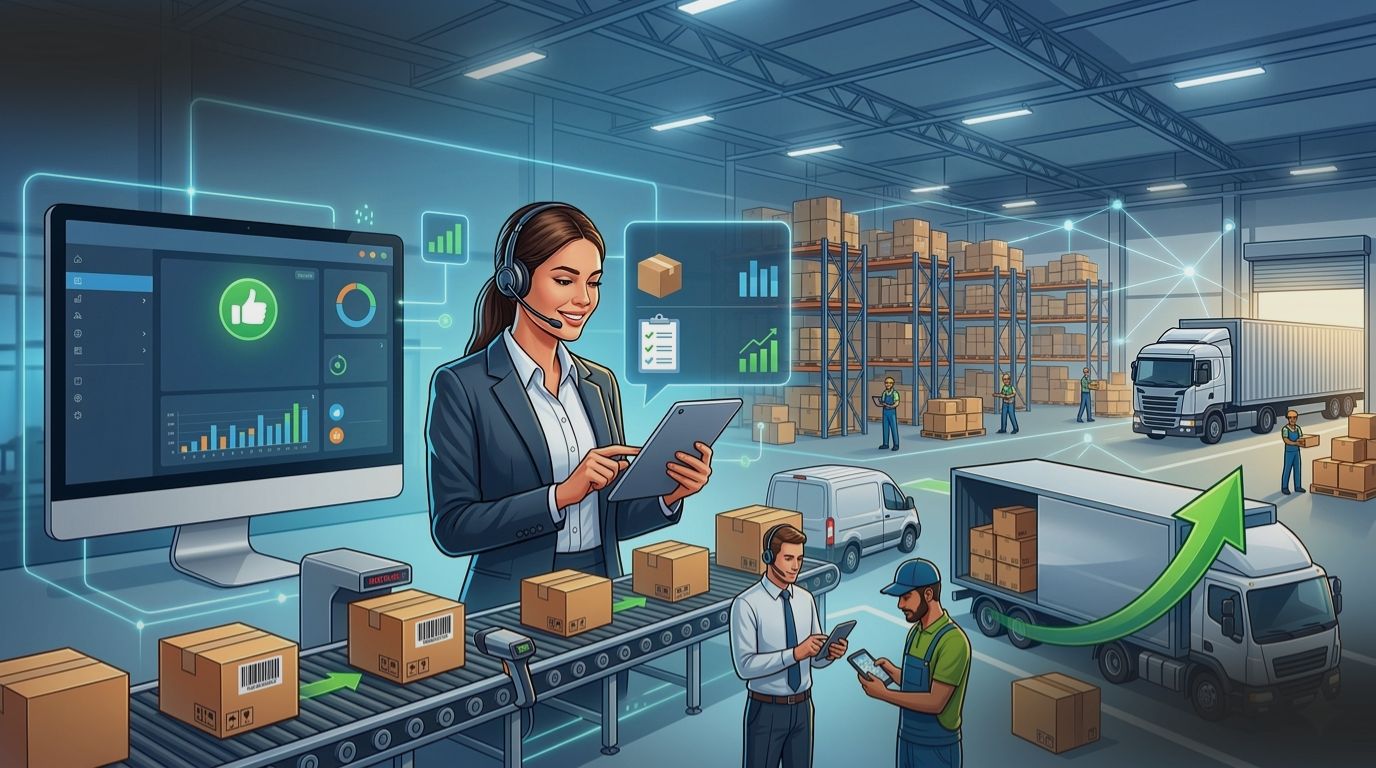
She opens an AI-powered SFA app before the visit. Order recommendations are already on screen, based on the retailer’s purchase history, live distributor stock, and active scheme eligibility. The visit becomes a real conversation, not a paper exercise.
The gap between these two reps is not a talent gap. It is an adoption gap, and it is getting wider with every quarter that passes.
This piece examines what is driving that gap, what the evidence actually says about AI’s capabilities in field sales order management, and what brands and distributors should consider before the opportunity to get ahead of this shift runs out.
Why the Traditional Order Booking Model Is Showing Its Age
Let’s be honest about something first. The field sales model that built Indian FMCG distribution is not broken. Sales reps bring genuine value: institutional knowledge of their accounts, personal relationships with retailers, and ground-level judgment that no algorithm can replicate. None of that is going away.
But the operational layer underneath it is under serious strain, particularly as brands push deeper into secondary and tertiary markets and SKU catalogues keep expanding.
Here is what we consistently hear from practitioners across the industry when we ask what is actually slowing them down:
- Orders placed against stale inventory data: Reps book products without real-time visibility into what the distributor actually has in stock. Cancellations and re-orders follow. Retailers get frustrated.
- Cognitive overload from growing product catalogues: When a rep is managing hundreds of SKUs across dozens of accounts, with different scheme structures for each, something always gets missed. It is not a people problem. It is a data problem.
- Too much time on non-selling tasks: Industry estimates consistently put the share of a field rep’s week spent on reporting, expense claims, and approval follow-ups at around 30%. That is nearly a third of their working week not spent in front of a retailer.
- Weak visibility beyond the primary distributor: Brand managers frequently find out about stockouts and sluggish sell-through at the retail level days or weeks after the fact, when the damage is already done.
- Inconsistent scheme application: Trade promotions and QPS thresholds get missed or miscalculated, which means revenue that should have been captured keeps slipping through the cracks.
Put all of this together, and you have a system that is slower, less accurate, and less responsive than the market it is meant to serve. And as distribution scales increase, the inefficiencies do not stay constant. They multiply.
30%
of a field rep’s week lost to non-selling admin work
2 to 4x
faster order cycles when AI-assisted SFA is in place
Rs. 1.1T
annual global revenue lost to inventory distortion*
*Global Inventory Distortion Study. Figures are global estimates and will vary by market and category.
WHAT THE TECHNOLOGY ACTUALLY DOES
Autonomous AI Order Booking: Cutting Through the Hype
The term gets used loosely, so it is worth being precise about what AI-powered order booking actually does in practice, and what it does not.
At its most useful, the technology analyses layered data sets: historical purchase behaviour by account, live inventory levels at the distributor, active scheme structures, beat plan calendars, and sell-through velocity at the retail level. From all of that, it produces a contextualised order recommendation before the rep arrives. In more mature implementations, routine replenishment for pre-approved accounts can be initiated automatically within agreed parameters.
What the system is reading and acting on:
- Historical retailer purchase patterns: What each outlet orders, in what quantities, at what intervals, and how those patterns shift across seasons and promotional windows.
- Real-time distributor inventory: Live stock data from the Distributor Management System ensures that recommendations always reflect what is actually available. No more orders placed against a product that has already gone.
- Scheme and promotion eligibility: The system maps each retailer’s order against active QPS thresholds, slab discounts, and trade promotional calendars automatically. The rep sees the right pricing and incentives without having to remember them.
- Beat plan and visit scheduling: AI-optimised journey planning ensures the rep is visiting the right outlets at the right frequency, and surfaces order recommendations ahead of each scheduled visit so they walk in prepared.
- Secondary and tertiary sell-through: Tracking actual consumption at the retail level, not just distributor offtake, means replenishment recommendations are driven by real demand rather than distribution assumptions.
What this amounts to is a meaningful shift from reactive replenishment, where you wait for the stockout to happen, to proactive prediction, where the system identifies the need three to five days before it would otherwise surface as a problem.
“The most important thing AI does in field sales is not to replace the rep. It removes the guesswork. A rep who arrives with data-backed recommendations is a fundamentally different commercial proposition than one who arrives with a paper catalogue.”
THE HONEST ASSESSMENT
Can AI Outperform a Sales Rep? Here Is What the Evidence Actually Says
This is the question most people in the industry dance around. It deserves a straight answer.
On dimensions like speed, scale, data processing, and pattern recognition, yes. AI has a genuine and measurable structural advantage. A well-configured system can track thousands of retailer accounts at once, factor in variables that no human working memory could hold simultaneously, and generate order recommendations in milliseconds.
But ‘outperform’ is the wrong frame to put around this. The more useful question is: where does each contribute most, and how should an organisation think about the relationship between the two?
| Capability |
AI / SFA System |
Human Field Rep |
Verdict |
| Order Speed and Accuracy |
Instantly, placed against livestock with zero manual error |
Fast on familiar beats, but slows when data is missing, or memory fails |
AI Edge |
| Scheme and Promo Recall |
Surfaces every applicable QPS, slab and trade promo automatically |
Strong reps recall key schemes, but miss edge cases at scale |
AI Edge |
| Journey Optimisation |
AI-optimised beat routing gets more productive calls out of every day |
Intuition-based routing that can be suboptimal over large territories |
AI Edge |
| Retailer Relationship Depth |
Tracks data well but cannot read mood, build trust, or earn loyalty |
Reads the room, navigates disputes, and builds lasting partnerships |
Human Edge |
| Negotiation and Exceptions |
Cannot adapt to real-time relational dynamics or bespoke terms |
Navigates tough conversations, pivots in the moment, and earns exceptions |
Human Edge |
| Real-Time Reporting |
Auto-generated, geo-tagged, and accessible across the hierarchy with zero lag |
Manual, delayed, and prone to gaps when field pressure is high |
AI Edge |
| Scaling Across Accounts |
Manages thousands of accounts simultaneously with consistent logic |
Hard ceiling on territory size and per-rep account quality |
AI Edge |
| Team Motivation |
Gamification, leaderboards, and nudges reinforce a performance culture |
Responds powerfully to recognition, healthy competition, and visible reward |
Both |
“The evidence points consistently in the same direction. AI and field reps are not substitutes. They are complements. Organisations that treat AI as a replacement for field force investment tend to erode the relationship capital that underpins long-term channel loyalty. Organisations that treat AI as an administrative overhead tend to underestimate what they are leaving on the table.”
OBSERVED OUTCOMES
What Brands Are Actually Seeing When They Make This Shift
Based on what we observe across FMCG and CPG distribution deployments in India, here is what brands and distributors consistently report when AI-powered SFA and DMS platforms are implemented well:
- Fewer stockouts on high-velocity SKUs: When AI flags low-stock risk at the distributor level before the rep’s visit, the model shifts from firefighting to prevention. Retailers notice this quickly.
- Less dead stock and channel overloading: Data-driven ordering means product moves through the channel based on actual sell-through, not on sales targets that have little to do with what retailers can actually shift.
- Compressed order cycles: What used to take several days of back-and-forth now happens in near-real time. The lag between the demand signal and supply response shrinks significantly.
- Better scheme uptake and improved margin performance: When scheme surfacing is automated, QPS thresholds and promotional structures get applied consistently. Revenue that previously slipped through gets recovered.
- Higher rep productivity per beat: With administrative tasks handled by the platform, reps spend more of their actual field time on productive retailer conversations, which drives both volume and relationship quality.
- Genuine management visibility across the full channel: Real-time data on primary, secondary, and tertiary stock movement changes the quality of decisions being made at the brand and distributor level. Leaders stop finding out about problems after they happen.
None of these outcomes is guaranteed by the technology alone. Implementation quality matters a lot. So does change management. Vendors who oversell the platform and underinvest in helping the field force actually adopt it tend to produce disappointing results. This is worth keeping in mind when evaluating options.
WHAT GOOD LOOKS LIKE
The SFA software market in India has grown considerably over the past few years, and not all platforms are equivalent. Based on our analysis, the capabilities that most reliably produce the outcomes described above are:
- Offline-first architecture: Field reps frequently work in low-connectivity areas. A platform that stops functioning without internet is a platform that fails in the places where it is needed most.
- Genuine DMS integration: SFA-only tools that do not connect to real-time distributor stock data cannot produce accurate order recommendations. The two systems need to work as one.
- A flexible scheme engine: The ability to configure and update QPS, slab discounts, and trade promotions without relying on IT support is critical. Markets move quickly, and promotional structures need to keep up.
- A motivation and gamification layer: Field force productivity is not purely a technology problem. Platforms that pair AI intelligence with performance nudges, leaderboards, and visible recognition consistently outperform those built only for monitoring.
- Geo-fencing and reliable visit verification: Accurate beat management depends on knowing that visits actually happened where reported. This directly affects the quality of the data feeding the AI recommendation engine.
- Retailer and dealer self-service capability: Platforms that let retailers and dealers place orders directly reduce rep dependency for routine replenishment and improve overall order frequency across the network.
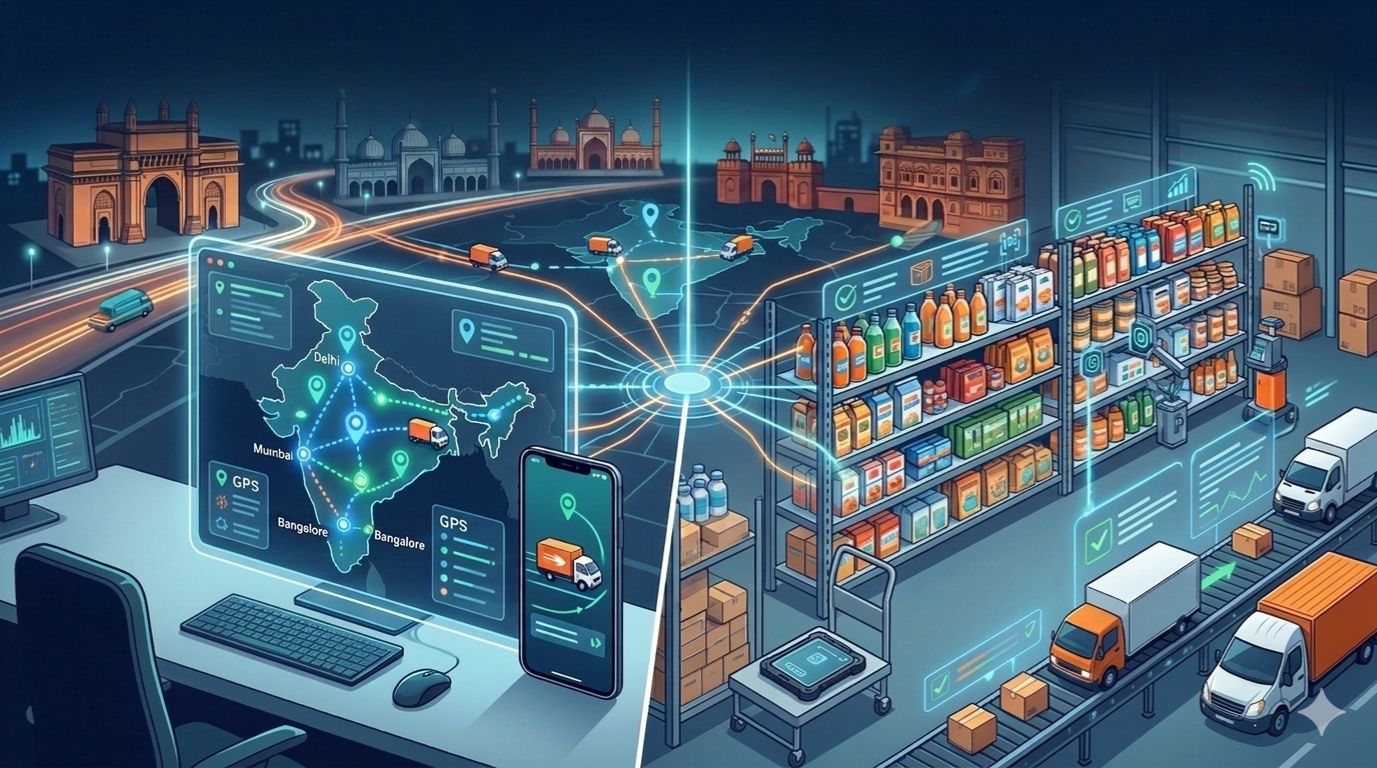
One platform in the Indian market that demonstrates this combination is MAssist. It operates as an integrated SFA and DMS ecosystem built specifically for the realities of Indian distribution: complex beat structures, multi-tier channel networks, and the challenge of motivating large, geographically spread field teams. We mention it here as a concrete example of what this capability combination looks like in practice. It is one of several platforms worth putting on your evaluation list.
MAKING THE TRANSITION
How This Shift Actually Happens in Practice
Brands that navigate this transition successfully do not do it overnight. The move to AI-assisted order management tends to happen in stages, with each stage having its own preconditions and payoff.
1
Connect
Start by unifying your SFA, DMS, and inventory data on a single platform. Every order recommendation is only as reliable as the data behind it, so this foundation is non-negotiable.
2
Assist
Let AI surface data-backed recommendations before each visit. Reps still approve every order, but the decision becomes a matter of seconds rather than a guessing game.
3
Automate
Enable retailers and dealers to place routine orders themselves through a self-service app. The rep is freed up for the conversations that actually need a human in the room.
4
Optimise
With every order cycle, AI models get sharper. Forecast accuracy improves. Scheme uptake grows. Rep productivity compounds. This is where the real long-term advantage builds.
The most common failure mode we observe is organisations trying to jump to Stage 4 without properly completing Stage 1. AI recommendations are only as good as the data feeding them. If your inventory and order data are fragmented, inconsistent, or poorly structured, your AI outputs will be too. The foundation has to come first.
THE BIGGER PICTURE
The Window for Early Advantage Is Real, and It Will Not Stay Open Forever
A few things are converging right now that make the next 18 to 24 months particularly important for brands operating in Indian distribution.
Retailer expectations are rising. Operators who have worked with AI-assisted ordering know what it feels like to have fewer stockouts, faster responses, and better scheme visibility. Those experiences are raising their baseline expectations of every supplier they work with. Brands that cannot meet that bar will find their shelf space under pressure, regardless of product quality.
Field force demographics are changing. Younger sales professionals grew up with digital tools and expect to use them at work. Organisations still running paper-based or spreadsheet-dependent field operations will face growing challenges recruiting and retaining the people they need.
Data advantage compounds over time. AI models improve as they process more data and more feedback cycles. A brand that starts building that data foundation now will have meaningfully better predictive accuracy in two years than a brand that starts then. The advantage is not just operational. It is cumulative.
“The real question is not whether to adopt AI-powered order management. For most FMCG and CPG brands operating at any meaningful scale, that decision has effectively already been made for them by the direction the market is moving. The question is how quickly they can make the shift without disrupting the field relationships that are already working.”
Based on what the evidence shows, the answer is: faster than most organisations currently expect, and more carefully than most technology vendors will tell you it needs to be.
The organisations producing the best outcomes in this space are the ones that treat AI as a tool to amplify their field force, not a shortcut around it. That means genuinely investing in adoption, protecting the relationship layer, and using the time AI saves to have the kind of commercial conversations that actually move the needle.
“The rep who walks in with data has a different kind of conversation than the one who walks in with a diary. That difference, played out at scale across every account in a distribution network, is what separates the brands that are winning from the ones watching their share quietly erode.”
Stop guessing, start growing.
Don’t let your sales depend on memory. See how Agentic AI transforms unpredictable retail demand into a precise science.
Book a Demo

 Beauty Advisor Application/Promoters App