Managing distributors effectively is crucial for businesses that rely on distribution networks to get their products into the hands of consumers. The global Distribution Management System market, valued at USD 5.51 billion in 2025, is projected to reach USD 20.22 billion by 2032, growing at a 20.4% CAGR—highlighting the urgent need for efficient tools to handle rising complexity. (Source: https://www.researchandmarkets.com/report/distribution-management-system)
But are you using the right tools to streamline this process? Distributor and consumer management involves everything from handling inventory and processing orders to managing customer relationships and ensuring timely delivery. The real question is: how efficient is your system in managing these tasks?
In this blog, we’ll explore the significance of distributor and consumer management system, explain how the right tools can simplify this process, and show you how MAssist can help your business thrive. By the end, you’ll understand why having a solid distributor management system in place is key to long-term success.
Why Is Distributor and Consumer Management System Critical for Your Business?
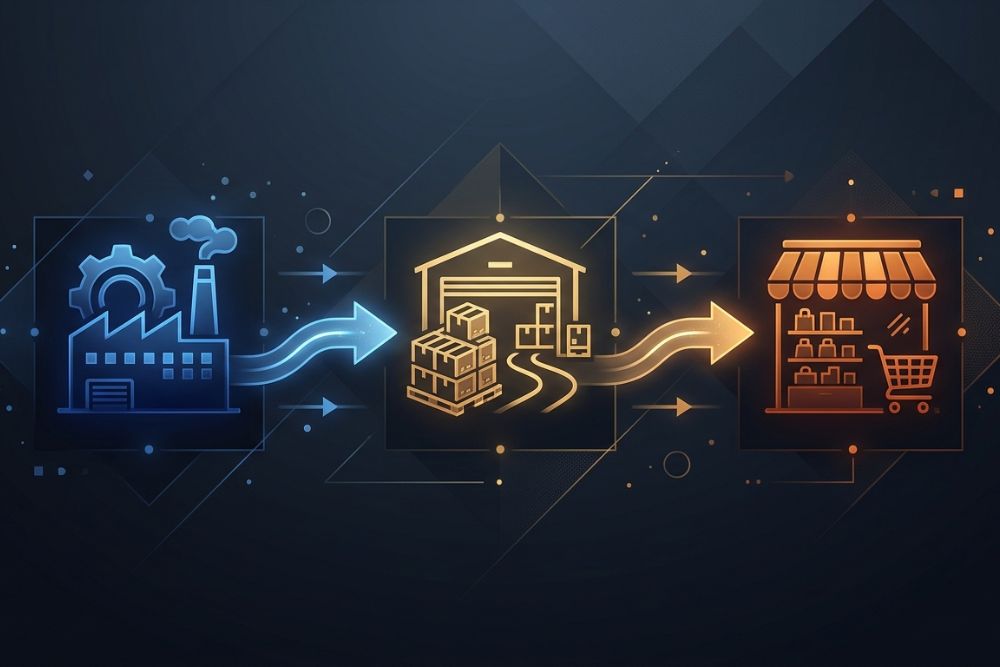
Every successful distribution strategy relies on the seamless movement of products from manufacturer to distributor and, ultimately, the consumer. Without a dedicated system, this chain is prone to “leaks” that drain profitability.
-
Visibility into Secondary Sales: Most brands know what they sold to the distributor (Primary Sales), but they are “blind” to what the distributor sells to the retailer (Secondary Sales). This system bridges that gap.
-
Preventing “Out-of-Stock” Scenarios: In a world of instant gratification, a product missing from a shelf is an invitation for your customer to switch to a competitor.
-
Optimizing Supply Chains: By tracking stock levels in real-time, businesses can ensure products are available exactly where demand is highest, preventing both shortages and overstocking.
How Does MAssist’s System Make Distributor and Consumer Management Easier?
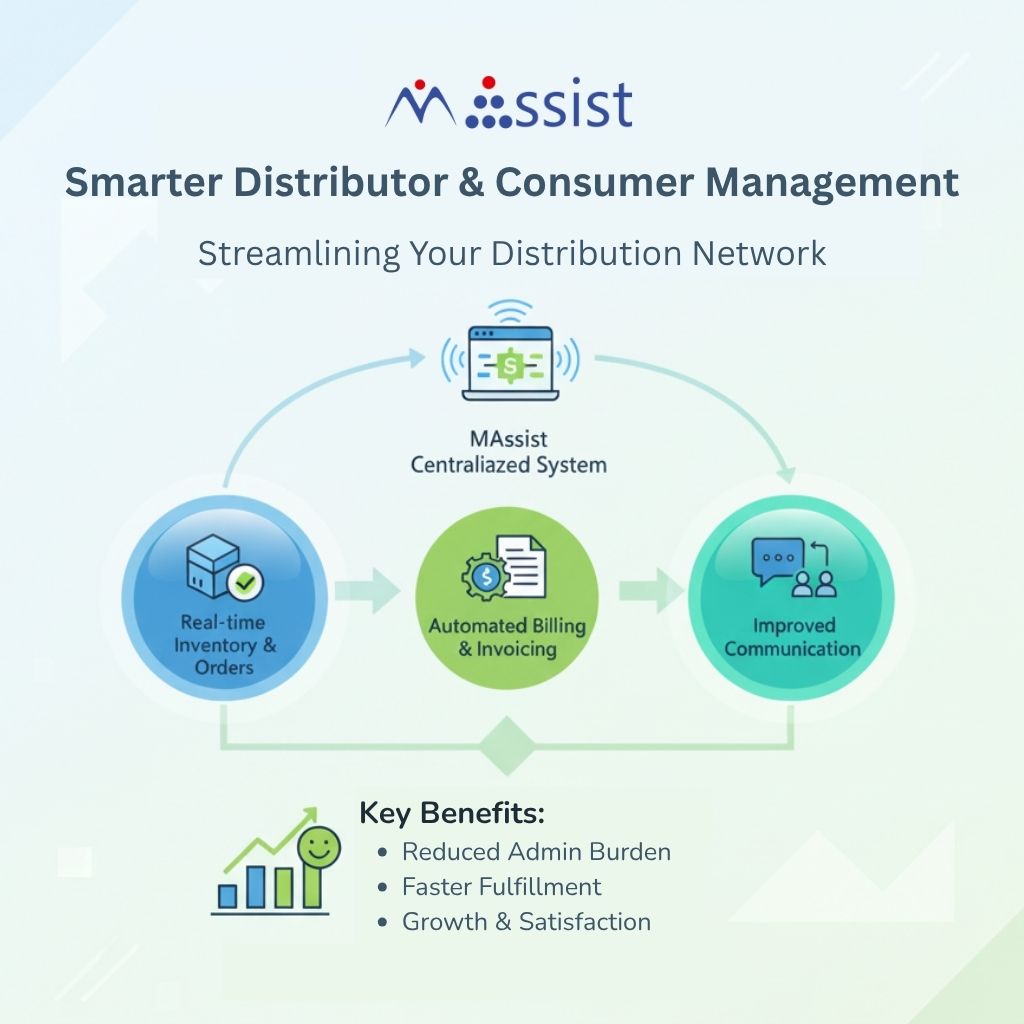
1. Real-Time Inventory & Dynamic Stocking
Traditional systems tell you what you had; a modern system tells you what you have.
-
Live Visibility: Track stock levels across all distribution points instantly.
-
Smart Buckets: Segment inventory into saleable, non-saleable, and expired items to handle returns without manual errors.
-
FEFO Logic: Prioritize stock based on expiry dates to reduce wastage and ensure consumer freshness.
2. One-Click Billing & Financial Transparency
Financial friction slows down the supply chain. Automation clears the path:
-
Automated Invoicing: Generate GST-compliant, professional invoices with a single click, sent via email or mobile.
-
Credit Control: Monitor distributor payments and set credit limits to protect your company’s cash flow.
-
Seamless Integration: Sync transaction data with existing ERPs to ensure a “single source of truth.”
3. Enhanced Retail Execution via Field Force Automation (SFA)
The “Consumer Management” aspect empowers your team on the ground:
-
Geo-Fencing & Beat Planning: Ensure accountability by verifying that sales reps are physically present at the retail outlet when orders are placed.
-
Scheme Transparency: Instantly push trade promotions and discounts to the field, ensuring the end-consumer actually benefits from your marketing spend.
Eliminate distribution blind spots and reclaim lost sales with a real-time engine built for 2026.
Join the industry leaders turning their supply chains into high-velocity growth machines.
Schedule a Consultation
From Managing to Leading: Staying Competitive with Advanced Features
In a market projected to hit over USD 20 billion by 2032, simply “tracking” your inventory isn’t enough to win. Staying competitive means moving faster than the data. It means knowing what a consumer wants before the distributor even places the order.
Here is how our advanced system transforms a standard distribution network into a high-velocity sales engine:
-
Turning Data into Instant Action: Most businesses struggle with “lag.” By the time they realize a product is trending, the shelf is already empty. Our real-time insights remove the guesswork, allowing you to reallocate resources and stock to high-demand zones while the trend is still peaking.
-
Frictionless Logistics & Last-Mile Excellence: Customer satisfaction is won or lost in the final mile. By optimizing the logistics flow, our system reduces transit times and eliminates the “where is my order?” friction. This reliability turns your brand into the preferred choice for both distributors and end-consumers.
-
The Power of a Unified Ecosystem: A common pitfall for growing companies is “software silos”, where the warehouse doesn’t talk to the accounting office. Our system acts as the “connective tissue” between your existing ERP and CRM tools. This creates a single source of truth, ensuring that every department, from finance to the field force, is working toward the same goal.
By moving beyond basic tracking into intelligent orchestration, you aren’t just reducing operational costs, you are building a resilient, future-proof supply chain that leaves slower competitors behind.
FAQs –
1. How does an efficient management system improve secondary sales visibility?
Answer: Efficiency is achieved through real-time data syncing. When sales reps log orders on their mobile apps at the retail level, the system instantly updates stock and sales data. This eliminates “blind spots” in the distribution chain, allowing brands to see exactly how much inventory is sitting with distributors versus what has actually been sold to consumers. This visibility is a core benefit of Sales Force Automation (SFA), which bridges the gap between field activities and back-end management.
2. Can this system help in preventing stockouts and overstocking?
Answer: Yes. By utilizing real-time inventory tracking and automated replenishment alerts, the system ensures that distributors maintain optimal stock levels. It uses historical sales data to forecast demand, preventing the loss of sales due to empty shelves while reducing the capital tied up in excess inventory.
3. What are the key features to look for in a distributor and consumer management system?
Answer: For maximum ROI, a robust system should include real-time dashboards for sales performance, mobile field force automation for on-the-go order booking, and advanced inventory and scheme management. It should also offer offline functionality to ensure work continues in areas with poor connectivity, as well as seamless integration with existing ERPs.
4. How does the system bridge the gap between distributors and end consumers?
Answer: It creates a direct feedback loop. While distributors handle logistics, the system captures consumer purchase patterns and feedback. This data helps brands tailor their marketing strategies and promotions to actual consumer needs, ensuring that the distribution strategy is driven by real market demand. This is often achieved by integrating Field Force Management tools that empower reps to collect insights directly from the point of sale.
5. Is it possible to integrate this management system with existing ERPs?
Answer: Absolutely. A high-quality system is designed to integrate seamlessly with existing accounting and ERP software. This ensures that financial data, invoices, and tax compliance (like GST) are synced automatically, reducing manual entry errors and streamlining the order-to-cash cycle. Many businesses find that digitizing their supply chain leads to massive improvements in overall operational efficiency.
The Bottom Line
Streamlining distribution consumer management is vital. Businesses depend on distribution networks to deliver products. MAssist provides robust system. It aims to simplify optimize every aspect of distributor management. This includes inventory tracking and order fulfillment. It also includes billing and communication.
With MAssist businesses can enhance distribution processes. They can reduce errors and improve distributor relationships. This helps with improved resource management and increased sales. Customer satisfaction also rises.
Businesses can leverage MAssist’s solution. They can ensure they meet current distribution challenges. It is also important to be competitive in the long term. It is the first step in streamlining a distribution network. Experience this with MAssist today!

 Beauty Advisor Application/Promoters App