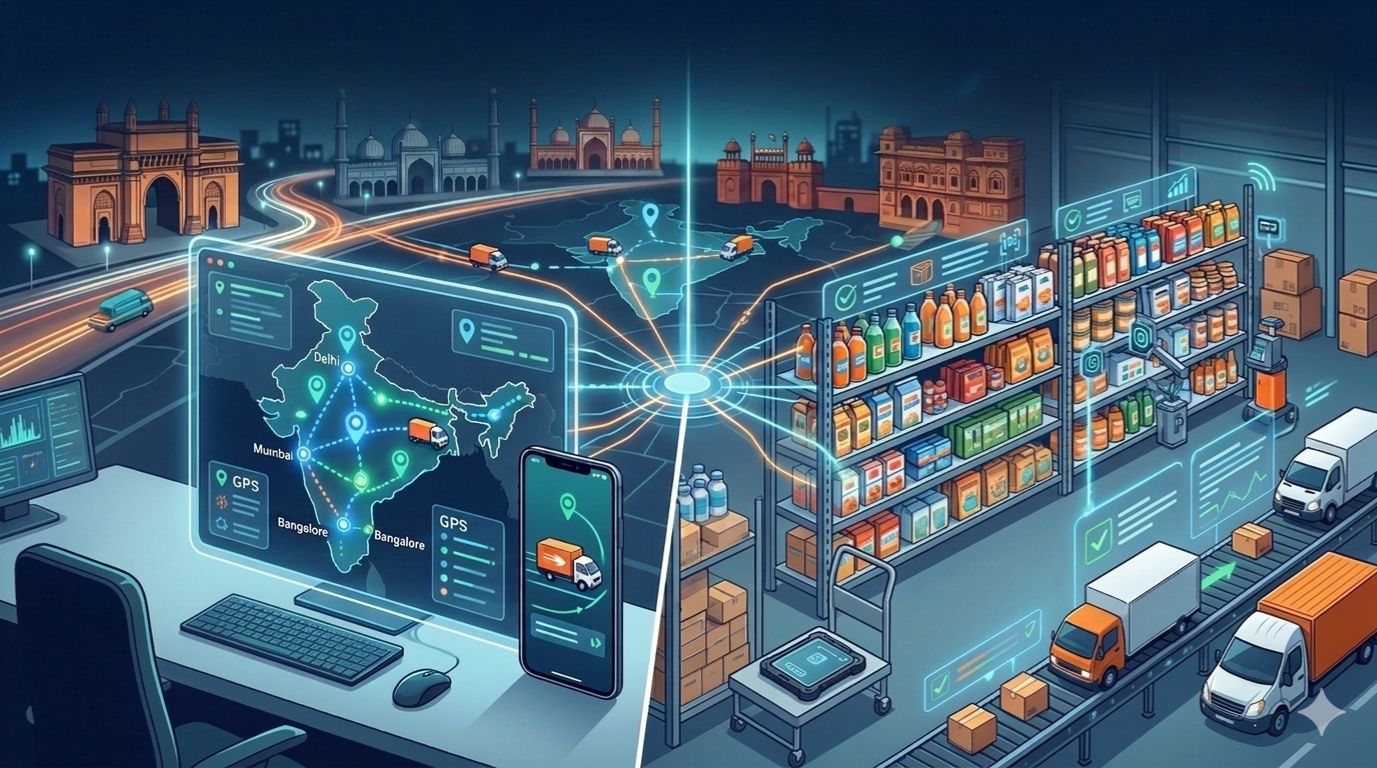
Your reports say full coverage. Your shelves tell a different story. Here’s how modern FMCG brands are eliminating execution blind spots — and turning every outlet visit into measurable revenue.
In FMCG, strategy rarely fails on paper. It fails quietly on the shop floor.
Beat plans are defined, targets are set, and daily reports confirm full outlet coverage. Yet stockouts go unnoticed, promotions underperform, and secondary sales consistently miss projections. The root cause is almost never strategy; it’s execution visibility. Or the complete lack of it.
Are your sales reps, merchandisers, and promoters actually visiting the outlets they’re reporting – or are you scaling decisions on data that doesn’t reflect reality?
Why Outlet Visit Visibility Is a Revenue Issue, Not Just an HR One
FMCG field sales operate at a scale that makes execution gaps almost invisible until they become expensive. Large distributed teams, thousands of outlets, high-frequency low-margin transactions, and relentless shelf-level competition — every missed visit compounds into a measurable revenue problem.
1
Missed visit →
Stockout goes undetected
3×
Longer recovery
when issues surface late
∞
Competitor shelf gain
if reps don’t show
When leadership relies on reported activity rather than verified activity, every downstream decision, from beat optimisation to trade marketing ROI, is built on assumed execution, not actual execution.
The Silent Cost of Ghost Visits
A ghost visit is a reported outlet visit that never physically happened. It’s rarely malicious, it’s a structural problem born from manual reporting workflows with no real-time verification layer. But the impact is far from minor.
📉
Revenue Leakage – Without physical shelf checks, stockouts and compliance issues surface only after sales drop, when recovery is slow and expensive.
🗂️
Distorted Sales Intelligence – Beat plans, territory design, and forecasting all depend on visit data. Inaccurate data cascades into bad planning decisions.
🤝
Retailer Trust Erosion – Retailers notice missed service. Over time, this weakens loyalty and makes them receptive to your competitors’ reps.
📦
Wasted Trade Marketing Spend – POS materials, schemes, and visibility investments deliver zero ROI when execution isn’t verified at the outlet level.
📊
Flawed Incentive Calculations – If visit data is unreliable, performance incentives are calculated unfairly, penalising honest reps, rewarding ghost reporters.
Why Traditional Reporting Can’t Fix This
Most FMCG organisations still rely on end-of-day submissions, manual call reports, or spreadsheet-based tracking. These systems confirm that a report was submitted, not that a visit actually occurred.
There’s no location context. No time stamp. No shelf-level proof. Managers are left interpreting numbers without context, and field teams lack a clear benchmark for what “good execution” looks like.
The problem isn’t that your teams aren’t working hard. It’s that you have no way to tell the difference between high-effort execution and reported effort.
How MAssist Closes the Execution Gap
MAssist’s Sales Force Automation (SFA) module is built specifically for the realities of FMCG field operations, giving you verified execution data without turning your field team into a surveillance state.
📍
Geo-Verified Check-Ins
Visits are logged only when reps are physically present at the outlet. Location-tagged check-ins eliminate ambiguity and create an objective record of coverage.
⏱️
Time & Duration Tracking
Capture when visits happen and how long they last. Short visits, overloaded beats, and skipped outlets become visible — and actionable.
📷
Photo Proof from the Shelf
Reps capture shelf conditions, POS execution, competitor activity, and product placement — replacing subjective reports with observable reality.
📋
In-Store Data Capture
SKU availability, number of facings, scheme compliance, new product adoption — every visit becomes a structured data collection event.
🔗
DMS Integration
Outlet visits connect directly to secondary order capture, distributor stock levels, and returns — linking execution to revenue in real time.
📱
Mobile-First, Zero Friction
Built for field reps on the move. Field tools work offline, sync automatically, and require no training overhead to ensure high adoption rates.
From Visit Verification to Market Intelligence
Verified visits aren’t just about accountability, they’re your most accurate, most current source of market intelligence. No syndicated data panel matches what a rep captures standing in front of a shelf.
-
Capture SKU-Level Reality
Stock availability, out-of-stocks, and competitor promotions – captured at every outlet on every visit, feeding directly into MAssist’s Business Analytics dashboard.
-
Monitor Execution Quality, Not Just Effort
Track shelf share, POS compliance, and scheme execution – moving your KPIs from “visits completed” to “market share defended.”
-
Connect Every Visit to a Revenue Event
Orders, returns, claims, and issue flags are logged during the visit – creating a direct, auditable link between field activity and distribution outcomes.
-
Optimise Beats with Real Data
MAssist analyses visit patterns, outlet productivity, and coverage gaps to help you redesign beats that maximise rep efficiency and revenue per visit.
Accountability Without Micromanagement
The biggest risk in field digitisation is getting the culture wrong. If your team believes the system exists to catch them out, adoption collapses — and you’ve spent a significant budget to make things worse.
The most effective FMCG organisations using MAssist position field visibility as a tool that works for reps, not against them:
✔ FAIR INCENTIVE CALCULATION
✔ PROOF OF EFFORT ON DISPUTED CLAIMS
✔ COACHING BASED ON REAL PATTERNS
✔ REDUCED REPORTING BURDEN
✔ SINGLE SOURCE OF TRUTH FOR DISPUTES
✔ RECOGNITION FOR TOP PERFORMERS
When field teams understand that visibility exists to support them, and managers use the data to coach rather than police – adoption improves naturally and execution quality follows.
Powered by Massist
One Platform. Complete Field Execution Visibility.
MAssist unifies Sales Force Automation, Distribution Management, Promoter App, Mobile POS, and Business Analytics — so your entire field operation runs on verified data, not assumptions.
The Bottom Line: Growth Lives on the Shelf
In FMCG, the distance between your strategy and your growth lives in the gap between what was planned and what was executed. That gap is measured outlet by outlet, visit by visit, shelf by shelf.
Brands that close this gap, with real-time field execution visibility powered by MAssist – don’t just reduce revenue leakage. They build a systematic competitive advantage that’s very hard to copy.
What isn’t executed isn’t sold. What isn’t visible can’t be corrected. What isn’t verified can’t scale.
If your sales reports consistently look better than your shelf reality, the answer isn’t more reports. It’s a field execution system that makes reality visible, before it shows up in your P&L.
Frequently Asked Questions:
- What is outlet visit visibility in FMCG sales?
Outlet visit visibility is the ability to verify whether sales reps, merchandisers, or promoters have physically visited retail outlets, and to capture what happened during those visits (shelf conditions, stock levels, POS compliance, competitor activity). It goes well beyond visit counts to include location, timing, execution quality, and actionable in-store intelligence.
- What are “ghost visits” and why do they matter?
Ghost visits are reported outlet visits that never physically occurred. They’re usually a symptom of manual, end-of-day reporting with no objective verification layer, not necessarily deliberate fraud. But their impact is significant: they distort sales data, inflate coverage metrics, hide real execution problems, and lead to poor decisions in beat planning, forecasting, and trade marketing.
- How does MAssist verify that outlet visits actually happened?
MAssist’s SFA module uses GPS-verified check-ins that only register when a rep is physically at the outlet location. This is combined with time-stamped visit logs, photo capture from the store (shelf, POS, stock), and in-store data collection, creating a complete, auditable record of every visit without adding friction to the rep’s workflow.
- Is MAssist’s outlet tracking the same as micromanagement?
Not when implemented correctly. MAssist is designed to support field teams, not surveil them. The data is used for fair incentive calculation, coaching conversations based on real patterns, proof of effort in disputed situations, and beat optimisation — not to police daily movements. When teams understand this framing, adoption is strong and performance improves naturally.
- What data should FMCG sales reps capture during outlet visits?
Using MAssist’s structured visit forms, reps capture SKU-level stock availability, number of facings and shelf share, scheme and POS compliance, competitor promotions and new product activity, secondary orders, returns, and any issues or opportunities flagged in-store. This transforms every visit from a checkbox into a high-value data collection event.
- How does MAssist connect outlet visits to sales outcomes?
MAssist integrates SFA with its DMS (Distribution Management System) and Business Analytics module, so every outlet visit is directly linked to secondary order capture, distributor stock levels, returns, and performance dashboards. Managers see execution and revenue in the same view, making it easy to identify what’s working and where gaps exist.

 Beauty Advisor Application/Promoters App