The Algorithmic Store is Here. Are You Ready to Lead It?
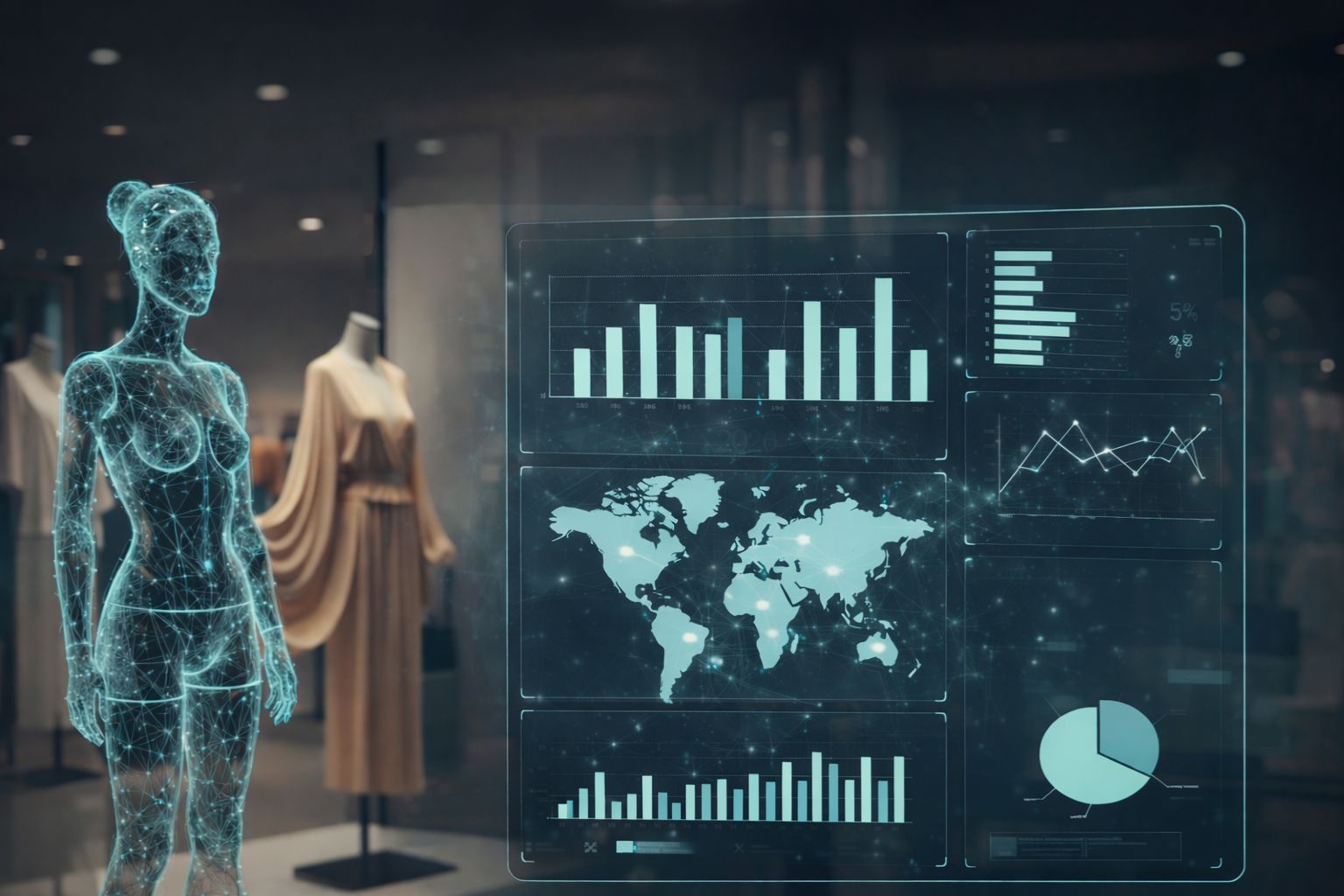
Walk into any modern retail environment – physical or digital – and you’re engaging with an Algorithmic Store. This isn’t some vision of the future; this is what commerce looks like today. From the dynamic pricing models on the digital shelves to the hyper-personalized product taxonomy on your favorite e-commerce site, core merchandising decisions are now being autonomously executed or optimized by sophisticated Machine Learning models.
The first reaction among human merchandisers is often the fear: Is Artificial General Intelligence replacing me?
Let’s reframe that fear right now. AI is not meant to replace the strategic, creative merchandiser; it’s meant to replace their analytical bottlenecks. The rise of the Algorithmic Store doesn’t signal the obsolescence of the human expert but rather their augmentation into a more potent, data-informed strategic leader. The future of merchandising depends on strong human-AI synergy. Learn how an AI-Powered Sales, Distribution, and Merchandising Platform like MAssist CRM enables this synergy.
Part I: The Science of Merchandising, Where AI Excels
For many years, the lion’s share of the merchandiser’s work was taken by the “science” part: time-consuming data aggregation, manual inventory reconciliations, and heuristic forecasting based on historical data and subjective judgment. That is precisely where AI adds exponential value that can be measured. By its nature, it specializes in optimization and execution.
-
Granular Demand Forecasting & Inventory Optimization
Advanced algorithms can consume and synthesize immense data sets, such as historical POS transactions, social media sentiment analysis, hyper-localized weather models, competitor stock levels, and macro-economic indicators, utilizing techniques like Time Series Analysis and Deep Learning.
This capability enables SKU-level, store-level, day-level predictions with much better predictive accuracy compared to traditional methods of inventory optimization. The operational consequences are huge: a significant reduction in expensive dead stock due to obsolescence costs and a drastic cut in revenue-losing stock-outs or lost sales costs. AI provides the empirical data layer for Supply Chain and Working Capital optimization.
-
Mass-Scale Hyper-Personalization
While a human merchandiser can curate an exceptional collection for a defined set of customer segments, a sophisticated Recommendation Engine can curate a unique digital experience for every shopper in real-time.
By using techniques such as Collaborative Filtering, Content-Based Filtering, and Natural Language Processing, the Algorithmic Store can:
- Understand semantic meaning to show products relevant to nuanced search queries.
- Dynamically modify the visual layout and product grid with Real-Time A/B Testing based on individual conversion probability.
- Provide price adjustments through the use of Reinforcement Learning models, considering local demand and individual price elasticity.
AI turns a generic e-commerce frontend into millions of personalized headless commerce experiences running all at the same time, continuously optimizing towards a defined KPI, for example, AOV or CR.
-
Automation of Tactical Operations: AI-Executed Solutions
The most immediate win for AI is the elimination of low-value, repetitive tasks that are perfect for AI-executed solutions. AI can automatically optimize product attribute tagging, create sophisticated visual merchandising plans (planograms), and instantly re-rank items on a category page based on real-time inventory and margin targets. By offloading these mechanical, high-volume tasks, AI frees up the most valuable commodity in strategic retail: human cognitive capacity.
Part II: Merchandising as an Art – The Human Factor That Cannot Be Replaced
If an algorithm is handling parameters regarding stochastic modelling and optimization, what’s left for the human to do? Everything that drives brand equity, emotional connection, and long-term strategic direction represents the AI-Assisted and AI-Led level of work that requires human judgment.
-
Brand Storytelling and Emotional Curation
AI excels at local optimisation, but it doesn’t have the Global Strategic Intent of the brand. It can tell you which products sell, but it cannot articulate the story of your brand heritage nor define its future identity.
It takes a human to curate the season’s overarching narrative, to choose the iconic product drop that creates a Cultural Moment, and to engineer the emotional resonance that transitions a transactional sale into fierce Customer Lifetime Value. The human merchandiser is the Brand’s Guardian and Chief Visionary.
-
Strategic Trend Interpretation vs. Signal Detection
An algorithm is a master of Signal Detection. It can identify a sudden spike in a latent variable – say, the volume of API calls, or social media chatter related to a certain aesthetic, weeks before it goes into the mainstream.
But Strategic Trend Interpretation can be applied by a human merchandiser alone. They have to evaluate whether this detected signal fits their core brand DNA or if there is any ethical implication in commercializing this trend. Expert, domain-specific knowledge translates a raw data point into a cohesive, nondamaging, commercially viable strategy that connects the quantitative insight back to the qualitative brand promise.
-
Definition and Governance of the Commercial Objectives
An algorithm is a rules-based system, not a rule-defining system. It’s the human merchandiser who must define the high-level commercial objectives and provide essential ethical and business governance.
They can intervene when there is some overriding rule that says something like: “The AI system should focus on Gross Margin (GM) maximization in Category A but ensure New Customer Acquisition (NCA) in Category B, even if the initial margin is lower.” This is the very essence of having a Human-in-the-Loop: to ensure that the algorithm, in its pursuit of short-term gains, does not violate long-term brand integrity or fall prey to data-driven algorithmic bias.
Part III: The Merchandiser of the Future: An AI-Augmented Role
The new merchandiser is not a tactical operator but an AI Strategist and Data Translator. It is in this collaboration that true synergy is realized, a result neither party could achieve alone.
The merchandiser of the future will be functioning as:
- The Curator & Visionary: Setting the initial product taxonomy, inventory depth, and the overarching creative narrative.
- The Prompt Engineer: The Strategic Goal Setter translates abstract brand goals-such as “increase brand prestige”-into precisely targeted, measurable, and executable AI objectives, such as “Increase conversion of high-end, high-margin SKUs by 5%”.
- Data Interpreter & Governor: Analyze the model performance metrics, understand the ‘why’ behind the AI’s predictions and errors; adjust the strategic inputs to refine the Human-in-the-Loop feedback system.
This is a fundamental shift from high-volume, low-leverage execution to high-leverage, strategic command, a role that is intellectually more stimulating and exponentially more valuable to the organization.
The most successful retailers will be neither purely algorithmic nor purely human, but the ones that can nurture the most robust and adaptive Human-AI Collaborative Intelligence framework.
Conclusion: Start the Engine, Take the Wheel
The Algorithmic Store is not a threat to be managed; it’s a technological leverage point to be mastered. It assumes the most arduous, time-intensive aspects of the merchandiser’s role – the data analysis, the optimization models, and the real-time adjustments – and performs them with technical perfection.
This frees you, the human expert, to focus on your core competitive advantages: creativity, strategic foresight, brand guardianship, and human connection.
The time to fear AI is obsolete; the time to invest in skills to master its strategic deployment is now. Embrace the powerful computational engine, take the strategic wheel, and drive the future of commerce.
The time to fear AI is obsolete; the time to invest in skills to master its strategic deployment is now. To explore AI-driven solutions that simplify distribution and empower your field teams, visit MAssist CRM. Embrace the powerful computational engine, take the strategic wheel, and drive the future of commerce

 Beauty Advisor Application/Promoters App