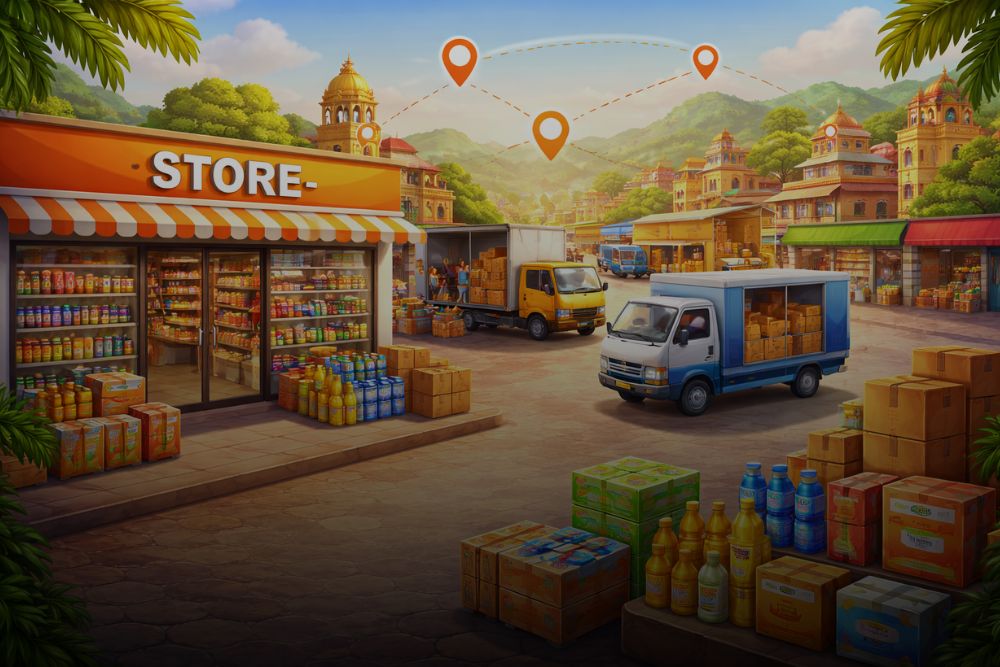
80% of India’s FMCG volume still flows through general trade: kirana stores, local distributors, and independent retailers that run largely on paper, manual registers, and basic accounting software. Most of them have no digital tracking. Which means most manufacturers are making critical business decisions based on half the picture.
Primary sales tell you what left your factory. They do not tell you what is sitting in your distributor’s godown, what is actually selling at the retailer shelf, or whether the scheme you launched last month is reaching the market at all.
Then your area sales manager calls from Lucknow. One distributor is sitting on 45 days of stock. Two retailers in a busy market have stopped reordering. The numbers on the dashboard looked fine right up until they did not.
This is the distribution visibility problem. It is one of the most common and most expensive blind spots in Indian FMCG. A Distributor Management System, or DMS, is the technology that closes it. This guide explains what a DMS actually does, how it works in a typical Indian distribution setup, and what to look for when choosing one.
What Is a Distributor Management System (DMS)?
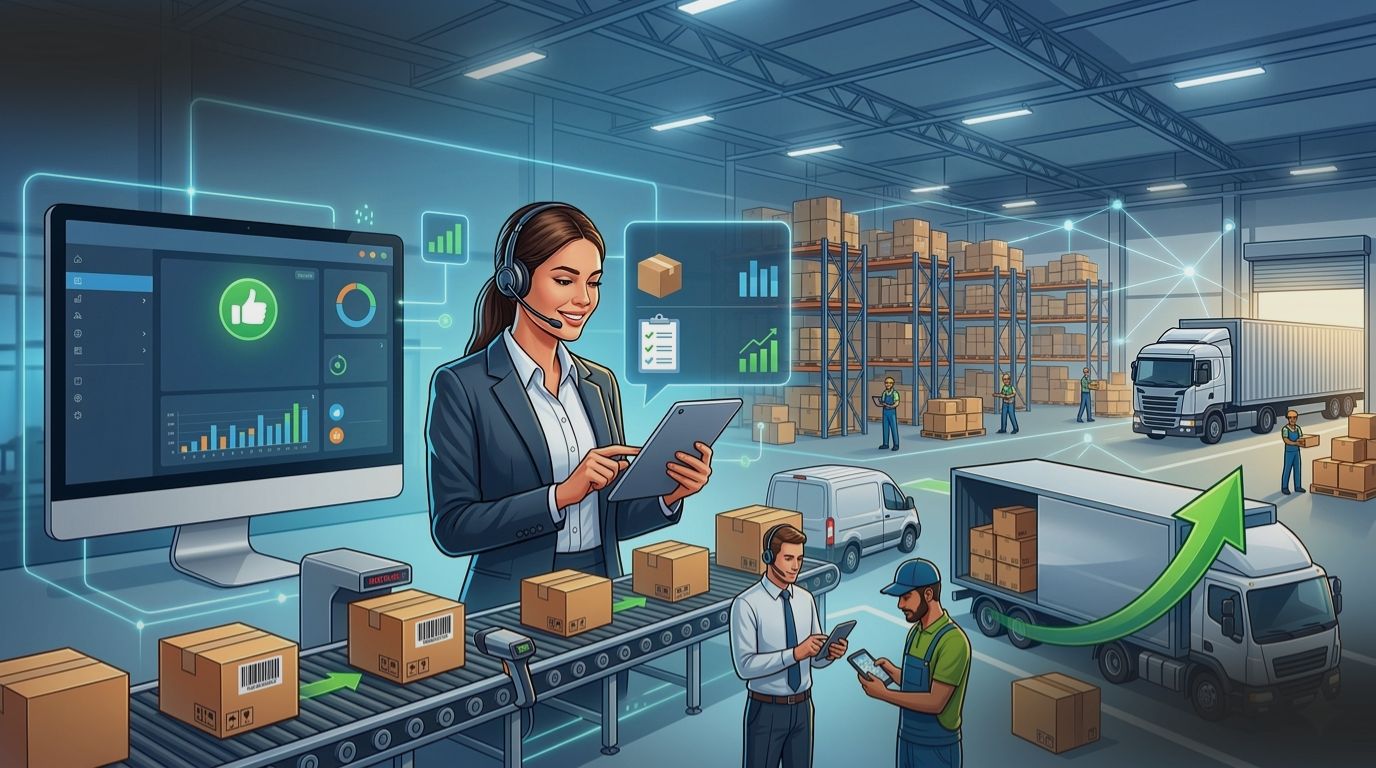
A Distributor Management System is software that sits between your ERP and your market. It manages everything that happens at the distributor level: order capture, billing, inventory tracking, secondary sales recording, scheme management, claim settlement, and payment collection.
Think of it this way. Your ERP records what your company sold to its distributors. That is primary sales. A DMS records what your distributors are selling to retailers. That is secondary sales. And secondary sales, not primary, are the number that tells you whether your brand is genuinely growing in the market.
Without a DMS, secondary data typically arrives via messaging apps, phone calls, or monthly spreadsheets from each distributor. By the time it reaches your desk, it is already two weeks old, inconsistently formatted, and impossible to act on at speed.
How a DMS Works in Practice
The simplest way to understand a DMS is to walk through a single transaction in a typical Indian FMCG setup:
- A retailer places an order with the distributor, either through the distributor’s sales rep or directly through a retailer-facing app
- The DMS checks stock availability in real time, at the SKU level, including near-expiry and non-saleable goods
- The order is billed with a GST-compliant invoice generated automatically, including e-invoice and e-way bill where applicable
- The secondary sale is recorded instantly and visible at the area manager and HQ level without any manual reporting step
- Scheme eligibility is calculated against verified secondary sales data, not against a distributor-submitted claim form
- Claims and collections are tracked in the same system, so credit limits, outstanding balances, and overdue alerts are always current
Each of these steps previously required a phone call, an email, or a manual message. A DMS turns them into automated, auditable transactions. The difference in operational speed, and in the accuracy of the data reaching your head office, is significant.
DMS vs ERP vs SFA: Understanding the Difference
This is the question that comes up in almost every DMS evaluation, and the confusion is understandable. Here is the clearest way to separate the three:
| |
ERP |
DMS |
SFA |
| What does it manage? |
Finance, procurement, manufacturing |
Distributor orders, inventory, secondary sales |
Field rep visits, orders, beat planning |
| Where does it sit? |
Company headquarters / back-office |
Distributor network layer |
Field sales team and retail outlets |
| Key data it produces |
P&L, balance sheet, MIS reports |
Secondary sales, stock positions, claim settlements |
Visit reports, order data, geo-tracking |
| Who uses it daily? |
Finance and supply chain teams |
Distributors and area sales managers |
Field reps and regional sales managers |
| India must-have? |
Yes, most brands already have it |
Yes, yet many brands still lack it |
Yes, especially for field-heavy teams |
Swipe left/right to view full table on mobile
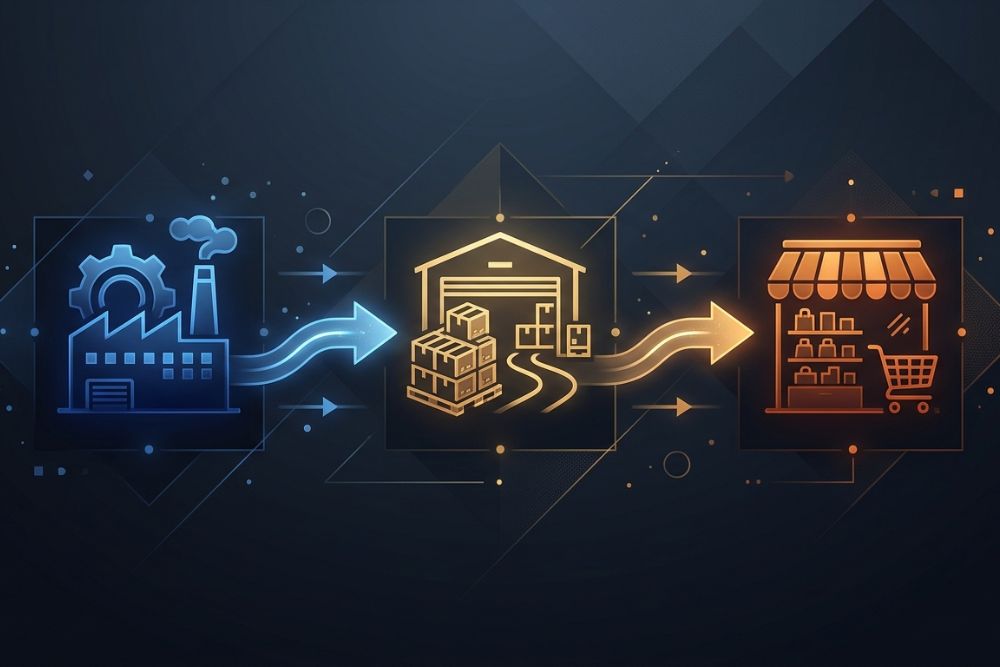
Most mid-to-large Indian FMCG brands need all three working together. The ERP is your financial backbone. The DMS is your distribution intelligence layer. The SFA is your field execution engine. When the three share data in real time, you have end-to-end visibility from your factory to the retailer’s shelf. When they operate in silos, each one has a blind spot that undermines the other two.
6 Features a Good FMCG DMS Must Have in 2026
Not all DMS tools are built for the complexity of Indian FMCG distribution. Here is what actually matters:
1. Real-time secondary sales tracking
This is the core function of a DMS. You should be able to see what your distributor sold to which retailer, in which beat, on which date. Not at month-end. Today. Any DMS that cannot provide this in real time is not solving the visibility problem.
2. Scheme and promotion management with verified claims
Trade schemes are one of the most significant cost lines in FMCG distribution, and they are also where leakage is most common. A good DMS lets you configure schemes at the distributor or warehouse level, tracks redemption against verified secondary transactions, and processes claims automatically. This eliminates the cycle of disputed claims that drains time and relationships.
3. GST-compliant invoicing and e-invoicing
Non-negotiable in India’s current regulatory environment. The DMS must generate GST invoices, credit notes, e-invoices for distributors above the applicable turnover threshold, and e-way bills for inter-state movement. This is not a feature to treat as optional.
4. Inventory visibility including stock ageing and non-saleable goods
You need to see stock positions at each distributor in real time: total stock, saleable stock, non-saleable, near-expiry, and expired. Stock ageing visibility is what lets you act before a distributor’s inventory becomes a write-off problem.
5. Offline-capable mobile app
Distributors in Tier 2 and Tier 3 cities routinely operate in low-connectivity environments. The DMS mobile app must work fully offline for order entry, billing, and inventory updates, and sync automatically when connectivity returns. If the app stops working without internet, it stops being used.
6. Native integration with SFA
If your DMS and SFA are separate tools with a scheduled data sync, you will always be reconciling two different pictures of reality. The strongest setups use platforms where DMS and SFA data share the same database, so a field rep’s order entry and a distributor’s secondary sale appear in the same dashboard without any integration lag.
Why the Indian FMCG Market Needs DMS More Than Most
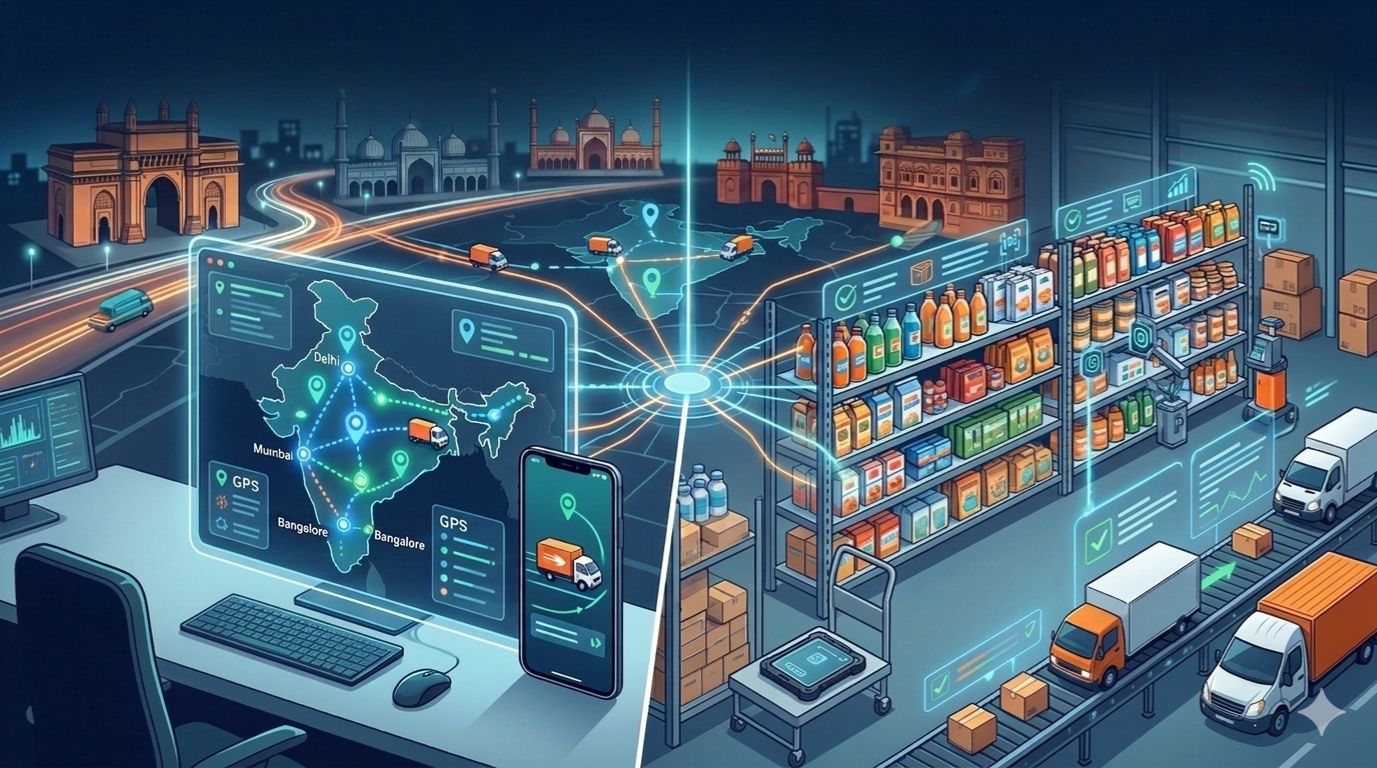
India has between 8,000 and 10,000 FMCG distributors serving over 12 million retail outlets. Most of those distributors still run their back-office on legacy accounting software, spreadsheets, or manual ledgers. Secondary sales data from this network is slow, inconsistent, and difficult to aggregate at scale.
This creates a structural problem. A brand can have excellent primary sales data from its own ERP and almost no reliable secondary data from the market. The result is that decisions about inventory allocation, scheme investment, and territory prioritisation are made on half the picture.
The problem compounds in Tier 2 and Tier 3 markets, where distribution is often informal, distributor relationships are highly personal, and there is no standardised reporting process. A DMS built for the Indian market needs to handle all of this, including local language support, accounting software integration, and the particular complexity of India’s multi-tier distribution structure.
The channel stuffing problem
When primary sales are pushed hard at quarter-end, distributors can accumulate stock faster than they can sell it to retailers. Without real-time secondary visibility, this inventory build-up is invisible at HQ until a distributor asks for a credit note or stops ordering. A DMS provides the early warning signal: if primary sales are consistently outpacing secondary offtake, the channel is filling up, not the market.
5 Signs Your Business Needs a DMS Right Now
- Your secondary sales data arrives weekly or monthly, not daily
- You have had scheme disputes with distributors because claims cannot be verified
- Field reps report that distributor godowns are full but you have no way to confirm it
- Your team manually reconciles distributor invoices against your own billing records each month
- You manage more than 20 distributors and have no single dashboard showing their current stock levels
If three or more of these describe your current setup, you are effectively managing your distribution network on estimates. The gap between what you think is happening in your channel and what is actually happening tends to widen with every new distributor you add.
How to Choose a DMS for Your FMCG Company
There is no shortage of DMS options in the Indian market. Here is a practical framework for shortlisting:
Start with India-specific requirements
A DMS built for or adapted to the Indian market will handle GST compliance, accounting software integration, local language interfaces, and the informal distributor workflows common in Tier 2 and 3 markets out of the box. A global platform adapted for India often requires significant customisation to do the same.
Test offline capability before you shortlist
Ask vendors a specific question: does the full distributor workflow (order entry, stock check, billing) work without any internet connection? Not ‘mostly offline’ or ‘read-only offline.’ Fully offline. The answer will immediately separate tools built for Indian ground conditions from those that are not.
Clarify how it integrates with your SFA
If you already have an SFA or plan to implement one, ask both vendors how the data flows between them. Request a live demonstration of a field rep booking an order that then appears in the DMS without any manual step. If either vendor struggles to show this clearly, treat it as a warning sign.
Get a specific implementation timeline
A standard DMS rollout for a brand with 50 to 150 distributors, including configuration, GST setup, data migration, and distributor onboarding, should take 6 to 10 weeks. Significantly longer timelines usually indicate that the tool requires heavy customisation to fit your workflows, or that the implementation team is stretched.
Check who provides support after go-live
Distributor onboarding is the hardest phase of any DMS implementation. Having an India-based support team that understands local distributor workflows and can communicate in Hindi or regional languages makes a practical difference. Ask who handles distributor-side queries after go-live, and how.
Frequently Asked Questions:
What is a Distributor Management System in FMCG?
A Distributor Management System in FMCG is software that manages the commercial relationship between a manufacturer and its distributor network. It captures and automates order processing, secondary sales tracking, inventory management, invoicing, scheme settlement, and collections at the distributor level, giving brand headquarters real-time visibility into what is happening beyond the factory gate.
What is the difference between a DMS and an ERP?
An ERP manages a company’s internal operations: finance, procurement, manufacturing, and the recording of primary sales. A DMS manages the external distribution layer: what distributors are selling to retailers, what stock they are holding, and how trade schemes are being claimed. ERP tells you what left your warehouse. DMS tells you what is actually selling in the market. Most FMCG brands need both.
If you sell through distributors and run a field sales team, yes. An SFA tracks what your field reps are doing at retail level: visit frequency, order booking, beat compliance. A DMS tracks what your distributors are doing at the billing and inventory level: secondary sales, stock positions, claims. Together they give you full-channel visibility. Separately, each one leaves a significant gap.
How much does DMS software cost in India?
DMS pricing in India depending on the feature set, the number of distributors, and whether SFA is bundled in the same platform. Implementation costs are usually priced separately and vary based on the number of distributors, data migration requirements, and the level of customisation needed.
How long does a DMS implementation take?
For a brand with 50 to 150 distributors, a standard rollout—covering configuration, GST setup, and training, typically takes 4 to 8 weeks. Larger deployments with 300+ distributors across multiple states generally take 8 to 12 weeks. While the platform can be configured in as little as 1–2 weeks, the total timeline depends on how quickly your distributor network provides clean data and completes onboarding training.
Final Thought
A DMS is not a reporting tool. It is the infrastructure that makes your distribution network manageable at scale. Without it, you are trusting that the numbers you receive from distributors are accurate, timely, and complete. In most cases, they are none of those things.
The good news is that the Indian DMS market has matured considerably in the last three years. There are now platforms purpose-built for the complexity of Indian FMCG distribution, with offline apps, GST compliance, accounting software sync, and field integration built in rather than bolted on.
If you are managing more than 20 distributors and your secondary sales visibility still depends on messaging apps and monthly spreadsheets, the cost of that blind spot is likely higher than the cost of fixing it.
See how MAssist DMS works
MAssist offers an integrated DMS and SFA platform built for Indian FMCG distribution, with real-time secondary sales tracking, GST-compliant invoicing, offline capability, and scheme management in one place. Book a free demo, and we will walk you through it with your own use case.

 Beauty Advisor Application/Promoters App