Here is something most FMCG sales reports will never tell you. A brand can look perfectly healthy on paper, factories humming, distributors placing big orders, quarterly numbers ticked off, while its products are quietly gathering dust on retail shelves three states away. Nobody flags it. Nobody notices. Until the returns start coming in.
The gap between what your company ships and what consumers actually buy is one of the most persistent and expensive blind spots in FMCG distribution. Research suggests that nearly half of consumers will switch to a competing brand the moment their preferred product is off the shelf, yet most brands have no reliable way to know when that is happening until the damage is already done. And at the root of it sits a three-level sales architecture that far too many brand managers, sales heads, and supply chain teams do not fully understand: primary sales, secondary sales, and tertiary sales.
These are not textbook definitions or accounting buckets. They represent three completely different stages of how your product travels from the factory to a consumer’s hands, each with its own risks, its own data challenges, and its own strategic weight. Get a handle on all three, and you have real visibility into your market. Ignore any one of them, and you are essentially flying blind.
What Is Primary Sales? The Factory-to-Distributor Transfer
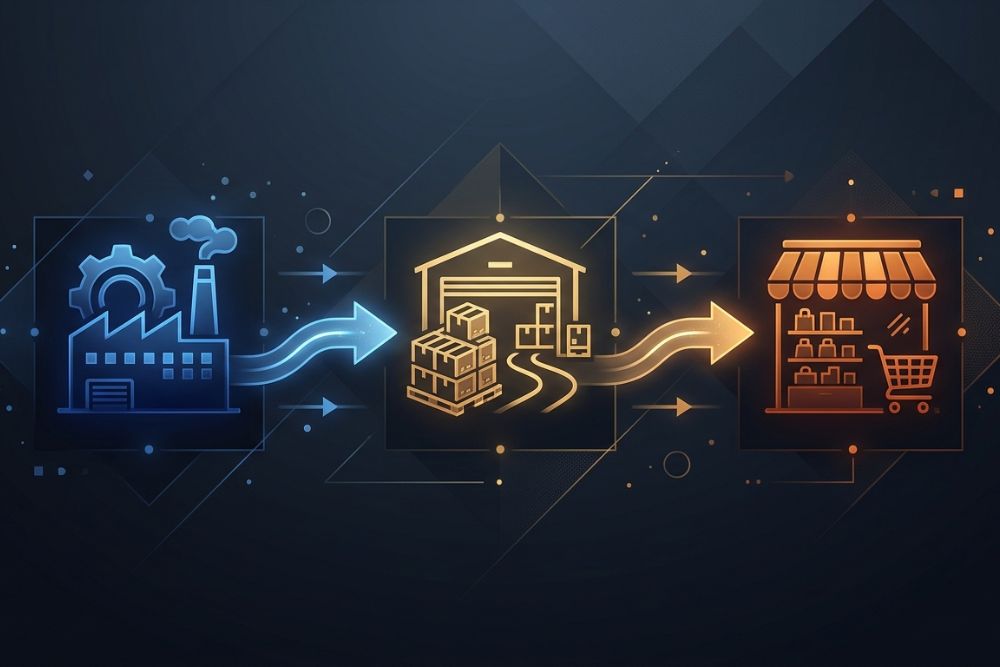
Primary sales is the first movement of goods, from the manufacturer to the first tier of the distribution network. That first tier is typically a Carrying and Forwarding Agent (CFA), a super-stockist, or a regional primary distributor. The moment your factory dispatches goods against a purchase order and raises an invoice, you have a primary sale on the books.
▸ How It Works in Practice
- The company dispatches stock to the distributor against a raised purchase order
- Revenue gets recognised in the company’s books at this point
- Freight, credit terms, and scheme obligations are all settled at this level
- Most field sales incentives and area manager targets are tied to primary offtake volumes
The Trap to Watch:
Primary sales is the easiest number to inflate. When a sales team is under pressure to hit month-end targets, the simplest lever is to push excess stock into the distributor network regardless of whether actual retail demand exists. This is called channel stuffing, and it is far more widespread than most organisations care to admit.
When your field force is measured entirely on what they “sell into” the channel rather than what the market absorbs, primary sales quietly become a vanity metric. It tells you how much stock is left in the warehouse. It tells you nothing about where it ended up.
What Is Secondary Sales? The Distributor-to-Retailer Movement
Secondary sales is the movement of goods from the distributor’s godown to the retail trade, kirana stores, general trade shops, modern trade outlets, pharmacies, or any other retail format that sells directly to the end consumer. Ask any seasoned FMCG professional which metric they would keep if they could only track one, and a large majority will say secondary sales.
▸ How It Works in Practice
- The distributor’s salesforce follows a beat plan, visiting retail outlets on set routes
- Orders are taken, invoiced from the distributor’s system, and stock is delivered to retailers
- The distributor earns a margin on each sale at this stage
- This data reflects real trade demand, not just a stock transfer between warehouses
This is where the practical distinction between primary sales vs secondary sales becomes genuinely actionable for any brand. Primary tells you what was shipped. Secondary tells you what the market actually absorbed. A steady and growing gap between those two numbers is almost always an early warning sign: distributor overstock building up, SKUs losing traction, or territory-level inefficiencies that nobody is yet addressing.
▸ The Distributor Black Box Problem
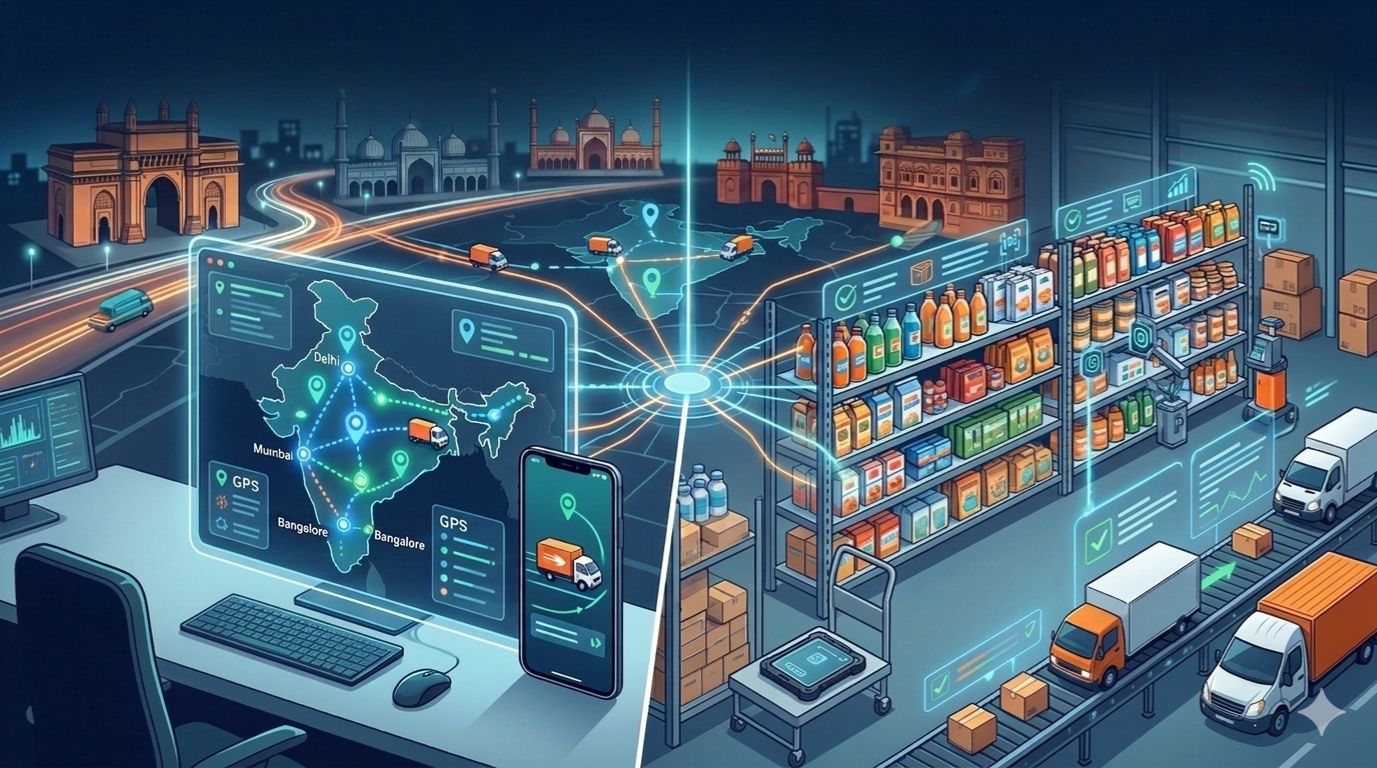
Secondary sales data has historically been the hardest to capture reliably. Distributors run their own billing systems, and unless a brand has enforced a Distributor Management System across its network, this information either arrives late, gets manually consolidated in a spreadsheet, or simply does not arrive at all. That opacity is one of the costliest blind spots in FMCG distribution, and it is entirely solvable with the right systems in place.
Why Secondary Sales Matter Most:
It is the most honest proxy for market demand at the trade level. Every downstream decision, scheme design, beat productivity reviews, route-to-market restructuring, and SKU rationalisation should be anchored in secondary offtake data, not primary dispatch volumes.
What Is Tertiary Sales? The Retailer-to-Consumer Pull
Tertiary sales is the final step, the transaction between a retailer and the end consumer. When a shopper picks a packet off a shelf, scans it at a modern trade checkout, or places an order through a quick commerce app, that is a tertiary sale. This is the only level where actual consumption happens. Everything upstream is just inventory movement.
▸ How It Works in Practice
- A consumer purchases the product at a retail outlet, either in-store or online
- The retailer’s inventory depletes, eventually triggering a reorder from the distributor
- In modern trade and e-commerce, this data is increasingly available through POS systems and loyalty programmes
- In traditional general trade, this data is almost entirely invisible to the brand
Tertiary sales is the only genuinely reliable demand signal in the entire chain. In theory, everything upstream, how much stock the distributor holds, how much the brand dispatches, how schemes are designed, should be calibrated to real consumer offtake. The supply chain should be pulled by tertiary demand, not pushed by factory output targets.
▸ Why Brands Often Fly Blind at This Level
In India’s general trade ecosystem, which still accounts for more than 80% of FMCG volumes, tertiary data is genuinely difficult to capture at scale. The millions of kirana stores across the country do not generate digital POS data. Brands piece together consumer demand from indirect signals like secondary offtake velocity, field team feedback, and market research panels. It is imperfect, but brands that make the effort to model it consistently are in a far better position than those who ignore it entirely.
80%+
FMCG volume in India still moves through general trade
3 to 4x
More expensive to fix distribution gaps reactively than proactively
<30%
FMCG brands with reliable secondary sales visibility across all distributors
Primary Sales · Secondary Sales · Tertiary Sales – Side by Side
| Parameter |
Primary Sales |
Secondary Sales |
Tertiary Sales |
| Transaction Between |
Company to Distributor or CFA |
Distributor to Retailer |
Retailer to Consumer |
| Revenue Recognition |
Yes, in company books |
No, in distributor’s books |
No, in retailer’s books |
| Demand Signal Reliability |
Low – can be manufactured |
High – shows real market absorption |
Highest – actual consumer pull |
| Data Availability |
Always available |
Partial – depends on DMS adoption |
Mostly unavailable in general trade |
| Risk of Manipulation |
High, especially near quarter-end |
Low to moderate |
Very low |
| Key Metrics Derived |
Dispatch volumes, billing targets |
Beat efficiency, outlet coverage, ROI |
Shelf velocity, brand offtake rate |
| Planning Use |
Production planning, credit management |
Route planning, scheme design |
Consumer marketing, activation ROI |
When the Gap Between Three Levels Becomes a Warning Sign
In a healthy distribution system, all three levels move roughly in alignment. When they start diverging from each other, something is wrong, and the longer it goes unaddressed, the worse the fallout tends to be.
▸ Channel Stuffing: The Short-Term Trap
When a sales team is racing to close the month, the path of least resistance is to push stock deeper into the distributor network. Primary numbers look great. Secondary offtake stays flat. Distributors quietly absorb more inventory than they can move, credit lines tighten, and the following month’s primary orders drop sharply as everyone waits to clear the overhang. What you end up with is an artificial revenue cycle, a spike, then a trough, that distorts both your P&L and your production planning.
▸ Distributor Overstock and Returns
When secondary sales consistently fall short of primary dispatches, stock accumulates at the distributor level. Add near-expiry products, slow-moving SKUs, or schemes that never redeemed properly, and you have a returns crisis in the making. The financial hit is real, but the relationship damage is often worse. Distributors under working capital pressure start quietly delisting SKUs, cutting down on beat coverage, or directing their salesforce toward faster-moving brands.
▸ Demand Forecasting That Misses the Mark
If your supply chain team is building production plans, procurement schedules, and logistics budgets purely off primary sales data, they are working from a distorted picture. Primary data that does not reflect real consumption leads to miscalibrated production runs, either stockouts at the retail end when actual demand spikes, or expensive warehousing costs when it does not. The working capital impact compounds quickly, and often by the time it surfaces, the root cause is three-quarters in the past.
A Metric Worth Tracking:
The spread between primary and secondary sales, often called the pipeline gap, is one of the best leading indicators of channel health. If that gap is growing month over month, it deserves urgent attention before it becomes a structural problem.
How Serious FMCG Brands Actually Bridge the Gap
The brands that consistently outperform on distribution do not just track these three levels in a dashboard. They have restructured how they measure performance, incentivise their teams, and act on data across the entire chain. Here is how they do it.
1. Make Secondary Sales Reporting Non-Negotiable
The most impactful step any brand can take is deploying a Distributor Management System at every distributor point and mandating its use. When secondary billing flows in real time, outlet-wise, beat-wise, SKU-wise, the brand’s sales hierarchy finally has a clear picture of what is actually moving in the market. Brands that have made this shift report pipeline gap reductions of 30 to 40 percent within the first year. The data was always there; it just needed a system to capture it.
2. Rethink How You Incentivise the Field Force
This is a cultural shift as much as a structural one. When a significant portion of field sales incentives moves away from primary offtake targets and toward secondary offtake and outlet productivity metrics, field behaviour changes noticeably. Area Sales Managers stop chasing distributor dispatches and start focusing on productive retailer calls, on-shelf availability, and territory-level offtake improvement. That is the kind of market-building activity that compounds over time.
3. Build Indirect Models for Tertiary Demand
Direct tertiary data may be out of reach in general trade, but that does not mean brands have to guess. The foundation is strong secondary data. When you have clean, consistent secondary offtake flowing in from across your distributor network, you can start reading patterns: which SKUs are accelerating by region, which territories are absorbing stock faster than forecast, and where promotions are actually driving sellthrough. Layered with seasonality calendars and field team market feedback, this creates a working picture of consumer demand that is far more reliable than primary dispatch data alone, even without a POS feed from every kirana in the country.
4. Track Outlet Availability as a Proxy for Tertiary Health
A product that is not on the shelf cannot sell. Brands that systematically track numeric distribution, weighted distribution, and outlet-level fill rates are monitoring the structural conditions for tertiary performance, even when transaction data itself is unavailable. If availability is high and secondary offtake is strong, consumer demand is almost certainly following. If availability slips, you will see it in tertiary performance before you see it in primary numbers.
5. Close the Loop Between Field Intelligence and Data
No system works in isolation. The brands that bridge the gap most effectively are the ones where field teams are not just executing beat plans but actively feeding insights back into the picture, flagging outlets with availability gaps, reporting competitor activity, and verifying that what the system shows matches what is actually on the shelf. When that ground-level intelligence is captured consistently alongside secondary billing data, brands get something genuinely valuable: a single, connected view of distributor health, beat productivity, and outlet performance that is both data-backed and field-validated.
The Core Lesson:
Bridging the three-level gap takes the right tools, the right incentive structure, and a genuine cultural commitment to sell-out accountability at every level of the sales organisation. When secondary data is clean, field activity is tracked, and distributor health is visible in real time, the gap stops being a blind spot and starts being a competitive advantage.
The Bottom Line: Real Growth Lives in Sell-Out, Not Sell-In
The FMCG industry ran on a sell-in mindset for decades. Get it to the distributor, book the revenue, move on. That logic worked when competition was limited, distribution was simpler, and consumers had fewer choices. Today, none of those conditions holds. Hundreds of brands are competing for the same shelf space. Retail margins are under pressure everywhere. Consumer attention is measured in seconds.
In that environment, the only growth that is truly sustainable is growth that starts at the consumer end and pulls through the entire chain.
Brands that track all three levels – primary, secondary, and tertiary- do not just measure their business more accurately. They build it more intelligently. They catch underperforming territories weeks earlier. They respond to demand shifts before stockouts happen. And they build distributor and retailer partnerships based on shared, transparent data rather than opaque volume targets that no one truly believes in.
The three-tier framework is not a definitional exercise for a training module. It is the diagnostic lens through which every serious FMCG brand should be evaluating its distribution health, spotting its blind spots, and designing the next phase of growth. The brands that understand all three and act on all three are the ones that keep winning markets that others cannot figure out how to crack.
Stop Guessing with Primary Data. Start Scaling with Real-Time Visibility.
Relying only on primary numbers leaves your secondary sales in a black box. Close the visibility gap today with real-time offtake tracking and actionable distributor insights.
Get a Custom Demo
The unified platform for FMCG leaders to master secondary sales and distributor health.

 Beauty Advisor Application/Promoters App