Can AI Truly Predict Retailer Sentiment?
By Harshit Rajput
/ April 20, 2026
The legendary Peter Drucker once said, 'The most important thing in communication is hearing what isn't said.' In the world...
Read More

OUTLINE STRUCTURE I. Introduction Hook: The gap between field sales reps and back-office systems Problem statement: Manual orders create data silos in omnichannel distribution What this blog covers II. What...
In the high-speed world of FMCG, ‘An order taken is not an order sold.’ Despite the digital revolution, many brands still rely on a ‘manual relay race’: a rep jots an order on a notepad, pings it over a messaging app, and waits for back-office manual entry. By the time the warehouse sees it, two days have passed, stock has dipped, and the retailer has already turned to a competitor.
According to industry benchmarks, manual data silos can lead to a 10–15% leakage in secondary sales due to stock-outs and credit blocks. This ‘analog lag’ is the silent killer of omnichannel growth. You can’t claim to be omnichannel if your field execution is still stuck in a silo.
In this blog, we break down what truly unified distribution looks like, why connecting manual field orders to your central platform is the only way to stop the leak, and the technology needed to make it happen.
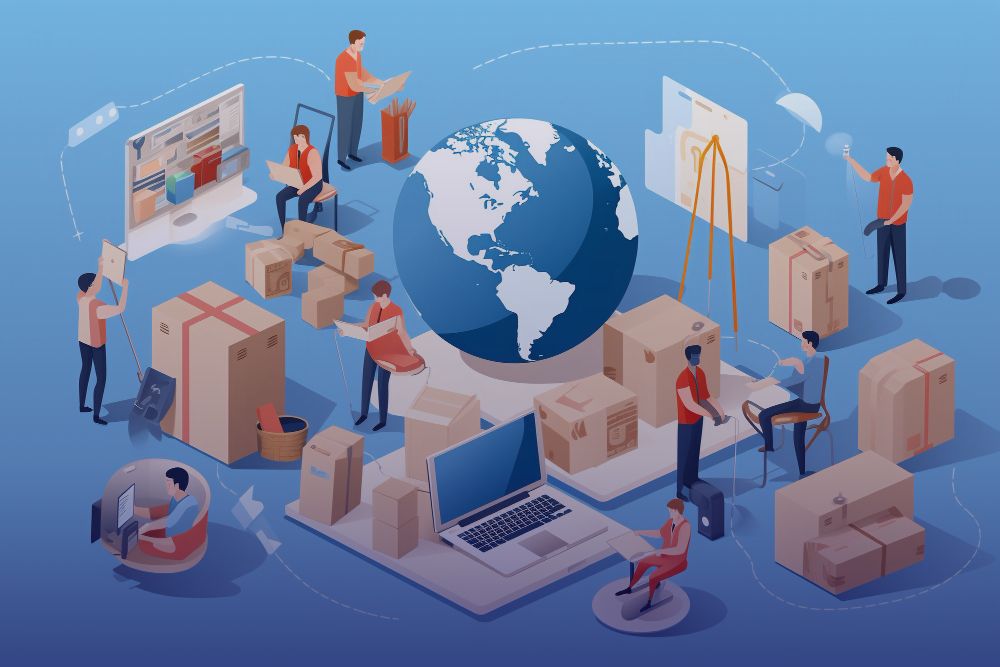
Omnichannel distribution is a fulfillment and sales strategy that enables a business to receive, process, and fulfill orders from multiple channels, including direct sales, e-commerce, field representatives, dealer networks, and modern trade, through a single, synchronized operational backbone.
The term is often misread as synonymous with multichannel retail. It is not. Multichannel means being present on many channels. Omnichannel means those channels share real-time data, inventory visibility, and a unified customer view.
In a distribution context, omnichannel means:
The challenge? Most distribution businesses have modernized their digital channels but left their field sales process as a manual island. That island is expensive.
Despite massive investment in CRM tools, ERP systems, and e-commerce platforms, field order capture in many distribution organizations still relies on:
Each of these touchpoints creates a data gap. Here is what that gap actually costs:
When an order is placed manually and entered into the system hours or even days later, inventory allocation is unreliable. Products get double-allocated or oversold. The reconciliation work alone consumes significant back-office time every week.
Your demand forecasting is only as good as your data. If field orders are arriving in batches rather than in real time, your forecasting models are working on stale inputs. This leads to stockouts at high-demand outlets and overstocking in distribution centers.
Manual order flows are difficult to audit. If a dispute arises over an order quantity, a delivery discrepancy, or a pricing error, there is rarely a clean digital trail. This creates friction in customer relationships and internal confusion about who authorized what.
The solution is not to eliminate field sales. Field reps remain one of the most effective sales channels in many industries, particularly in FMCG, pharma, and consumer durables distribution. The solution is to connect their activity to the central nervous system of your DMS in real time.
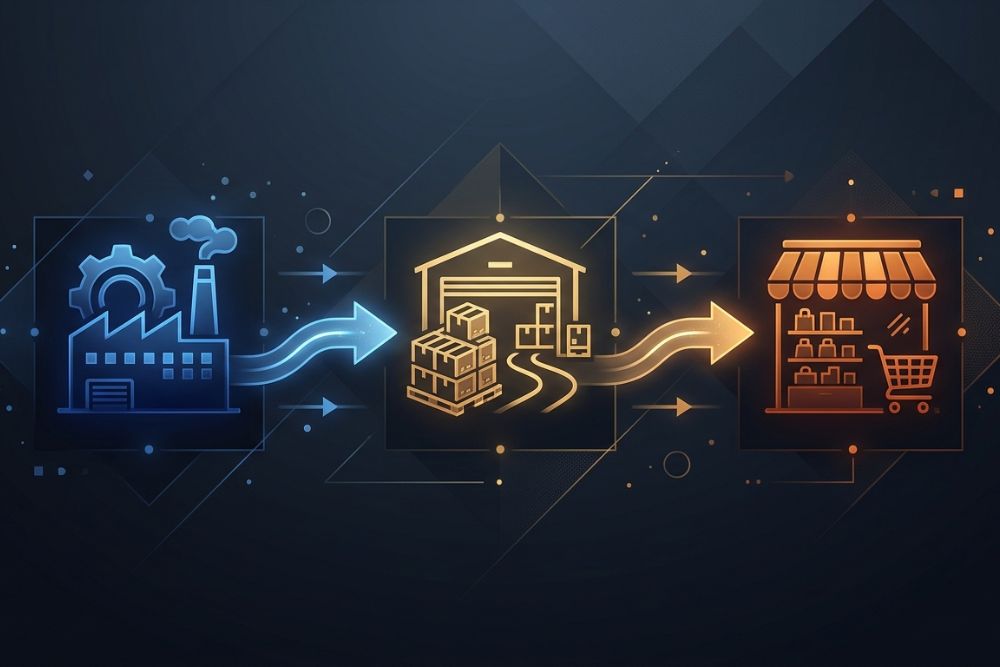
A distribution management system is the operational core of a distribution business – handling the flow of goods from manufacturer or warehouse to the end retailer or consumer through the distributor network. If you want a full breakdown of how these platforms work, our dedicated page on Distribution Management Systems covers it in detail. For this blog, the key point is what “unified” actually means in practice.
A modern distribution platform spans inventory management, order processing, route planning, secondary sales tracking, and distributor incentive management. But the word “unified” is what separates a true omnichannel operation from a patchwork of disconnected tools.
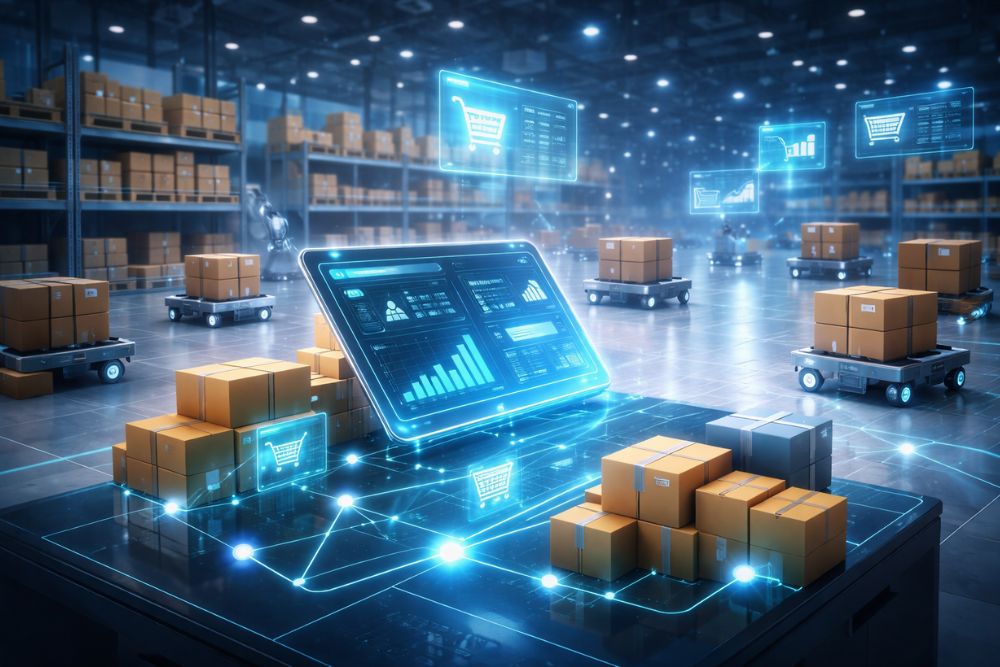
For this strategy to succeed, every order – regardless of the channel – must flow through the same central system. The moment parallel order streams run in isolation, the operation becomes fragmented. To achieve total visibility, the platform must capture all data points: digital storefronts, dealer portals, and manual field orders captured on the ground. For a deeper look at the architecture behind these systems, see our comprehensive guide on Distribution Management Systems.
Integrating field order capture into your central distribution platform requires both a technology layer and a process change. Here is how best-in-class distribution teams are doing it:
The foundation of field integration is giving sales reps a mobile application that connects directly to the distribution platform. Instead of writing orders on paper, the rep opens the app, selects the retailer from a geotagged account list, chooses SKUs from a live catalog with real-time stock availability, and submits the order. The order is in the system the moment the rep taps confirm.
This eliminates the transcription step and ensures that the order data is clean, standardized, and linked to the correct account from the start.
Once an order is submitted from the field, it should trigger an immediate inventory reservation in the warehouse management layer of the platform. The rep can see whether the order will be fully fulfilled or partially fulfilled before leaving the outlet. This sets accurate delivery expectations and reduces customer complaints.
Not every field order should go straight to warehouse picking. For large orders, special pricing requests, or new credit accounts, a configurable approval workflow ensures the right manager reviews and authorizes before processing begins. This maintains control without slowing down the overall cycle.
A major concern in field distribution, especially in rural or semi-urban markets, is network reliability. Any field integration solution must work offline, storing orders locally on the device and syncing automatically when connectivity is restored. Without this, adoption by field teams in low-connectivity territories will remain low.
When field order capture is fully connected to your unified DMS, the operational and commercial benefits compound quickly.
Not every distribution platform on the market is built for true omnichannel field integration. When evaluating platforms, look for these capabilities:
Solutions like MAssistcrm.com are built specifically for the distribution and field sales context, offering a connected platform where CRM activity and on-ground order capture operate within the same environment – rather than requiring complex third-party integrations to link up separate tools.
Omnichannel distribution is not a front-end design exercise. It is an operational commitment to ensuring that every channel, including your field sales team on the ground, is connected to the same data backbone that powers your warehousing, planning, and customer management functions.
Manual field order processes are the most common gap in otherwise sophisticated distribution setups. They create data silos, slow down fulfillment, and make accurate forecasting nearly impossible.
The good news is that closing this gap is increasingly accessible. Distribution platforms with built-in field order connectivity are purpose-built for teams like yours. The question is not whether to make the shift, but how quickly you can do it before your competitors do.
If you are evaluating your current distribution technology stack, start by asking one question: Can a field rep in your network place an order right now and have it visible in your warehouse system in under five minutes? If the answer is no, you have a gap worth closing.
Bridge the gap between field sales and your back office with a single source of truth.
 Channel Management
Distributor Management System
Field Force Management
Growth Strategies
Industry Insights
Inventory & Visibility
Market Intelligence (RTM Strategy)
Performance Analytics
Predictive Analytics
Retail Execution
Sales Force Automation
Secondary Sales & Order Booking
Specialized Sales Roles
Tech & AI
Channel Management
Distributor Management System
Field Force Management
Growth Strategies
Industry Insights
Inventory & Visibility
Market Intelligence (RTM Strategy)
Performance Analytics
Predictive Analytics
Retail Execution
Sales Force Automation
Secondary Sales & Order Booking
Specialized Sales Roles
Tech & AI
Get notified about the next update