Can AI Truly Predict Retailer Sentiment?
By Harshit Rajput
/ April 20, 2026
The legendary Peter Drucker once said, 'The most important thing in communication is hearing what isn't said.' In the world...
Read More

Why Artificial Intelligence in FMCG Is Now a Baseline Expectation The FMCG industry runs on speed, scale, and precision. Thousands of SKUs, millions of retail touchpoints, rapidly shifting consumer preferences,...
The FMCG industry runs on speed, scale, and precision. Thousands of SKUs, millions of retail touchpoints, rapidly shifting consumer preferences, and razor-thin margins – these are the everyday operating conditions for consumer goods brands. And this is exactly why artificial intelligence in the FMCG industry has moved from being a pilot experiment to a core business capability.
AI in FMCG is being used to forecast demand, automate field force workflows, optimize trade promotions, improve retail execution, and support smarter distribution decisions. The global AI in FMCG market is expected to reach USD 57.7 billion by 2033, growing at a 22% CAGR from 2023. That number reflects a fundamental shift in how consumer goods companies operate – not just technologically, but strategically.
This guide covers the most important AI use cases in FMCG, how machine learning is changing field operations and distribution, and what FMCG leaders should prioritize in 2026.
Before getting into use cases, it is worth being specific about what AI for FMCG actually means in practice.
AI in the FMCG sector refers to the deployment of machine learning (ML), computer vision, natural language processing (NLP), predictive analytics, and agentic AI across core business functions – field sales, distribution, retail execution, marketing, and supply chain.
FMCG machine learning models learn from historical sales patterns to improve inventory and ordering decisions. Computer vision tools assess shelf compliance from photos taken by field reps. NLP systems process product reviews and social signals to surface emerging consumer trends. Agentic AI goes further still – taking autonomous action based on defined business rules without waiting for human prompts.
Together, these applications of AI in FMCG help brands shift from a reactive, manual operating model to a dynamic, data-powered one.
To understand why AI adoption is accelerating, it helps to look at the specific pain points it addresses.
AI in the FMCG sector addresses all of these directly.
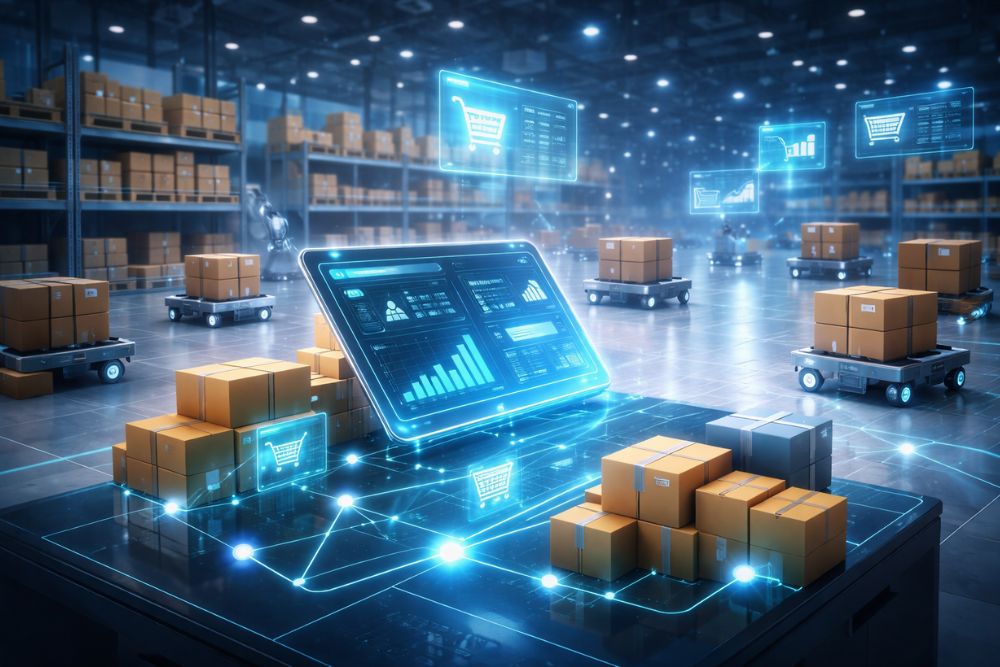
Demand forecasting is one of the most mature and high-impact AI use cases in FMCG. Traditional forecasting methods rely on historical averages and spreadsheet models. AI-powered demand sensing pulls in a far richer set of signals: historical sales data, real-time market activity, seasonal patterns, promotional calendars, weather, regional events, and social media trends.
The result is meaningfully more accurate demand predictions at a granular level – by SKU, by outlet, by region – enabling smarter replenishment decisions across the supply chain.
The key capability behind this is real-time secondary and tertiary sales visibility. When platforms track what is actually selling through at each level of the distribution chain, AI models have far more reliable data to work with. Inventory becomes dynamic rather than static, and decisions get made on facts rather than assumptions.
Business impact: Fewer stockouts, leaner warehouses, less expired or near-expiry stock, and stronger fill rates. McKinsey research has found that AI-enabled supply chains can reduce demand forecasting errors by up to 50% in some consumer categories.
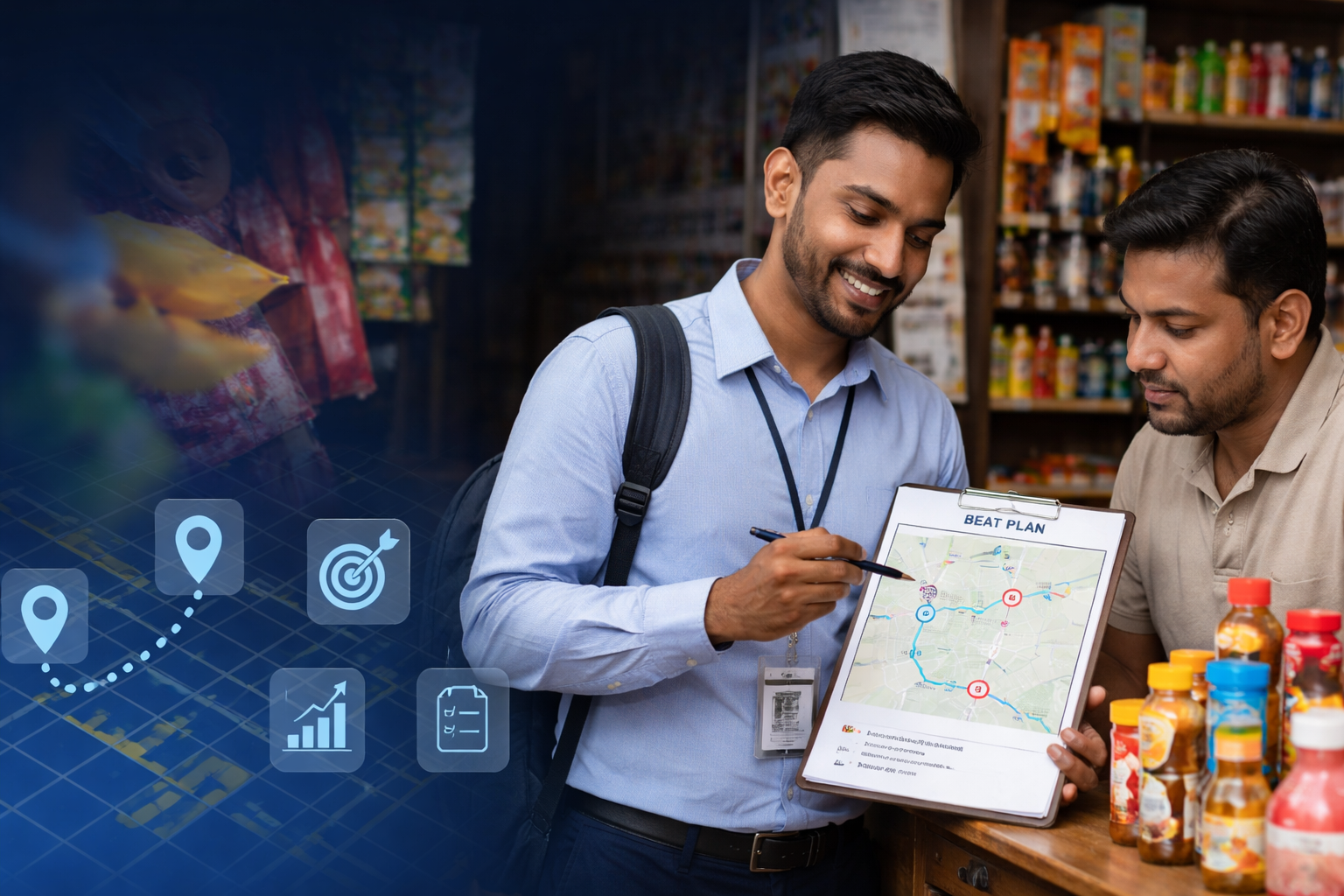
Traditional route planning for field sales was largely fixed. Reps followed set beat plans regardless of outlet potential, visit history, or real-time stock conditions. The result was often high visit volumes but low visit quality – lots of calls, not enough conversion.
AI-driven beat and journey planning changes this by scoring outlets dynamically based on purchase history, sales potential, visit frequency, and geographic clustering. The system recommends which outlets to prioritize on any given day, so reps spend their time where it actually matters.
This capability also integrates with target tracking. Daily and weekly goal settings, primary and secondary target breakdowns, and real-time deviations from beat plans can all be monitored automatically – without managers having to chase reports.
What changes on the ground: Field reps receive guided routes with animated navigation. Managers get deviation reports showing where actual visits differed from planned beats. Attendance is geo-fenced to verified locations, eliminating fraudulent check-ins. The administrative burden of planning and reporting falls significantly.
One of the most practically valuable applications of AI for FMCG field teams is the automation of reporting. Instead of reps filling in forms and managers compiling spreadsheets, AI-driven platforms analyze field activity data and automatically generate reports – in real time, without manual intervention.
This changes the nature of sales management entirely. Managers move from spending time collecting information to spending time acting on it. Real-time dashboards surface:
The shift from lagging reports to live intelligence is one of the areas where FMCG machine learning delivers the most immediate and visible return.
AI in FMCG field operations is not just about analysis – it also changes how orders are actually placed and what gets ordered.
AI-based party-wise product selection means the platform learns each retailer’s buying behavior and surfaces the right SKUs at the right time during an order booking interaction. Instead of a rep scrolling through thousands of products, the system shows what that specific outlet is most likely to buy based on purchase history, seasonal trends, focus products, and current schemes.
This drives basket size up, reduces missed upsell opportunities, and ensures new product launches get visibility at relevant outlets rather than being forgotten in the catalogue.
Combined with real-time distributor inventory visibility during order booking, reps can confirm availability instantly and avoid order rejections downstream.
Out-of-stocks cost FMCG brands an estimated 4 to 8 percent of sales. Planogram non-compliance compounds this by reducing the visibility advantage of shelf positioning. Manual shelf audits are too slow, too inconsistent, and too expensive to run at scale.
Computer vision AI addresses this directly. Field reps photograph shelves during visits. AI algorithms analyze those images automatically, identifying stockouts, incorrect SKU placement, missing facings, and compliance gaps – without any manual assessment.
The output is immediate corrective guidance rather than a delayed audit report. Managers can see shelf compliance status across their entire territory in real time, not at the end of the week.
This application of AI in FMCG retail execution has a direct and measurable impact on shelf share, and by extension, on conversion and revenue.
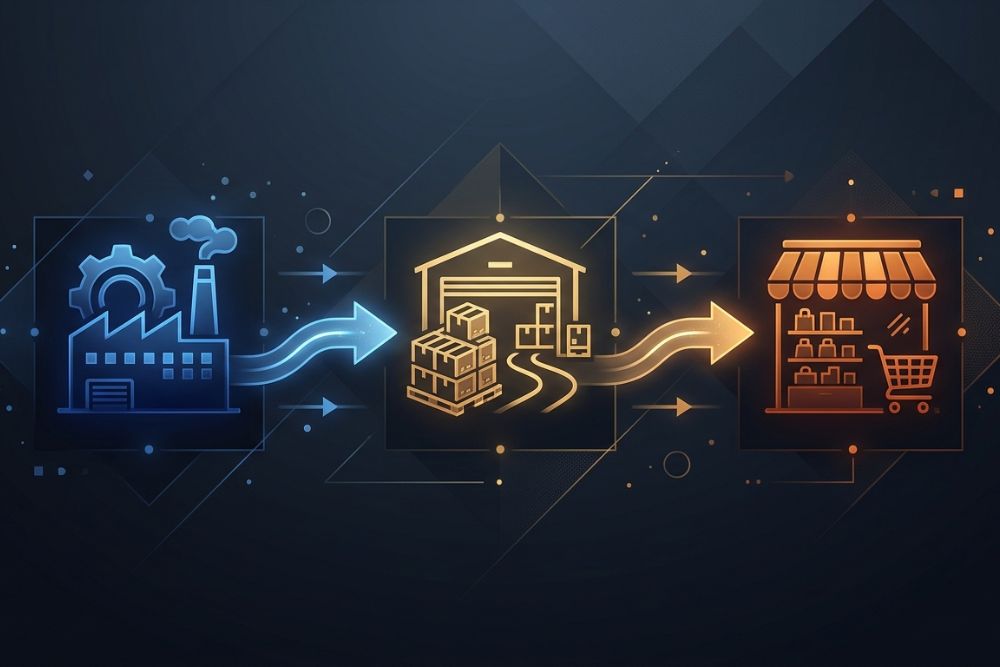
The relationship between FMCG brands and their distributors has historically been opaque. Brands could see primary sales – what left the warehouse – but had limited visibility into what was actually happening downstream. Secondary sales tracking, scheme compliance, claims management, and distributor stock levels were all manual, delayed, and error-prone.
Distribution Management Systems change this by providing real-time, end-to-end visibility across the distribution chain. Live inventory updates, automated order processing, dynamic stock buckets for saleable and non-saleable goods, one-click billing, and automated claims reconciliation all become part of a single connected workflow.
For FMCG leaders, this means the first time they have a genuinely reliable picture of secondary and tertiary sales – which is the foundation for intelligent demand planning, promotion evaluation, and distributor performance management.
For FMCG brands with in-store promoters and beauty advisors, AI extends field force intelligence beyond the traditional sales rep. Promoter apps with AI-driven analytics capture attendance, outlet visits, sales transactions, and sampling records in real time.
Managers can track promoter KPIs, identify execution gaps, and take corrective action without waiting for end-of-day reports. In-app learning modules help promoters stay current on new product information, compliance requirements, and competitive positioning – delivered directly to their mobile devices.
This closes one of the most common blind spots in FMCG retail execution: the gap between what brands intend to happen in-store and what actually happens.
Motivating large, geographically dispersed field teams is a persistent challenge for FMCG companies. Traditional incentive structures are often delayed, opaque, and disconnected from daily behavior.
AI-powered platforms enable real-time performance tracking that feeds directly into recognition and incentive mechanisms. Top performers are highlighted across the organization. Daily goal progress is visible to each rep. Target attainment, productive call ratios, and secondary sales contributions can all feed into data-driven incentive frameworks.
This kind of transparent, performance-based system drives engagement at the field level in a way that manual tracking simply cannot replicate.
It is worth being concrete about what AI in FMCG field operations actually looks like day to day – both for the rep on the ground and the manager overseeing a territory.
The cumulative effect is significant. Administrative time drops, visit quality goes up, data accuracy improves, and teams spend their time on what actually drives revenue.
Not every AI initiative delivers results immediately, and the companies that get the most from AI in the FMCG sector tend to follow a disciplined approach.
The next generation of AI in FMCG goes beyond augmenting human decisions to enabling autonomous action. Some of the directions already taking shape:
| AI Application | Core FMCG Use Case | Business Impact |
|---|---|---|
| Demand Sensing & Forecasting | SKU and outlet-level inventory planning | Reduces stockouts and overstock |
| AI-Driven Beat Planning | Dynamic route and visit prioritization | Higher visit quality, better outlet coverage |
| Automated Report Generation | Real-time field and sales analytics | Faster decisions, no manual report lag |
| Party-Wise Order Recommendations | AI-assisted order booking at outlet | Larger basket size, better new launch visibility |
| Computer Vision (Shelf Audit) | Planogram compliance and OOS detection | Increased shelf share, faster corrective action |
| Secondary Sales Tracking | DMS-powered distribution visibility | Reliable sell-through data across chain levels |
| Distributor Intelligence | Claims, stock, and performance monitoring | Healthier distributor relationships, fewer disputes |
| Promoter Analytics | In-store execution and attendance tracking | Closed execution gap between brand intent and reality |
| Gamification and Incentives | Real-time performance scoring | Higher field team engagement and productivity |
Artificial intelligence in the FMCG industry is no longer an innovation project. It is an operational baseline. The use cases are proven, the tools exist, and the ROI is measurable across field force automation, demand planning, retail execution, and distribution management.
The brands gaining ground right now are the ones that have moved past experimenting with AI and are building it into the way their field teams, distributors, and managers work every day. Not as a layer of technology on top of existing processes – but as the intelligence layer embedded inside those processes.
The gap between FMCG companies that have made this shift and those that have not is widening. The time to close it is now.
Join the FMCG brands using integrated SFA + DMS to win in Tier-2 and Tier-3 markets. No more data silos—just real-time execution.
Book Your Demo Channel Management
Distributor Management System
Field Force Management
Growth Strategies
Industry Insights
Inventory & Visibility
Market Intelligence (RTM Strategy)
Performance Analytics
Predictive Analytics
Retail Execution
Sales Force Automation
Secondary Sales & Order Booking
Specialized Sales Roles
Tech & AI
Channel Management
Distributor Management System
Field Force Management
Growth Strategies
Industry Insights
Inventory & Visibility
Market Intelligence (RTM Strategy)
Performance Analytics
Predictive Analytics
Retail Execution
Sales Force Automation
Secondary Sales & Order Booking
Specialized Sales Roles
Tech & AI
Get notified about the next update