Can AI Truly Predict Retailer Sentiment?
By Harshit Rajput
/ April 20, 2026
The legendary Peter Drucker once said, 'The most important thing in communication is hearing what isn't said.' In the world...
Read More

Stockouts and overstock are not warehouse problems. They are business problems. Here is how CPG and FMCG brands build smarter inventory systems that protect margins and keep shelves filled. What...
1. Why CPG Inventory Is Uniquely Difficult
3. What Good Inventory Management Looks Like
5. Common Challenges and How to Solve Them
7. Key Metrics to Track
2. The Real Cost of Poor Inventory Management
4. Core Features Your System Should Have
6. A Practical Rollout Approach
8. Frequently Asked Questions
Out-of-stocks cost retailers nearly $1 trillion globally every year.” That’s not just a supply chain issue, it’s a direct hit to revenue, market share, and customer trust.
Picture a mid-sized beverage brand watching two million dollars disappear in a single quarter. Not because of a poor campaign or a bad product launch. Simply because their warehouses were choking on slow-moving stock while their top-selling SKUs had run completely dry.
This is not a freak story. It is the daily reality for a large share of FMCG and CPG businesses that have not yet modernized how they manage stock.
For sales managers and business owners in CPG, the numbers are hard to ignore. While you are chasing a 5% growth target, stockouts are quietly eating 15 to 20% of your potential revenue, and excess inventory is locking up nearly 30% of your working capital. Getting inventory management in CPG right is not a back-office concern. It is a frontline business decision.
of potential revenue lost to stockouts annually
of working capital tied up in excess inventory
lower supply chain costs with advanced inventory capabilities
CPG businesses face a specific set of pressures that make stock management far more complex than a simple count of what sits in a warehouse. You are balancing product availability against cost-cutting pressure, while navigating demand fluctuations, spoilage concerns, supply chain complexity, and channel fragmentation simultaneously.
Add to that the rise of quick commerce and ultra-fast delivery expectations, and the margin for error shrinks considerably. Around 70% of global consumers are open to switching brands over price, experience, or convenience. That means CPG brand loyalty is more fragile than it appears.
When a customer finds an empty shelf, they do not wait. They switch. Research shows that two-thirds of consumers will leave a store or an e-commerce site and shop from a competitor when an item they want is out of stock.
Meanwhile, manual stock counts, spreadsheets, and rigid ERP systems slow down decision-making, introduce costly errors, and fail to keep up with the speed of modern wholesale distribution. The result is a persistent gap between what the data shows and what is actually happening at the shelf, in the van, or at the distributor level.
The gap between what your data says and what is actually on the shelf is where your revenue disappears.
Poor stock practices are not just inefficiencies. They are silent revenue killers that compound quietly over time.
Excess inventory feels like a safety net. In practice, it drains cash and creates operational drag. Overstocking ties up capital you could invest in marketing, new products, or expansion. Inventory carrying costs climb, and products risk expiring before they ever reach customers.
CPG companies that rely on manual processes and spreadsheets often introduce errors that build quietly, and by the time overstock shows up in reports, the damage is already done.
Stockouts create an immediate sales loss and a longer-term loyalty problem. Retailers notice too. If you cannot reliably keep items in stock, they reduce your shelf space or drop your brand from their range entirely.
Estimated revenue missed by CPG companies globally due to supply chain disruptions and poor inventory visibility, according to industry analysis.
Both overstocking and stockouts represent some of the biggest sources of lost revenue for CPG brands. What makes it frustrating is that both problems are largely preventable with the right visibility and systems in place.
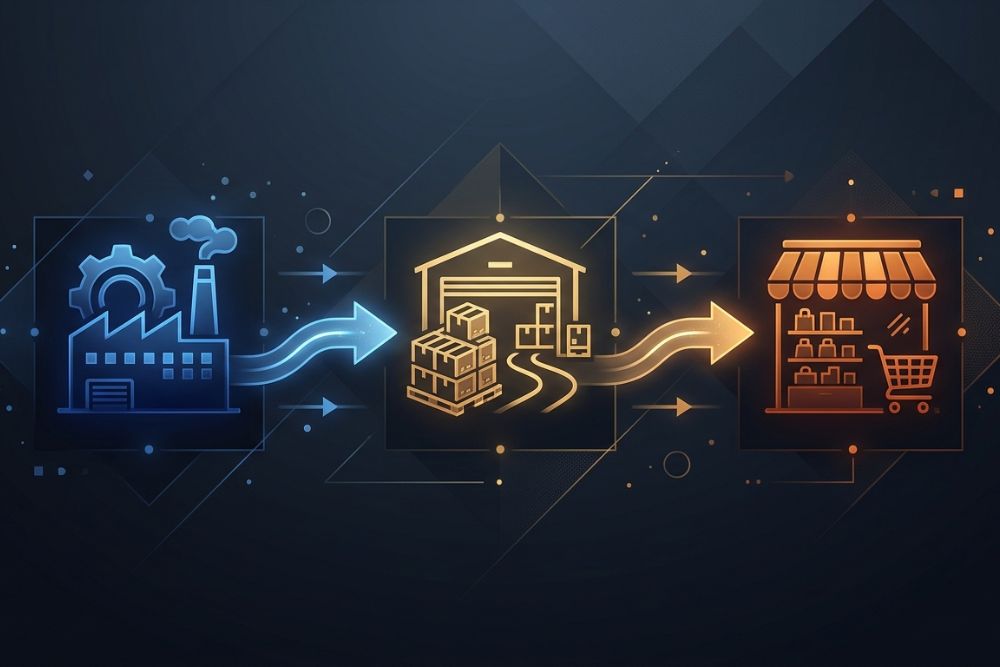
Effective CPG inventory management is not just about tracking what sits in a warehouse. Brands need to take a proactive approach to managing inventory across production, warehousing, distribution, and retail. Done well, it enables companies to maintain sufficient stock to meet consumer demand while minimizing cost and waste.
Here is what separates companies that get it right from those still reacting to problems after they happen.
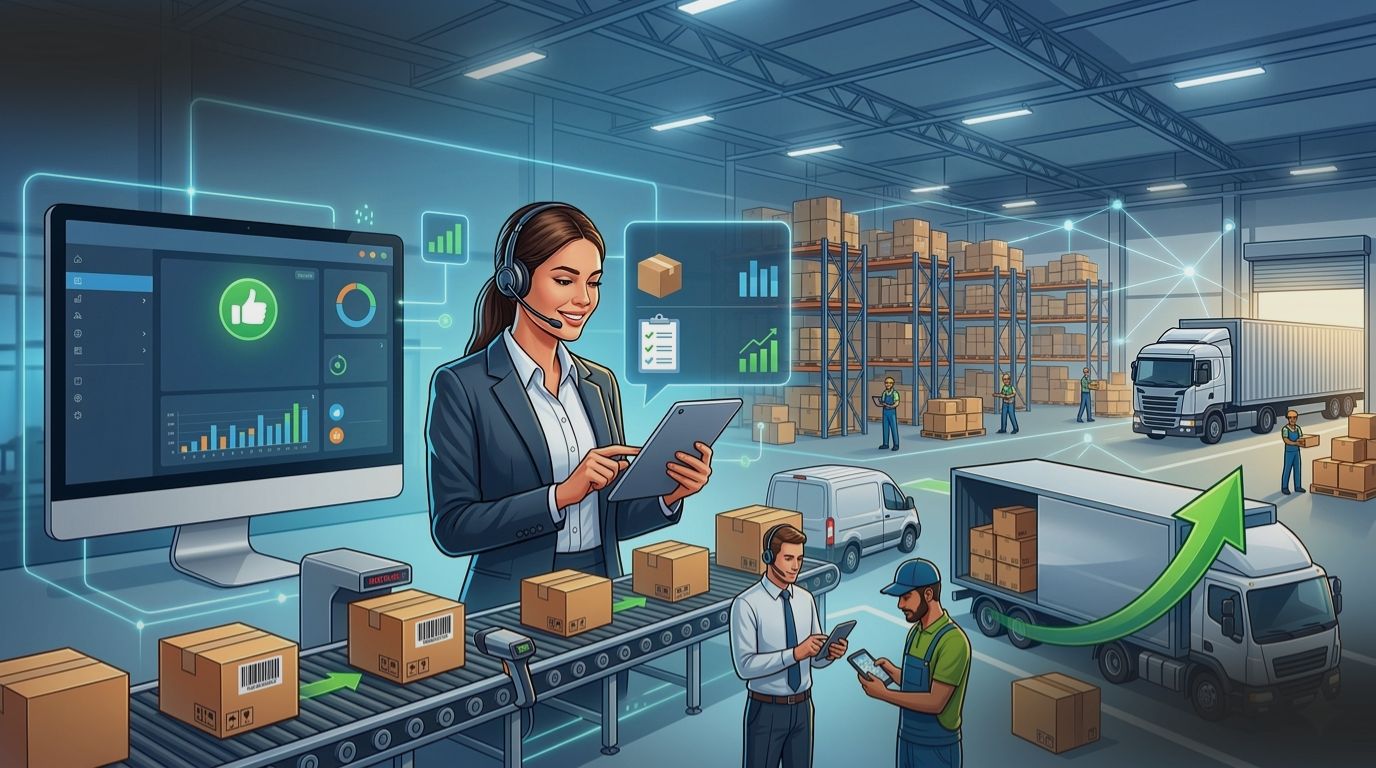
Whether a sales rep is placing an order in the field or a warehouse manager is preparing a shipment, every team member needs access to the same live data. Without this, decisions get made on outdated information, and errors multiply fast. Companies with advanced inventory capabilities enjoy up to 30% lower supply chain costs compared to those with limited visibility.
For CPG businesses with distributors and field teams, this means syncing inventory data across warehouses, vans, and retail outlets in real time, not at the end of the day.
Brands that deal heavily in seasonal products or viral items are particularly vulnerable to demand volatility. Traditional forecasting tools rely too heavily on historical data and miss critical real-time signals.
AI-powered tools refine forecasts by integrating real-time inventory tracking, market trend monitoring, and demand-driven models. In practice, this means your system can flag a likely demand spike before a festival season, not three days into it when your distributor is already calling.
Replenishment should not depend on someone remembering to reorder. The right method depends on demand patterns, supplier reliability, and storage capacity. Automated replenishment with clearly set thresholds removes the manual bottleneck and reduces the chance of both empty shelves and unnecessary over-ordering.
For food, beverage, and personal care products, expiry management is non-negotiable. Lot and expiration tracking is critical for perishable goods and should be a baseline requirement for any CPG inventory system. Without it, shrinkage builds up unnoticed, and your COGS and gross margin figures look far better than they actually are.
When retail, wholesale, and direct-to-consumer operations each maintain separate stock counts, overselling becomes almost inevitable. Real-time inventory syncing updates availability across every channel the instant an order comes through. Around 73% of consumers expect up-to-the-minute inventory accuracy when making retail purchases. That expectation is not going away.
Not every inventory platform is built for CPG realities. When evaluating options, the following capabilities are what actually move the needle for FMCG and CPG operations.
Systems that can scale from managing 50 SKUs across a few channels to hundreds of SKUs across multiple regions are worth the investment, particularly for brands in a growth phase.
Consumer demand in CPG is often shaped by fast-moving trends, promotions, and market events. A product can go from stable to viral overnight, or slow to a crawl after a competitor launches something new. The answer is not more safety stock. It is better forecasting tools that combine historical data with real-time signals, including what your field reps are hearing from retailers on the ground.
Managing inventory across retail, wholesale, and e-commerce simultaneously creates visibility gaps that lead to overselling, delayed fulfillment, and frustrated retail partners. A unified inventory view, updated in real time, removes the guesswork entirely.
When your sales team is operating on one system and your warehouse is on another, you end up with a dangerous lag between what has been sold and what has been restocked. Integrating your sales force automation (SFA) and distributor management system (DMS) with your inventory data is what closes this gap.
Teams build habits around spreadsheets and manual counts. Rolling out a new system without proper training and change management often leads to low adoption and patchy data quality. A phased rollout with role-specific training tends to work significantly better than a full cutover all at once.
Rolling out a modern inventory management system does not have to mean disruption. A phased approach keeps operations running while steadily building toward full impact.
1. Assess – Run a stock audit across your key SKUs and locations. Quantify waste, identify high-risk stockout categories, and document where data gaps exist in your current process.
2. Pilot – Select one warehouse or distributor location to go live first. This allows your team to learn the system with lower risk and helps uncover integration challenges early.
3. Train and Refine – Enable field reps and warehouse staff to get comfortable with mobile tools and dashboards. Refine forecasting models using real data from the pilot instead of assumptions.
4. Scale – Expand across all locations and establish regular KPI reviews. Track metrics like stock turnover ratio, fill rate, and days of inventory on hand to measure real-world impact.
Numbers without context are just noise. These are the metrics worth watching closely across any CPG inventory operation.
Efficiency
How many times inventory is sold and replaced in a given period. Higher is generally better, though the ideal benchmark varies by product category.
Service Level
The percentage of customer orders fulfilled completely from available stock. Above 95% is typically the minimum threshold retail partners expect.
Cash Flow
How long your current stock would last at the current rate of sales. Too high signals overstock risk. Too low signals a potential stockout ahead.
Waste Control
The proportion of inventory lost to expiry, damage, or theft. Often underreported and deserves its own line in any regular inventory review meeting.
Planning
The gap between what was predicted and what actually sold. Improving this even by a few percentage points has a material effect on both waste and product availability.
Working Capital
The total cost of holding unsold stock, including storage, insurance, and obsolescence. Reducing this frees up cash for growth-driving activities.
Inventory management in CPG refers to the systems and processes brands use to plan, track, and control how products flow through the supply chain, from production through warehousing, distribution, and retail. The goal is to maintain enough stock to meet consumer demand while minimizing holding costs and waste.
CPG inventory is complicated by short product shelf lives, high SKU counts, multi-channel distribution (retail, wholesale, DTC), and fast-changing consumer demand. These factors together make accurate forecasting and real-time visibility far more critical than in industries with slower-moving or longer-lasting products.
Both ends of the spectrum create damage. Stockouts result in immediate lost sales and retailer relationship problems. Overstock ties up working capital and risks product expiry. The compounding effect of both happening simultaneously, across multiple channels, is where most of the revenue damage occurs.
AI-powered forecasting tools analyze historical sales data alongside real-time signals like promotions, seasonality, and market trends to predict demand more accurately than traditional models. This helps brands avoid both overstocking and stockouts by adjusting procurement and replenishment before problems arise.
A fill rate above 95% is typically the minimum expected by retail partners. High-performing CPG brands often target 97 to 99% fill rates for their highest-velocity SKUs, since consistent availability is a key factor in retailer shelf space allocation decisions.
If your focus is on distributor-level challenges specifically, van stock tracking, secondary sales blind spots, and claims reconciliation, read our guide on CPG distributor inventory management | Why Inventory Management Matters for FMCG Distributors and What Happens When It Fails
See how a unified SFA and DMS platform gives CPG and FMCG businesses end-to-end inventory visibility, from warehouse to shelf.
 Channel Management
Distributor Management System
Field Force Management
Growth Strategies
Industry Insights
Inventory & Visibility
Market Intelligence (RTM Strategy)
Performance Analytics
Predictive Analytics
Retail Execution
Sales Force Automation
Secondary Sales & Order Booking
Specialized Sales Roles
Tech & AI
Channel Management
Distributor Management System
Field Force Management
Growth Strategies
Industry Insights
Inventory & Visibility
Market Intelligence (RTM Strategy)
Performance Analytics
Predictive Analytics
Retail Execution
Sales Force Automation
Secondary Sales & Order Booking
Specialized Sales Roles
Tech & AI
Get notified about the next update