Can AI Truly Predict Retailer Sentiment?
By Harshit Rajput
/ April 20, 2026
The legendary Peter Drucker once said, 'The most important thing in communication is hearing what isn't said.' In the world...
Read More

“Running distribution for an FMEG brand today is harder than it looks from the outside. Electricians and contractors expect fast, reliable availability. Inventory sits across multiple warehouse tiers. And underneath...
“Running distribution for an FMEG brand today is harder than it looks from the outside. Electricians and contractors expect fast, reliable availability. Inventory sits across multiple warehouse tiers. And underneath all of it is a data problem: the numbers your team works from are often 24 hours old, manually entered, or pulled from systems that do not talk to each other.”
That gap between what is actually in your supply chain and what your DMS reports is where margin quietly disappears. Stockouts on high-demand items: smart sensors, LED drivers, circuit breakers, sit right next to overstock on slow-moving switchgear. Orders get delayed. Customers find another supplier.
This piece breaks down what is driving FMEG distribution failures in 2026 and what the brands getting it right are doing differently.
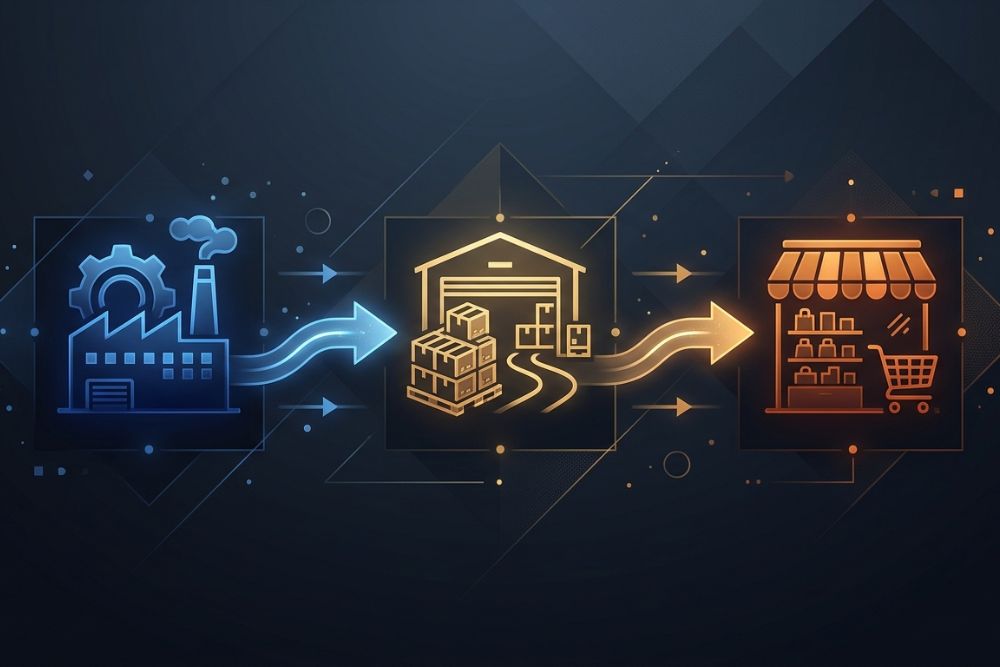
Most FMEG distributors still operate on a linear model: goods flow from manufacturer to master agent to wholesaler, with demand forecasting built on historical spreadsheets and stock counts done in batches. That worked when buyer expectations were lower and supply chains were stable. Neither is true in 2026.
Electricians and contractors now expect the same responsiveness from their electrical supplier that they get from consumer e-commerce. A two-hour delivery window for a circuit breaker is not an exaggeration in dense urban markets. If your availability data is not real-time, you cannot promise it, and you lose the order.
Without predictive analytics, FMEG distributors face the same pattern repeatedly: overstocked industrial switchgear sitting in a warehouse while popular smart home components run out. The cost shows up on both sides, tied-up working capital and lost sales. It is a double hit that compounds over time.
Buyers in 2026 research products online and want to confirm branch availability before they travel to a store. If your digital catalog does not sync with live shelf stock, the customer journey breaks at the most critical moment. Many will simply go elsewhere and they will not tell you why.
Distribution 4.0 is not a rebrand of the same old model with a new label on it. It is a shift from reactive, batch-based logistics to a decentralised supply chain that uses real-time data to make and execute decisions, often without waiting for a human to intervene.
Three capabilities define it.
Standard automation follows rules. Agentic AI acts on them without human intervention. When a shipment of copper wiring is delayed at port, an AI agent can detect the shortfall, identify which regional warehouse has surplus inventory, and reroute stock to the highest-priority construction site, all before your operations team is aware of the disruption.
“The brands pulling ahead are not just tracking inventory better. They are letting software make the first call on redistribution decisions — and only escalating the exceptions.”
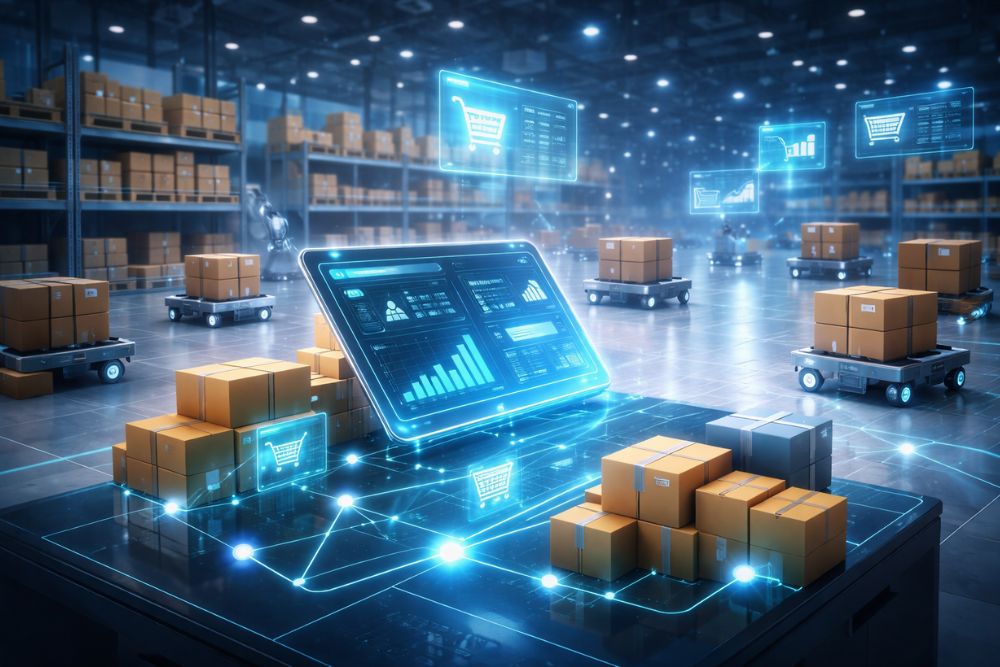
Batch-level tracking tells you a pallet left the warehouse. Item-level visibility tells you exactly where every SKU is, what condition it is in, and whether storage conditions like temperature and humidity are within spec. For FMEG products with strict storage requirements, this moves quality assurance from a spot-check exercise to a continuous process. It also makes FIFO inventory rotation something that happens automatically, rather than something you assume is happening.
A contractor at a job site needs to see their negotiated price, confirm that the nearest branch has 40 units of a specific LED driver in stock, and place the order from their phone. That requires a single commerce surface where pricing, contract terms, inventory, and branch data are all unified. Direct-to-Professional (D2P) is how leading FMEG brands are reducing the back-and-forth of traditional sales calls and increasing order frequency without adding headcount.
MAssist’s Dealer Application and Retailer Application bring this to life, enabling seamless order placement, real-time inventory visibility, scheme updates, and performance tracking in a single unified platform built for channel excellence.
| Capability | Legacy model | Modern model (2026) |
|---|---|---|
| Demand forecasting | Historical spreadsheets | Predictive AI with real-time signals |
| Inventory visibility | Batch-level, 24-hour delay | Item-level, SKU-by-SKU, live |
| Sales channels | Siloed offline and online | Unified phygital commerce |
| Sales force planning | Manual beat plans | AI-optimised route and beat logic |
| Supply chain model | Just-in-Time (fragile) | Just-in-Case with regional micro-hubs |
| Claims & schemes | Manual reconciliation, disputes | Digital verification at every transaction |
The most common reason FMEG distribution technology projects fail is that they are built on fragmented data. Companies invest in new software and find that the inputs are still unreliable, because the systems feeding them are not connected.
Before selecting or upgrading a DMS, audit your data connectivity across three points:
“The uncomfortable truth: If the answer to any of those questions is “no,” that is where the investment needs to go first, not in additional automation layers built on top of a broken foundation.”
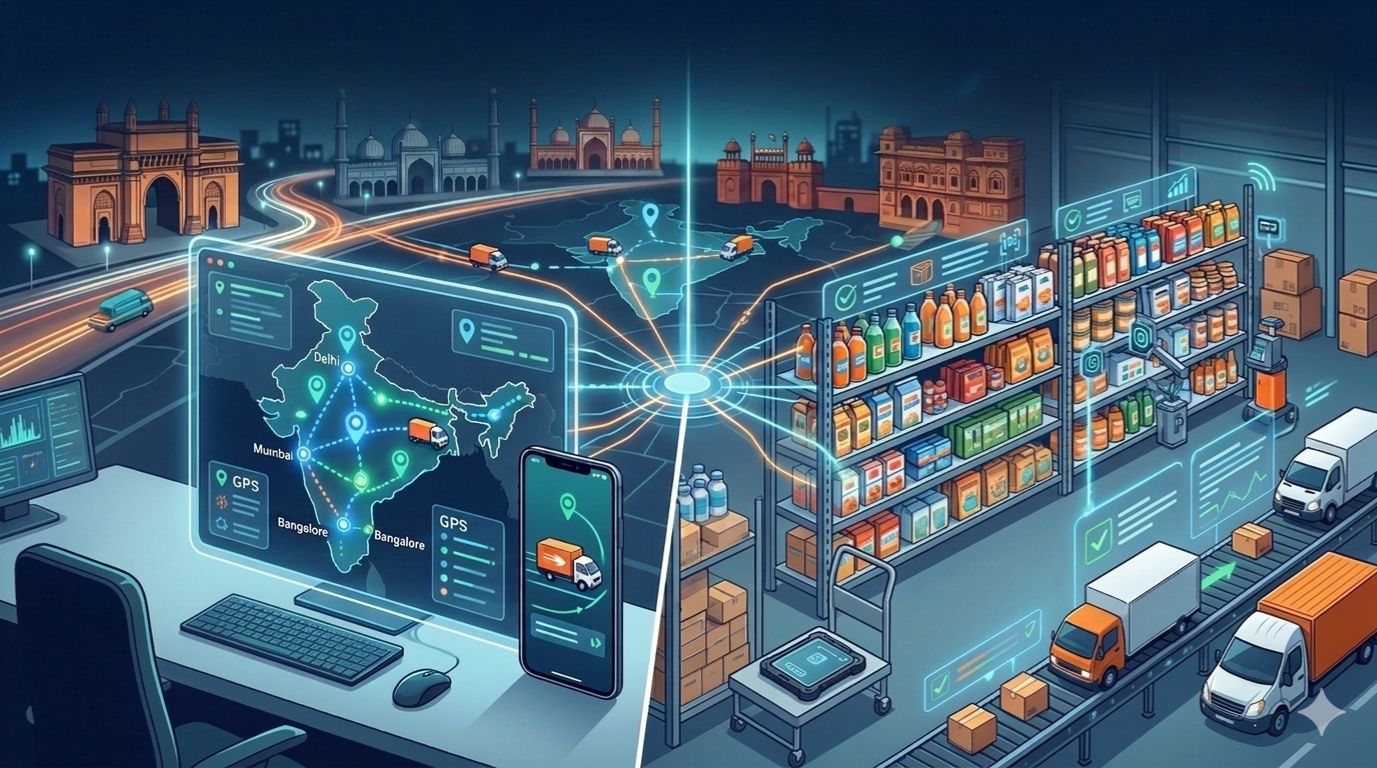
A connected DMS like MAssist resolves this at the root. It integrates via API with your existing CRM, ERP, HRMS, and inventory management systems, creating a single data ecosystem across secondary sales, stock levels, scheme compliance, and field team performance. No more end-of-day reconciliation. No more disputes over whether a scheme was actually passed.
Global trade disruption in 2026 has made landed costs for copper, semiconductors, and electrical components volatile in ways that are genuinely difficult to plan around. Brands that relied on single-source suppliers for critical components have had an uncomfortable few years.
The FMEG brands handling this best have made two structural shifts. First, they have moved from Just-in-Time to Just-in-Case for critical SKUs, using regional micro-hubs to reduce dependence on a single shipping route or port. Second, they have embedded ESG tracking into their distribution reporting, because large-scale industrial and government contracts increasingly require it. A supply chain that cannot report its carbon footprint per delivery is becoming a disqualifier in procurement decisions, not just a differentiator.
Q: What is FMEG distribution management?
FMEG distribution management covers the processes and systems used to move fast-moving electrical goods from manufacturers through distributors, wholesalers, and channel partners to end buyers such as contractors, electricians, and project managers. Modern FMEG distribution management uses a Distributor Management System (DMS) to automate inventory tracking, order processing, scheme compliance, secondary sales visibility, and demand forecasting, across every tier of the distribution chain.
Q: What is the difference between FMCG and FMEG distribution?
FMCG and FMEG share similar distribution challenges around speed and volume, but FMEG adds complexity around product storage requirements, technical specifications, and B2B procurement processes. FMEG buyers, electricians, contractors, project managers, operate on specific negotiated pricing and need real-time branch availability before they make a purchasing decision, making a unified B2B commerce layer far more critical than in typical FMCG distribution.
Q: How does a DMS help FMEG distributors specifically?
A DMS like MAssist gives FMEG brands real-time SKU-level visibility into secondary sales and inventory at every tier, warehouse, stockist, distributor, and retailer. It replaces manual reconciliation with automated data flows, applies schemes and discounts digitally so they are verified at every transaction, and enables mobile ordering and billing for field reps. The result is fewer stockouts, fewer disputes, and faster order-to-cash cycles.
Q: What is agentic AI in supply chain management?
Agentic AI refers to AI systems that do not just predict or flag issues but take autonomous action to resolve them. In FMEG supply chain management, an agentic AI might detect a shipment delay, identify available inventory in a low-demand region, and reroute stock to a high-priority site, without waiting for human approval. It moves the role of the operations team from reactive firefighting to managing exceptions.
Q: Is MAssist DMS suitable for FMEG brands in India?
Yes. MAssist is purpose-built for high-volume, field-distribution-heavy industries including FMEG, FMCG, building materials, consumer durables, and chemicals. The platform supports scheme compliance, outlet-level tracking, beat planning, inter-stock transfers, and mobile-first ordering and it integrates with existing ERP and CRM systems via API. It also supports offline functionality, which is essential for field teams operating in low-connectivity areas across India.
If your FMEG distribution operation is generating activity in the market but not converting it into reliable fill rates and repeat orders, the problem is almost always data connectivity, not effort or intent.
A connected DMS that gives your sales team, distributors, and channel partners a single, trusted source of truth is the foundation. Predictive analytics, agentic AI, and omnichannel commerce sit on top of that foundation, but only work as well as the data underneath them.
The right first step is a data audit: map where your systems are disconnected, where manual reconciliation is happening, and where your secondary sales data has gaps. That audit will tell you exactly where to invest first.
MAssist works with FMEG and FMCG brands across India to implement DMS and sales automation systems built for the specific complexity of electrical goods distribution. Request a demo and let’s map your data gaps together.
Explore More Insights:
 Channel Management
Distributor Management System
Field Force Management
Growth Strategies
Industry Insights
Inventory & Visibility
Market Intelligence (RTM Strategy)
Performance Analytics
Predictive Analytics
Retail Execution
Sales Force Automation
Secondary Sales & Order Booking
Specialized Sales Roles
Tech & AI
Channel Management
Distributor Management System
Field Force Management
Growth Strategies
Industry Insights
Inventory & Visibility
Market Intelligence (RTM Strategy)
Performance Analytics
Predictive Analytics
Retail Execution
Sales Force Automation
Secondary Sales & Order Booking
Specialized Sales Roles
Tech & AI
Get notified about the next update