Can AI Truly Predict Retailer Sentiment?
By Harshit Rajput
/ April 20, 2026
The legendary Peter Drucker once said, 'The most important thing in communication is hearing what isn't said.' In the world...
Read More

India’s FMCG market is rapidly expanding and is estimated to be worth USD 220 billion by 2025, largely due to the different retail channels. General Trade (GT), which is basically...
India’s FMCG market is rapidly expanding and is estimated to be worth USD 220 billion by 2025, largely due to the different retail channels. General Trade (GT), which is basically kirana shops, has been the mainstay of the market whereas Modern Trade (MT) that includes supermarkets and online shopping serves urban consumers. The introduction of Quick Commerce (Qcomm) that is a fast delivery option and is headed by platforms like Zepto and Blinkit is something quite different. Nevertheless, Qcomm is not capable of substituting GT or MT because of their distinct advantages and deeply established roles. This article looks at the differences, growth possibilities, and the reason why the three channels are partners in the future of the Indian FMCG market.
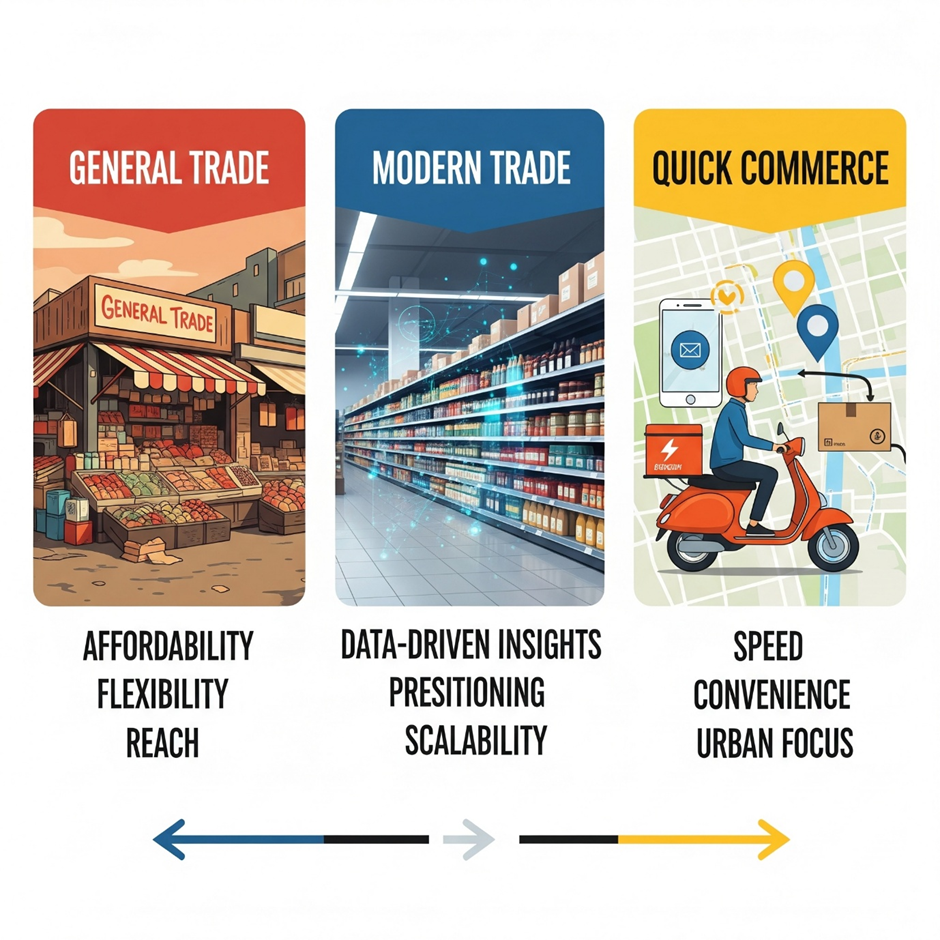
General Trade consists of local kirana shops and grocers that number in the millions, and it is still the backbone of the FMCG sector. GT’s hold on rural and semi-urban areas is based on the support of the community and the profound grasp of the local needs.
Modern Trade is composed of supermarkets, hypermarkets, and large e-commerce platforms and targets the urban consumer who demands convenience, variety, and a high-quality shopping experience. Technology and data power its operations.
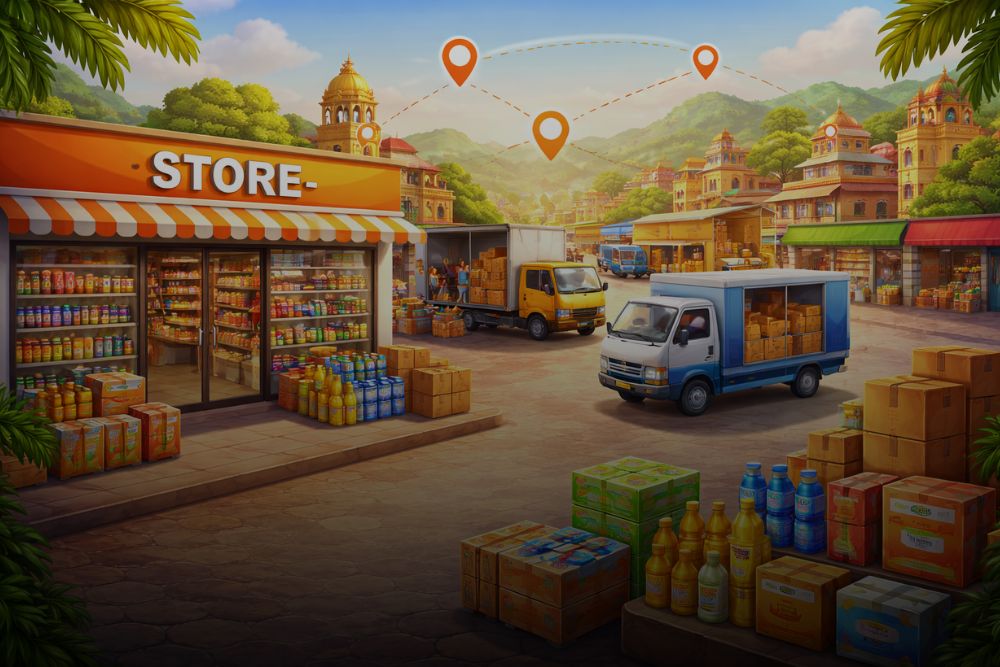
Quick Commerce is a new frontier in urban retail with a technology-driven model of dark stores and hyper-local logistics. What distinguishes it from the rest is unmatched speed and convenience.
Although Qcomm is revolutionizing urban FMCG retail, GT or MT cannot be replaced by it because of the following reasons:
| Attribute | General Trade (GT) | Modern Trade (MT) | Quick Commerce (Qcomm) |
|---|---|---|---|
| Market Share | 70–75%, rural and semi-urban focus | 20–25%, urban focus | ~5–10%, urban-centric, rapidly growing |
| Operations | Trust-based, manual, relationship-driven | Tech-enabled, standardized, automated | Hyper-local, tech-driven, instant delivery |
| Consumer Reach | Local, community-oriented | Urban, variety-seeking | Urban, convenience-driven |
| Pricing & Promotions | Flexible, credit-based, negotiation-driven | Fixed pricing, app-based discounts | Dynamic pricing, app-based offers |
| Supply Chain | Fragmented, local distributors | Centralized, optimized logistics | Hyper-local dark stores |
| Growth Rate | Stable at 8–10% annually | Accelerated at 15–20% annually | Explosive at 25–30% annually |
GT drives volume through widespread reach, MT excels in premiumization and variety, and Qcomm dominates in speed and convenience. Together, they address diverse consumer needs.
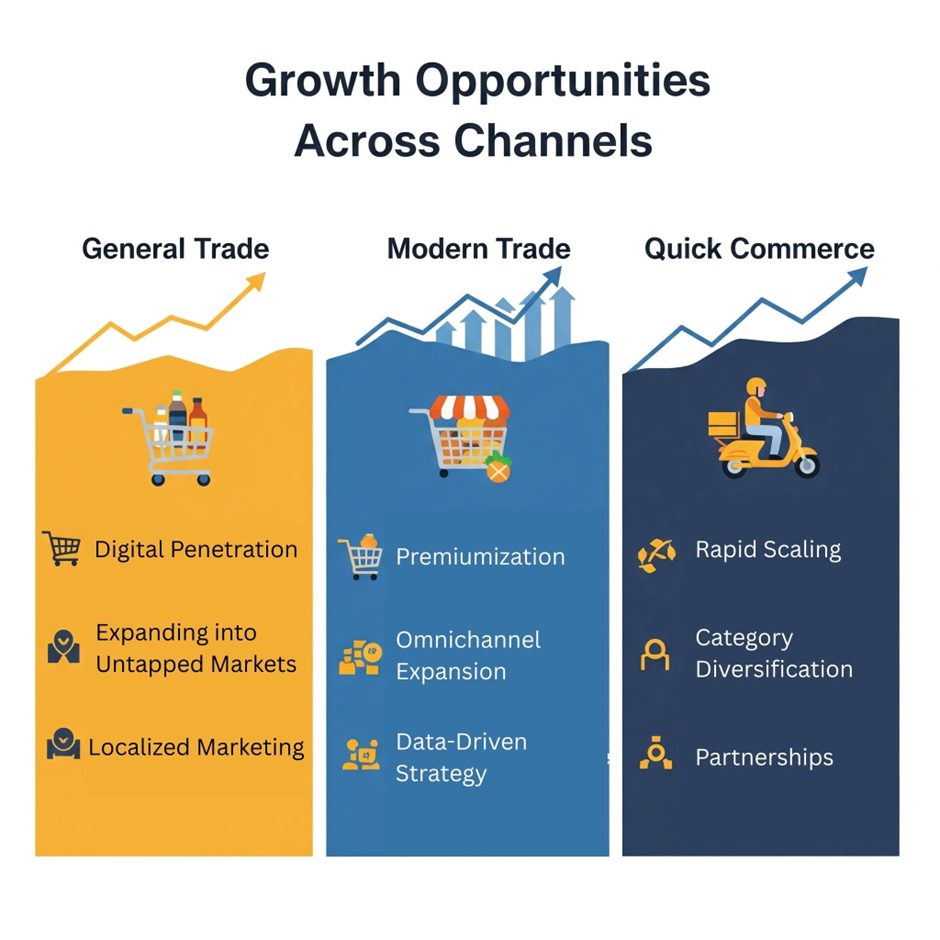
The FMCG retail ecosystem is transforming into a phygital one that combines the physical reach of the network with digital smartness. Kirana shops are getting ready for UPI, barcode scanning, and inventory tools whereas MT is blending regional products to give a local flavor. Although Qcomm is a game-changer, it doesn’t replace GT and MT but rather supports them by providing a service for the instant need segment. For FMCG brands, winning means using the power of all three to get the maximum reach, efficiency, and consumer engagement.
MAssist equips FMCG brands with state-of-the-art sales and distribution management tools to streamline General Trade (GT), Modern Trade (MT), and Quick Commerce (Qcomm), and also ensure that the channels are seamlessly integrated and scalable:
By eliminating the operational inefficiencies that exist in GT, the problem of data fragmentation in MT and the issue of high-speed demands in Qcomm, MAssist is the driving force which allows brands to not only scale dynamically but also be able to adapt to India’s FMCG market that keeps changing.
GT is characterized by common operational challenges such as inadequate stock visibility and irregular promotions, while MT has to cope with compliance costs and data silos that fragment. The solution lies in a hybrid strategy, which combines the use of technology in both channels. Moreover, brands have the opportunity to fully utilize GT distribution during the rush demand periods, simultaneously gathering valuable MT insights to perfect urban campaigns.
Some helpful tips:
The core difference lies in organization and scale. General Trade (GT) consists of a fragmented network of small, independent retailers (e.g., kirana stores). Modern Trade (MT) consists of organized, centrally managed retail chains like hypermarkets and supermarkets.
Not exactly. While Modern Trade and Quick Commerce are growing, General Trade remains the backbone of FMCG distribution in many regions due to its last-mile reach in rural areas and the “high-frequency, small-ticket” buying habits of consumers.
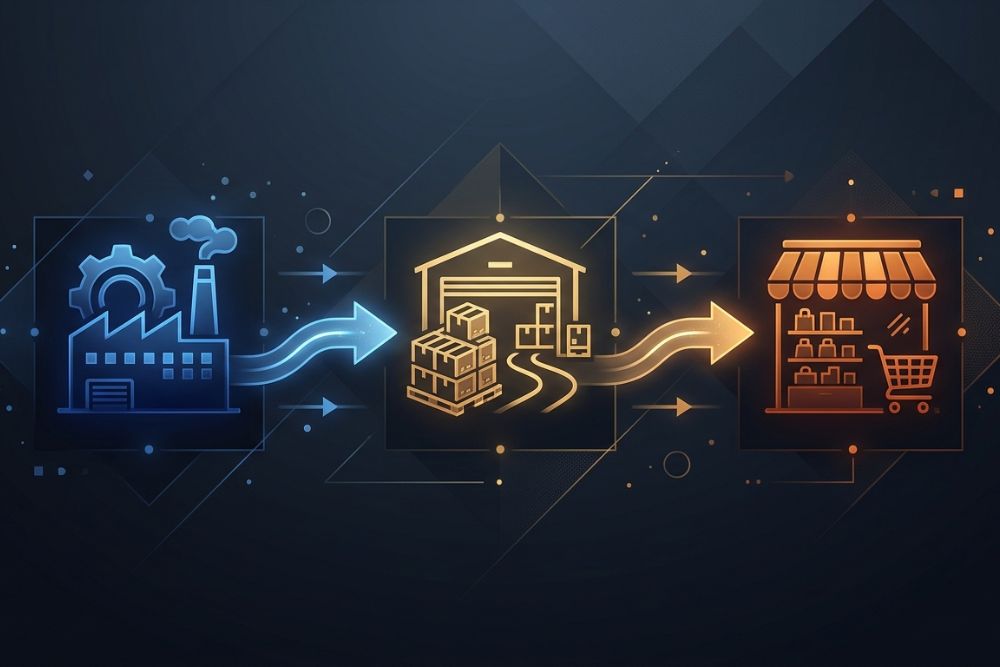
General Trade: Follows a traditional “Manufacturer → Distributor → Wholesaler → Retailer” path. It is highly dependent on a large field sales force.
Modern Trade: Often uses a more direct “Manufacturer → Distribution Center → Store” model, utilizing centralized logistics and Electronic Data Interchange (Inter-system communication) for automated replenishment.
Quick Commerce (Q-Commerce) bridges the gap between the speed of a local store and the tech-driven inventory of Modern Trade. It targets the “instant gratification” segment. For brands, the challenge is gaining secondary sales visibility across these hyper-local dark stores to prevent stockouts.
In Modern Trade, the Fill Rate (the percentage of a customer’s order that is met) is a critical KPI. Unlike GT, where a consumer might accept a substitute from a local shopkeeper, MT retailers often penalize brands for “out-of-stock” situations as it disrupts their automated inventory systems.
Modern Trade typically has a higher barrier to entry due to “slotting fees” (paying for shelf space) and strict margin requirements. General Trade has lower entry fees but much higher long-term operational costs due to the complexity of managing thousands of individual distributors.
In 2025, GT, MT, and Qcomm are interdependent pillars that sustain the Indian FMCG sector. While GT provides the widest and most authentic access, MT ensures the sector’s efficiency and maturation, and Qcomm is there for speed and ease. Thus, despite Qcomm having a huge transforming potential, the fact that it is urban-focused and has operational constraints make it impossible for it to replace GT which has wide penetration or MT which is scalable.With the help of MAssist’s cutting-edge sales and distribution technologies, FMCG companies are able to create a hybrid retail engine that is capable of driving growth which is not only sustainable but also spans across the rural heartlands, urban centers, and instant-delivery ecosystems.
 Channel Management
Distributor Management System
Field Force Management
Growth Strategies
Industry Insights
Inventory & Visibility
Market Intelligence (RTM Strategy)
Performance Analytics
Predictive Analytics
Retail Execution
Sales Force Automation
Secondary Sales & Order Booking
Specialized Sales Roles
Tech & AI
Channel Management
Distributor Management System
Field Force Management
Growth Strategies
Industry Insights
Inventory & Visibility
Market Intelligence (RTM Strategy)
Performance Analytics
Predictive Analytics
Retail Execution
Sales Force Automation
Secondary Sales & Order Booking
Specialized Sales Roles
Tech & AI
Get notified about the next update