Can AI Truly Predict Retailer Sentiment?
By Harshit Rajput
/ April 20, 2026
The legendary Peter Drucker once said, 'The most important thing in communication is hearing what isn't said.' In the world...
Read More

Every sales manager with a distributed field team has faced the same gap. The beat plan says the rep visited 12 outlets. The rep confirms the same. But order volumes...
Every sales manager with a distributed field team has faced the same gap. The beat plan says the rep visited 12 outlets. The rep confirms the same. But order volumes from that territory are flat, outlet relationships are thin, and there is no way to verify what actually happened on the ground.
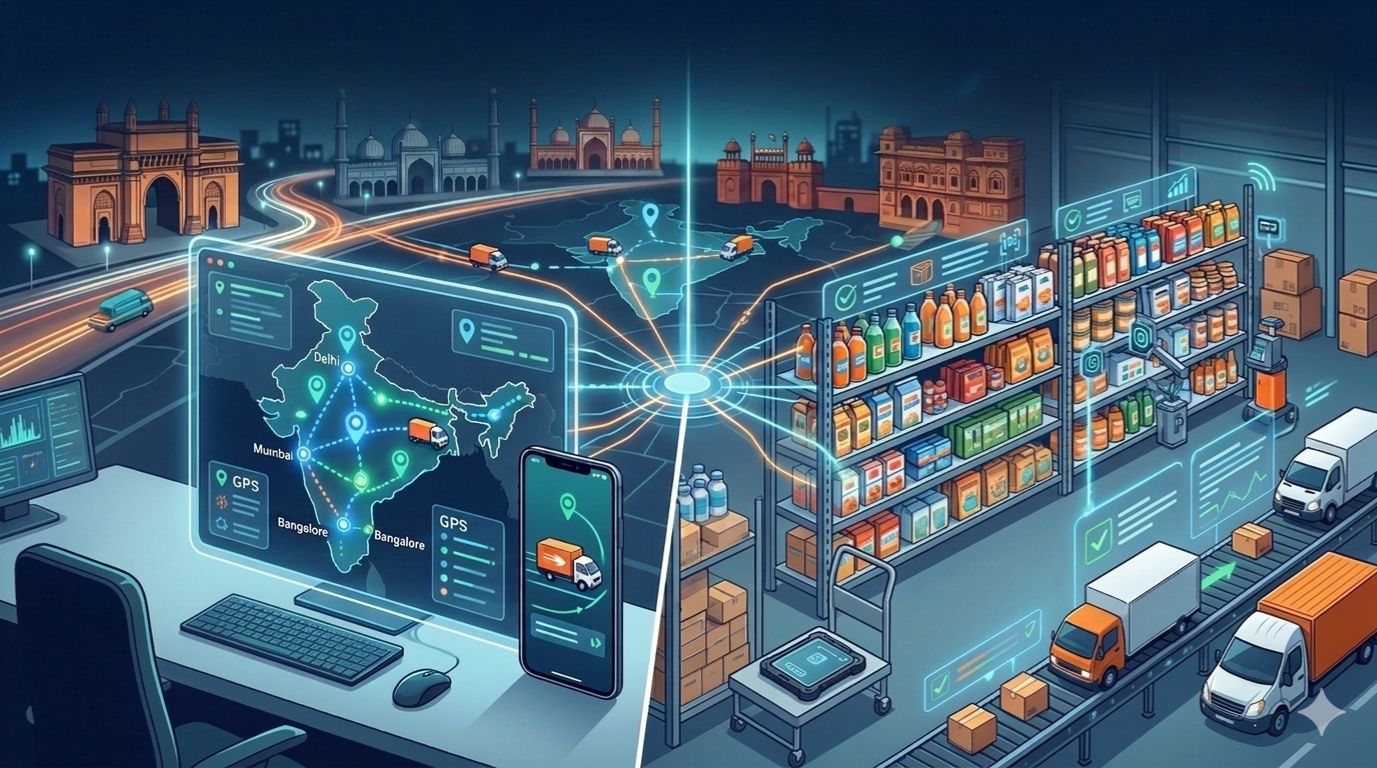
Geo tracking software closes that gap. It gives managers real-time visibility into where field reps are, which outlets they have visited, how long they stayed, and whether their routes matched the plan. Not at the end of the day from a self-reported form. Right now, on a live map.
This guide covers what geo tracking software actually does, what features matter most, and what to look for when evaluating options for a field sales or distribution team.
Geo tracking software uses GPS, cellular networks, and Wi-Fi to monitor the real-time location of field employees and log their movement and activity throughout the workday.
In a field sales context, this means a manager can open a dashboard and see which outlets a rep has visited, how long they spent at each one, which route they took, and whether that route matched the planned beat. All of this is available live, not reconstructed from self-reported data at the end of the day.
It is worth clarifying the difference between geo tracking and geofencing attendance, since the terms often get used interchangeably, but they serve different purposes:
Both capabilities are valuable, and for field sales teams, they work best together.
The field rep carries the mobile app on their smartphone. As they move through their territory and visit outlets, the app tracks their GPS location and logs activity at each stop.
The manager’s dashboard shows a live map with each rep’s current position, the outlets they have checked in at, and the time they spent at each visit. Over time, this builds a data trail that reveals meaningful patterns: which reps are covering their territories consistently, which outlets are being skipped regularly, and where time is being spent off-route.
A well-built geo tracking app also works offline. Location data is captured on the device and synced automatically when the connection is restored, so reps in remote areas or low-signal zones do not create blind spots in the data.
Managers see where each field rep is on a live map. This is not just a historical check-in log. It is a real-time view of the full field team, useful for coordinating urgent visits, reassigning tasks, or identifying if something has gone wrong in the field.
When a rep checks in at an outlet, the system logs the GPS location, arrival time, and departure time. Managers can verify that visits happened as planned and how long the rep actually spent with the customer. This data becomes the basis for fair, fact-based performance reviews.
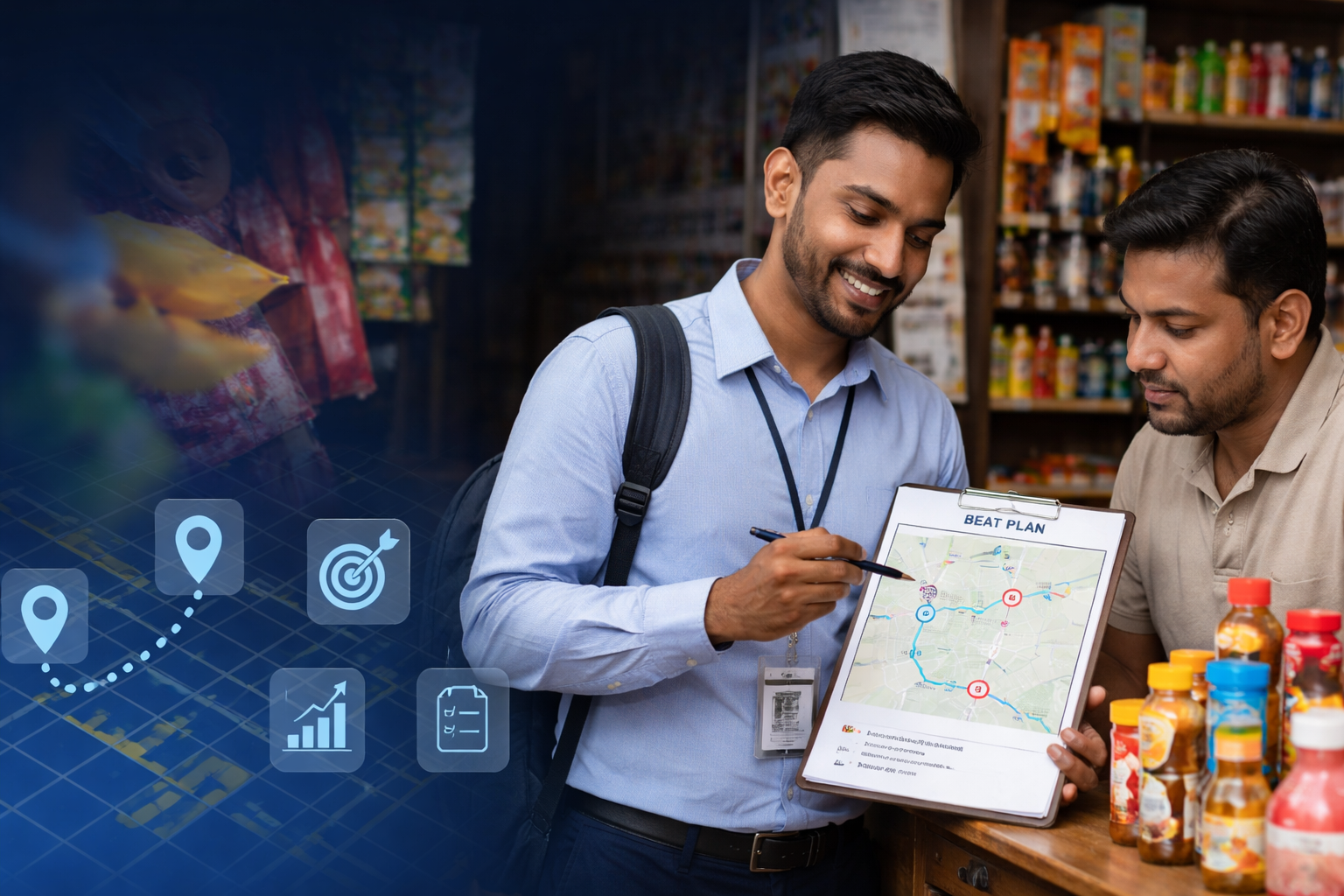
Geo tracking connects to beat plans and flags deviations. Managers can compare planned routes against actual routes and identify outlets that are consistently being missed or visited out of sequence. Over time, this improves territory coverage and customer relationships.
The app records the full path a rep took during the day. Route history helps spot inefficiencies, reduce unnecessary travel, and optimize future beat plans based on actual movement data rather than assumptions.
Advanced geo tracking systems detect when a rep marks a visit from a location that does not match the outlet’s actual address. This goes beyond simple attendance verification and ensures that visit records are genuinely tied to physical presence at the right place.
Teams in remote zones or areas with poor connectivity should not create gaps in the data. A reliable geo tracking app captures location data offline and syncs automatically when the connection returns.
A single dashboard shows all reps, all locations, and all activity in real time. For businesses managing field teams across multiple cities or regions, this replaces a constant stream of status calls and end-of-day reports.
Geo tracking works best when it connects to the rest of the field operations stack: order booking, visit logs, beat plan management, expense tracking, and performance reporting. When location data is integrated with activity data, managers see not just where a rep went but what happened at each stop.
| Feature | Geofencing Attendance | Geo Tracking |
|---|---|---|
| Primary Purpose | Verify clock-in at an approved location | Monitor movement and activity throughout the day |
| What it Captures | Arrival and departure at a specific zone | Real-time location, routes, time at each stop |
| Who Benefits Most | HR, payroll, compliance teams | Sales managers, field ops, territory planners |
| When Data is Captured | At clock-in and clock-out events | Throughout the working day |
Both are valuable. For field sales teams, using them together gives you the full picture: verified presence at the start and end of each visit, and complete visibility into everything that happened in between.
A few questions worth asking before committing to a platform.
Does it connect to your beat plan and show deviations automatically, or does it just show a map? Does it detect discrepancies between where a rep marked a visit and where the outlet actually is? Does it work offline for teams in low-connectivity areas?
For FMCG, CPG, and distribution businesses specifically, tracking is the first step toward mastering inventory challenges at the dealer level. it is worth looking for a platform that integrates geo tracking with order management, visit logs, and reporting, rather than a standalone GPS tool that sits separately from the rest of your field operations stack. The value of location data multiplies significantly when it is connected to activity and outcome data.
If you manage a distributed sales or delivery team and want to understand how geo tracking integrates with beat planning, visit management, and field performance reporting, speaking to a specialist who works with field-heavy businesses can save a lot of evaluation time.
Want to see geo tracking in action inside a full field force management platform? Request a demo and speak to a field operations specialist to explore what visibility looks like for your specific team size and sector.
Also read: Geofencing Attendance System for Field Teams – if verified clock-in and clock-out at approved locations is what you need, this guide covers how geofencing attendance works and what features to look for.
 Channel Management
Distributor Management System
Field Force Management
Growth Strategies
Industry Insights
Inventory & Visibility
Market Intelligence (RTM Strategy)
Performance Analytics
Predictive Analytics
Retail Execution
Sales Force Automation
Secondary Sales & Order Booking
Specialized Sales Roles
Tech & AI
Channel Management
Distributor Management System
Field Force Management
Growth Strategies
Industry Insights
Inventory & Visibility
Market Intelligence (RTM Strategy)
Performance Analytics
Predictive Analytics
Retail Execution
Sales Force Automation
Secondary Sales & Order Booking
Specialized Sales Roles
Tech & AI
Get notified about the next update