Can AI Truly Predict Retailer Sentiment?
By Harshit Rajput
/ April 20, 2026
The legendary Peter Drucker once said, 'The most important thing in communication is hearing what isn't said.' In the world...
Read More
Every FMCG brand faces the same fundamental challenge: you can have the best product on paper, but if it is not on the shelf when a consumer wants it, you...
Every FMCG brand faces the same fundamental challenge: you can have the best product on paper, but if it is not on the shelf when a consumer wants it, you have already lost the sale. And that is precisely where the route to market in FMCG becomes the real differentiator.
Whether you are expanding into new geographies, managing a complex distributor network, or trying to reduce dead stock and missed deliveries, the quality of your route to market strategy in FMCG will determine whether you grow or stagnate. This guide breaks down what RTM actually means, why it matters more than ever in 2025, and what a well-structured approach looks like in practice.
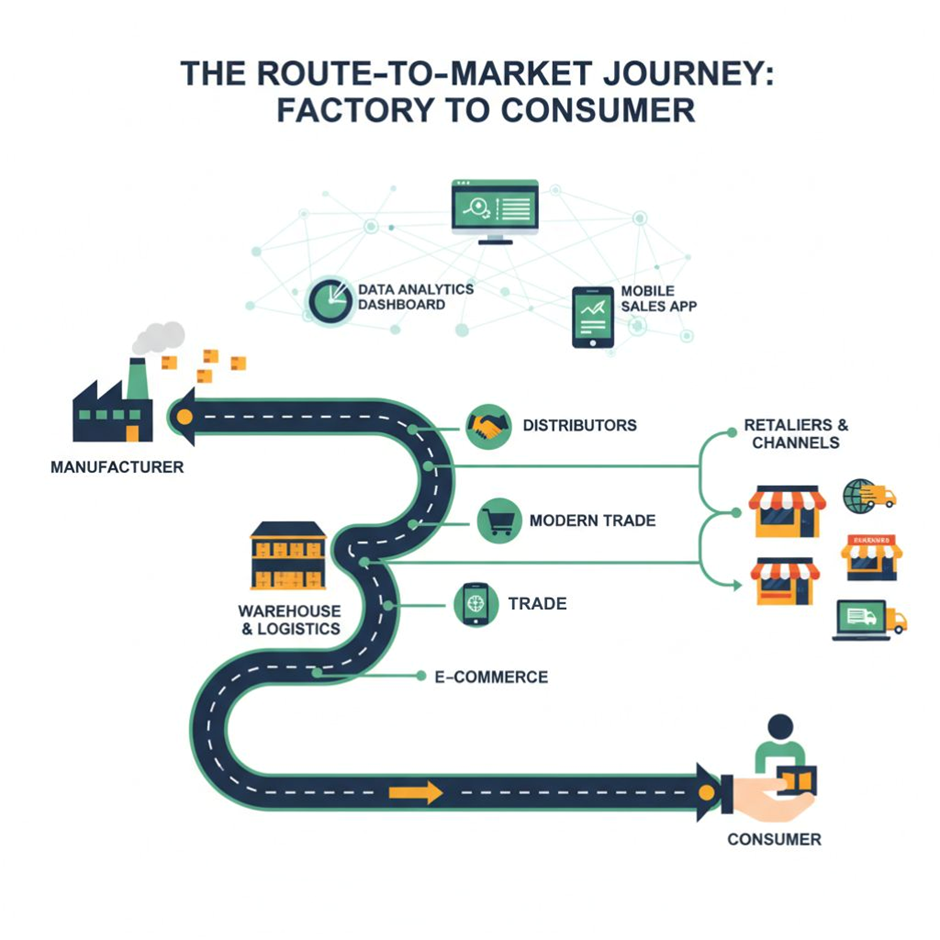
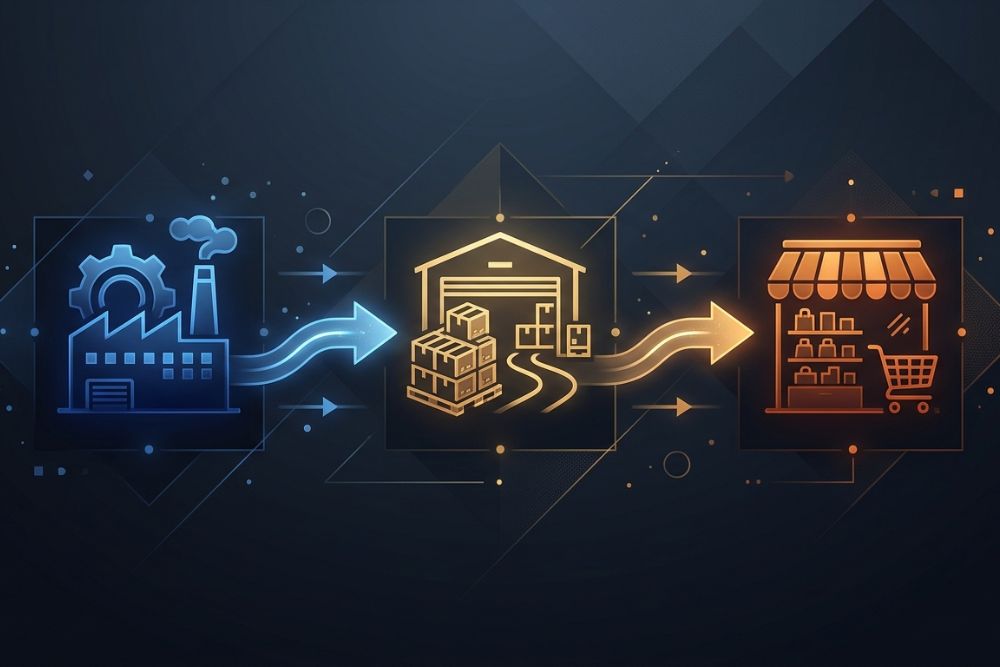
Route to market in FMCG refers to the complete pathway a product takes from the manufacturing facility to the end consumer’s hands. It covers every step, every intermediary, and every process involved in moving goods from production to purchase.
In practical terms, FMCG route to market includes decisions around:
A common misconception is that route to market is just about logistics. It is not. It is a strategic framework that connects your commercial goals to your operational reality. Done right, it becomes your brand’s biggest competitive advantage. Done poorly, even a market-leading product will quietly lose shelf space to a more efficiently distributed competitor.
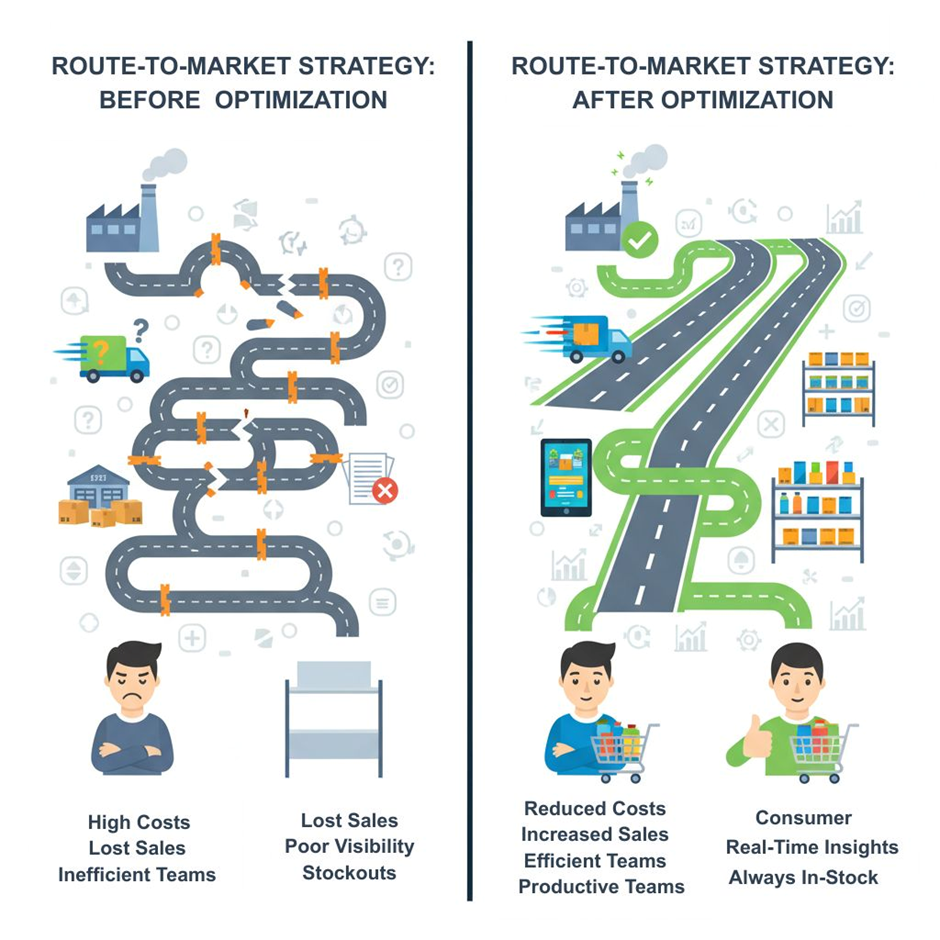
The FMCG sector operates at a pace and scale that leaves very little room for inefficiency. Products turn over quickly, margins are thin, and consumers are not loyal to a brand that keeps going out of stock. Here is why getting your FMCG route to market strategy right is non-negotiable.
A well-designed route to market strategy helps brands go beyond the obvious channels. Yes, modern trade and hypermarkets matter. But a huge volume of FMCG sales in emerging markets like India still flows through millions of small kirana stores, mom-and-pop shops, and local wholesalers in tier-2 and tier-3 towns. Brands that build their RTM to cover this fragmented landscape grow faster and more sustainably. Tiger Brands, for example, expanded its retail footprint from 50,000 to over 71,000 stores in South African townships within a year by using a targeted RTM approach, resulting in a 90% increase in product availability in previously underserved areas.
Every inefficiency in your distribution chain costs money. Overstocking at one distributor while another runs dry leads to both write-offs and lost sales simultaneously. Poor route planning for field teams wastes fuel and working hours. An optimized route to market in FMCG tightens all of these leaks, reducing transportation costs, cutting inventory holding expenses, and improving demand forecasting accuracy.
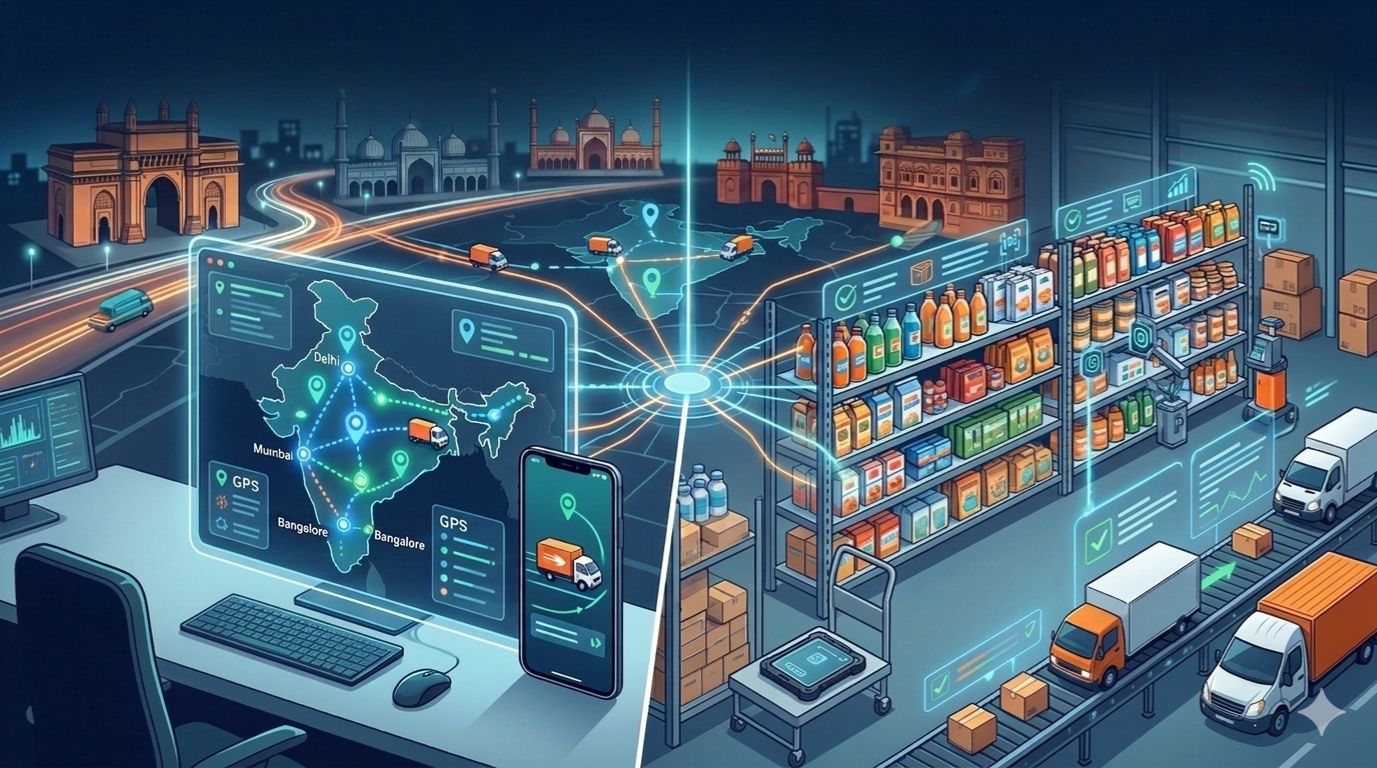
One of the biggest problems in traditional FMCG distribution is what happens after stock leaves the warehouse. In many setups, it disappears into a black box. Distributors may not report secondary sales accurately. Field teams may miss visits. Shelves may go empty without anyone catching it in time. A technology-driven RTM strategy fixes this by giving brands live visibility into stock positions, sales executive activity, and retail execution across every outlet and territory.
Your field team is the last mile of your route to market strategy in FMCG. If they are spending hours on manual reporting, guessing at beat plans, or working with outdated price lists, they are not selling. Structured RTM systems with mobile-enabled sales force automation free up reps to spend more time building relationships, capturing orders, and executing in-store plans. Companies using technology-backed RTM strategies grow 15 to 25 percent faster than those relying on traditional, manual models.
The field intelligence generated by a strong RTM setup is genuinely valuable. You can see which SKUs are moving where, which outlets are underperforming, what competitors are doing at the shelf level, and which promotions are actually working. This kind of ground-level data transforms how brand managers and sales leaders make decisions, moving from gut-feel to evidence-based strategy.
Building the best route to market for FMCG brands requires getting several moving parts right at the same time. Here is what an effective RTM framework looks like.
The first question in any RTM strategy is: which channels will you use to reach your end consumer, and what combination makes the most sense for your product category, geography, and target buyer?
Common RTM models in FMCG include:
The right channel mix depends on your product type, cost-to-serve analysis, consumer shopping behavior, and geographic footprint.
Not every retail outlet deserves the same level of attention. The best route to market in FMCG involves segmenting your outlet universe by sales potential, visit frequency, product range stocked, and strategic importance. High-volume outlets get priority visits, premium shelf placement support, and faster replenishment. Lower-tier outlets may be served through a van sales model or alternate-day visits. Outlet segmentation ensures your field resources are deployed where they generate the highest return.
Moving stock efficiently is foundational to RTM performance. This includes warehouse network design, vehicle routing optimization, beat planning for field teams, and demand-based replenishment cycles. When logistics is tightly integrated with the rest of the RTM system, stock-outs drop, delivery times improve, and waste from expired or unsold goods goes down significantly.
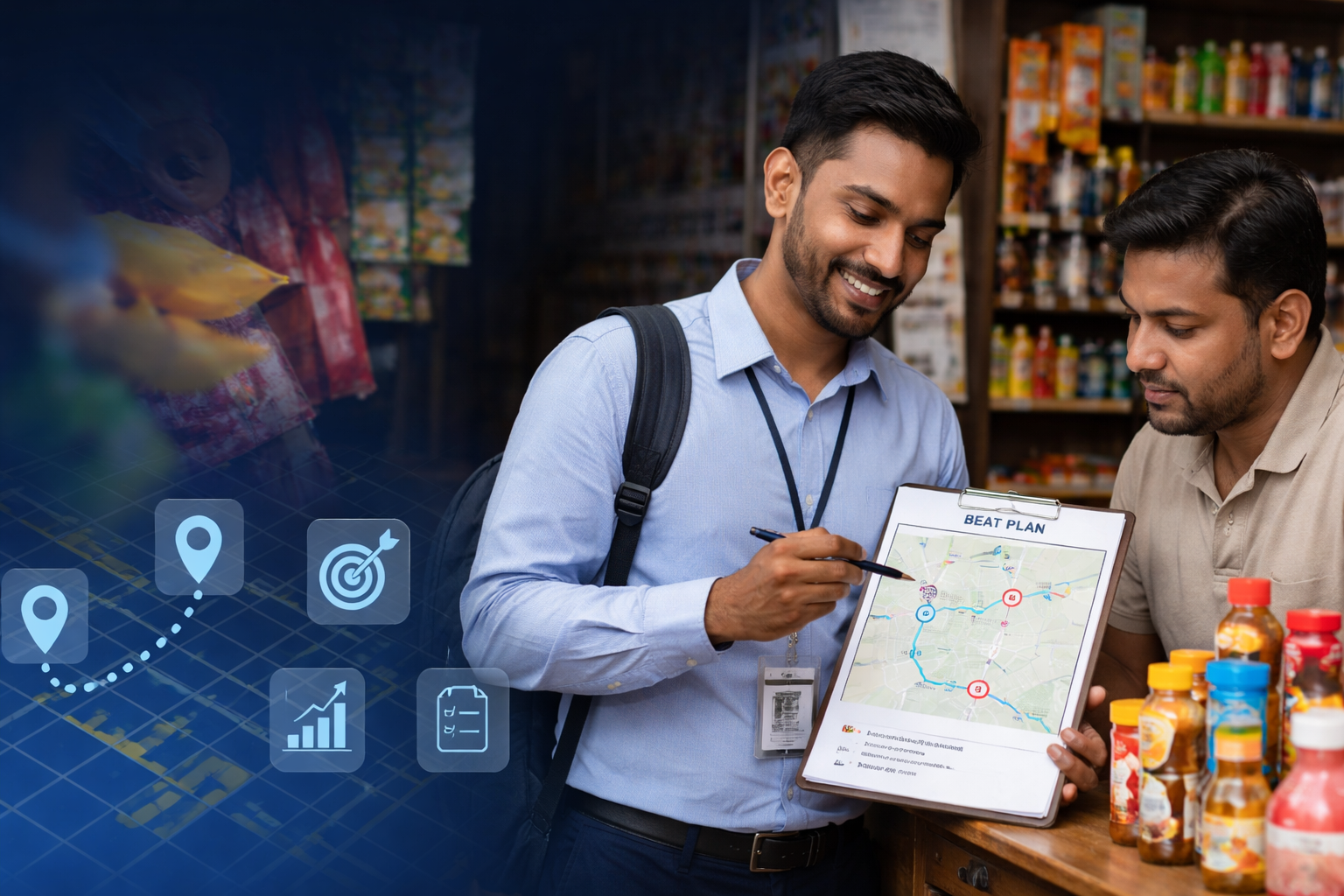
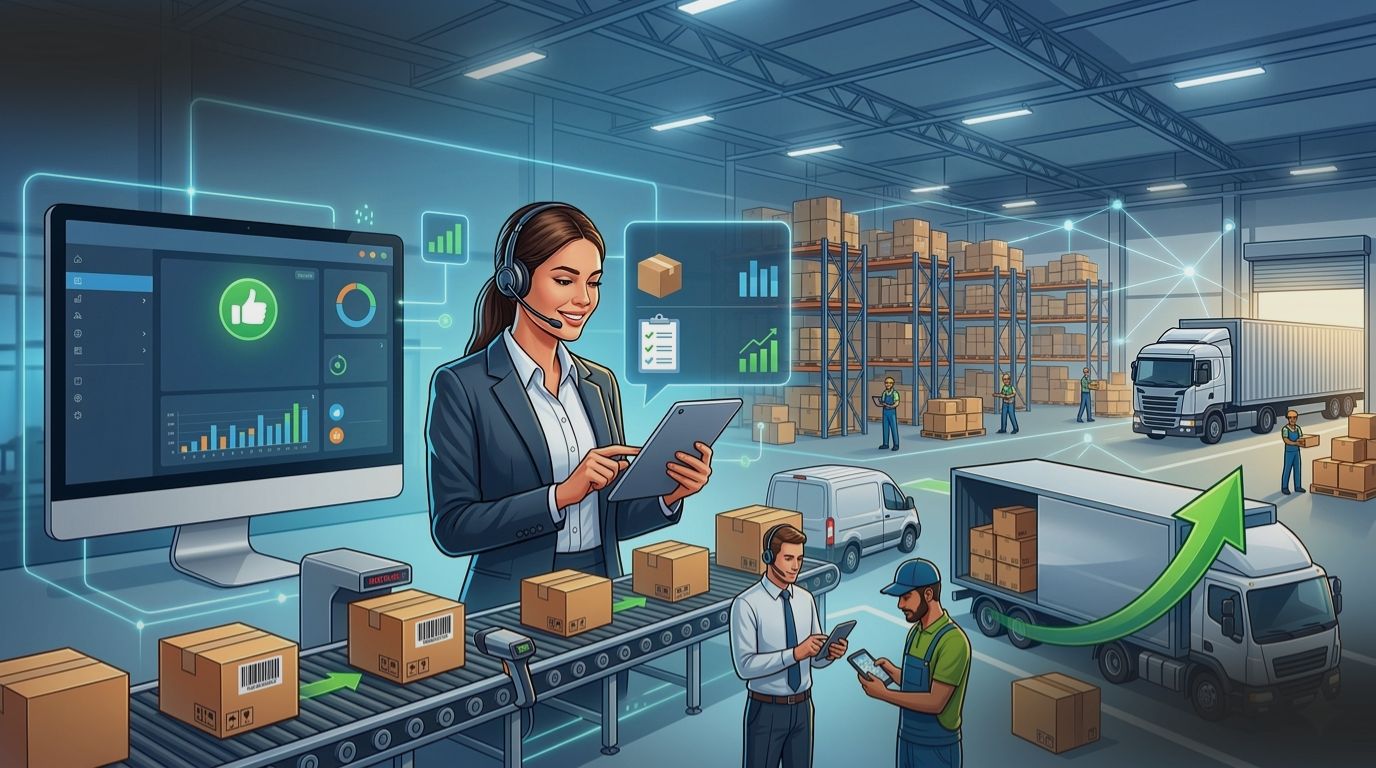
A field team operating on paper-based processes or basic spreadsheets is a massive bottleneck. Modern RTM strategies rely on mobile-first sales force automation (SFA) tools that allow reps to capture orders digitally, log outlet visits, track promotions, report competitor activity, and generate attendance through geo-fencing, all in real time. This data flows back to managers and brand teams instantly, replacing end-of-day reports with live operational intelligence.
Distributors are the backbone of FMCG distribution in most markets, but managing them without the right systems leads to data gaps, slow claims processing, and poor secondary sales visibility. A distributor management system (DMS) that is connected to your central platform gives you a shared view of stock levels, order status, outstanding claims, and sales performance at every distributor location.
Raw data from field teams and distributors is only useful when it is structured, visualized, and acted upon. A strong BI layer transforms operational data into dashboards and alerts that help sales leaders monitor territory performance, track KPIs, and identify emerging risks before they become problems.
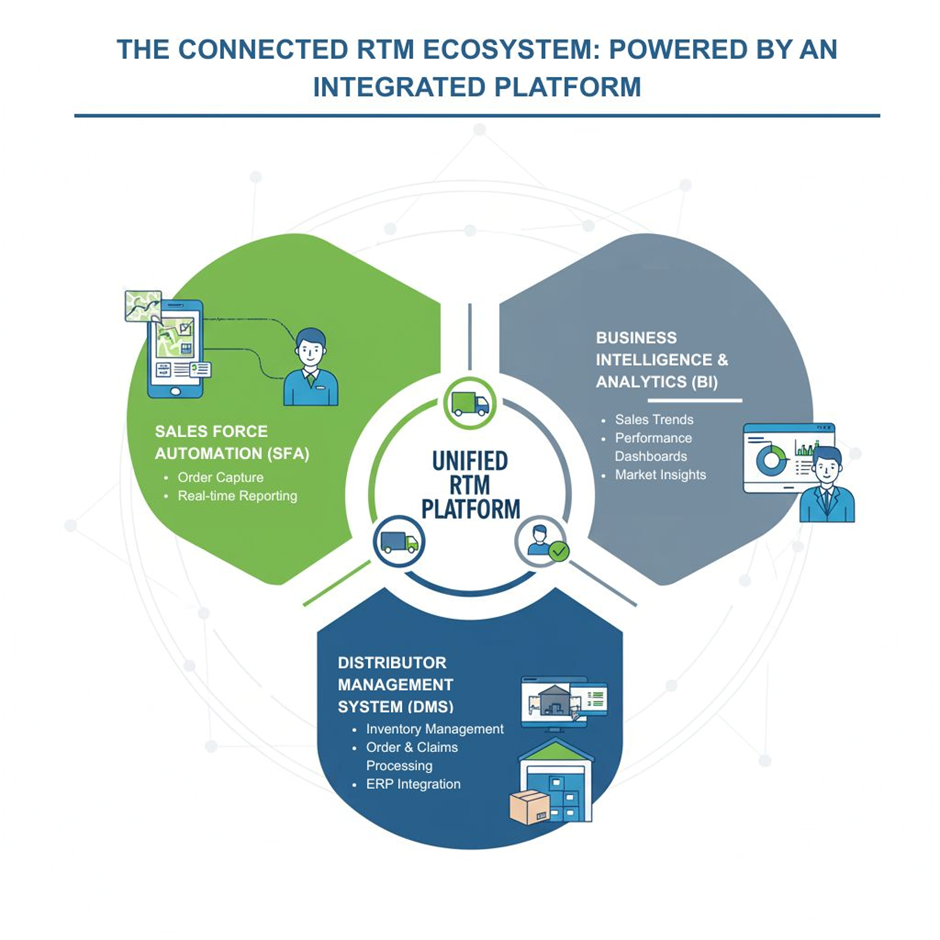
The traditional model where RTM is managed through spreadsheets, phone calls, and periodic market visit reports is no longer sufficient. The pace of the market, the complexity of multi-channel distribution, and the sheer volume of data being generated demand a connected, technology-driven approach.
Forward-looking FMCG brands are moving toward integrated platforms that link every stakeholder in the distribution chain, from the manufacturer to the distributor to the field rep to the retailer, on a single connected system. When this happens, a few powerful things become possible:
This kind of integration does not just reduce costs. It fundamentally changes how FMCG companies compete.
Most FMCG brands we speak with are not struggling because their strategy is wrong. They are struggling because the tools they are using to execute that strategy were not designed for the complexity they are now facing.
A few questions worth honestly answering:
If any of those hit close to home, the issue is almost never the people. It is the absence of a connected system that ties field execution, distributor operations, and management visibility together on one platform.
The good news is that closing those gaps does not require a full-scale transformation. It starts with understanding exactly where your RTM is leaking and which capabilities, whether that is sales force automation, distributor management, or real-time analytics, will have the highest impact first.
Talk to an FMCG distribution specialist and get a clear picture of where your current setup stands and what a connected SFA and DMS platform can change for your field-to-shelf operations.
Request a DemoEven well-resourced FMCG brands run into consistent RTM challenges. Here are the most common ones and what good practice looks like in response.
A great Route-to-Market (RTM) isn’t just a flow chart on a slide deck-it’s a living system. Whether you’re a massive multinational or a growing local brand, the best strategies all do five things differently:
Start with the Shopper, Not the Truck: It’s easy to build a route based on what’s convenient for the warehouse. But a winning strategy starts with where the consumer actually stands. Every outlet segment and beat plan should answer one question: “Is this where they want to find us?”
Data is the Engine, Not a Report: Real-time field data and secondary sales aren’t “extra” info to check on Mondays. They are the operating system. If you aren’t using live outlet analytics to make decisions, you aren’t driving the market-you’re just following it.
Build for Pivot, Not Perfection: Markets move fast. Distributors change, and new channels pop up overnight. The best RTMs are flexible enough to adapt on the fly without needing a total overhaul every time the market shifts.
Connect the Entire Chain: Technology shouldn’t stay stuck in the head office. It needs to live in the distributor’s portal and the field rep’s pocket. When the whole chain is connected, everyone sees the same truth.
Execution is the Only Metric that Matters: Strategy is just paper until it hits the shelf. A high-performing team knows that value is created at the point of purchase, every single day. If it’s not executed at the shelf, the strategy didn’t happen.
A great product with a weak route to market strategy will always be outperformed by a decent product with a great one. In FMCG, distribution excellence is not a back-office function. It is a frontline competitive weapon.
Getting your route to market in FMCG right means investing in the right channel design, the right field execution model, and the right technology to connect it all. It means treating distribution as a system rather than a series of one-off transactions. And it means building in the data and visibility needed to keep improving over time.
The brands winning shelf space today are not just outspending their competitors on marketing. They are out-executing them in distribution, route planning, and retail coverage every single day.
The question is not whether your RTM needs to evolve. It almost certainly does. The question is whether you have the right systems in place to make that evolution happen without disrupting the operations you already depend on.
Route to market in FMCG is the strategy a brand uses to move its products from manufacturing through distribution channels to the end consumer. It covers channel selection, distributor management, field sales operations, logistics, and retail execution.
Because FMCG products compete on availability and visibility. If your product is not on the shelf when a consumer wants it, they buy a competitor’s product. A strong RTM ensures consistent product presence, controlled costs, and accurate field data to keep improving performance.
Common RTM models include direct-to-retail, distribution through wholesalers or stockists, van sales for last-mile coverage, and hybrid models that combine direct and indirect channels. Many brands also now include e-commerce and quick-commerce routes in their mix.
There is no single best model. The right route to market depends on your product category, target geography, consumer shopping behavior, and cost-to-serve economics. Most FMCG brands use a hybrid approach tailored to different channels and market tiers.
Technology improves RTM by providing real-time data on field activity, distributor stock levels, and outlet performance. SFA tools automate order capture and beat planning. DMS platforms connect brands to distributors with shared visibility. BI dashboards turn data into actionable decisions.
Look for a platform that connects sales force automation, distributor management, and analytics in one integrated system rather than separate tools. Key capabilities include real-time secondary sales visibility, mobile order capture for field reps, distributor portal access, ERP integration, and BI dashboards that surface actionable insights at the territory and outlet level.
 Channel Management
Distributor Management System
Field Force Management
Growth Strategies
Industry Insights
Inventory & Visibility
Market Intelligence (RTM Strategy)
Performance Analytics
Predictive Analytics
Retail Execution
Sales Force Automation
Secondary Sales & Order Booking
Specialized Sales Roles
Tech & AI
Channel Management
Distributor Management System
Field Force Management
Growth Strategies
Industry Insights
Inventory & Visibility
Market Intelligence (RTM Strategy)
Performance Analytics
Predictive Analytics
Retail Execution
Sales Force Automation
Secondary Sales & Order Booking
Specialized Sales Roles
Tech & AI
Get notified about the next update